
Page 2 – The Crypt – the home of classic horror movies
IT CHAPTER ONE AND TWO (2017-2019)

By Neil Baker
The critical and financial success of Mushietti’s faithful yet modern adaptation of IT only proved the enduring power of King’s original novel. But why is IT a masterpiece of modern horror? After all, many argue it is not King’s strongest work, yet its cultural impact remains prominent.
IT would bring together a range of themes found in his earlier work, from “The Body” to “Carrie” and “The Stand”, to create a coming-of-age horror centred on our deep-seated childhood fears and insecurities and their ability to shape the adults we become. Here, King reminds us of our human need to face our monsters, wherever they may reside, at whatever age we may be. IT, like “The Body”, is a story of the power of our early teenage friendships. But IT is also a tale of the adult scars we carry from our teens and the need to own our past.
Mushetti captures these elements beautifully throughout both chapters of IT, always acknowledging the psychological horror at the core of King’s story while unlocking the childhood fears we would rather keep buried. As a result, IT reminds us of the children we once were and the adults we have become, and how the two are interlinked, no matter how much time has passed.
LAST NIGHT IN SOHO (2021)

By Neil Baker
Bathed in a Giallo-esque glow, Edgar Wright’s deliciously twisted mystery bends, distorts and dissolves time through Chung Chung-hoon’s bright, bold, nostalgic cinematography, a soundtrack of sixties classics and a Hitchcock-inspired classical score by Steven Price. Eloise and Sandie’s mirror life shimmers with echoes of Hammer’s underappreciated flick Vampire Circus (1972), while the style and use of colour pay homage to Dario Argento’s Deep Red (1975) and Vertigo (1958).
But, like all of Wright’s work, at the heart of this deliciously structured mystery and horror, a musical sits in the shadows, screaming to be freed. Like the perfectly orchestrated music and action of Baby Driver, the lifeblood of Last Night in Soho is its auditory wonder and the beautifully timed choreography of its performances. What starts as a musical love letter to a decade of freedom and hope slowly descends into darkness as the bright colours morph into a neon nightmare with no escape, one Hitchcock would have been proud to call his own.
Upon its release, many argued that Last Night in Soho failed to deliver on the horror promised by its premise. I beg to differ. Last Night in Soho understands that memorable horror isn’t all about the blood and gore; it’s about subverting the securities we hold dear.
In Repulsion, Polanski twisted the joy of sex into a terrifying fever dream. In Last Night in Soho, Wright takes the energetic pop of the 60s into the cold, damp, dark back streets of a city steeped in loneliness and despair. It is an auditory and visual masterclass, a delectable horror homage, and a very British love letter to classic supernatural terror.
The Crypt – the home of classic horror movies
DRACULA (1958)

By Neil Baker
Hammer’s The Curse of Frankenstein may have fired the starting gun on a new era of vibrant British horror, but Terrance Fisher’s Dracula (1958) gave birth to a new Hammer horror empire. Within the first few scenes, Terrance Fisher’s Dracula appears to be the quintessential representation of Bram Stoker’s legendary Count, born from earlier Universal pictures. But it wasn’t long before Hammer’s Dracula revealed its true intentions, reinventing Stoker’s character for a new audience.
Fisher allowed Christopher Lee to ditch the debonair vampire in favour of a more sexual and animalistic predator. Lee’s Count Dracula would become iconic, influencing multiple subsequent portrayals of the character as Fisher experimented with the horror genre’s links to sex and sexuality.
MARTIN (1977)

By Neil Baker
In 1977, George A. Romero brought us a unique, bold, and distinctive vampire movie that faded from view for many years after its release, only to see the light of day again recently. Martin. From the outset, Romero dispenses with the classic tropes of the vampire movie as we meet the 19-year-old Martin on a train heading for Pennsylvania. As Martin walks the train corridors, Donald Rubinstein’s experimental jazz-inspired score emphasises his delicate looks, soft persona, and loneliness.
However, this lost, lonely, and insecure boy is a vampire, but not in the classic sense; he has a reflection, his teeth are not sharp, and the religious cross plays no significance in his well-being. Martin’s need for nourishment comes through carefully selected victims, each drugged before feeding in an urgent and often fumbled final struggle, his guilt coupled with a need to find intimacy in the arms of his victims.
Martin is a serial killer and predator with his compulsion to kill rooted in sex and desire in all but name. Martin’s vampire status is ambiguous —a blessing and a curse — as he struggles to define his place in society. Romero’s complex, enthralling, and fascinating character study is rooted in handheld camerawork, inner-city decline, and documentary-like realism, making Martin a vampire film unlike any other.
The Crypt – the home of classic horror movies
NOSFERATU (1922)

By Neil Baker
F.W. Murnau’s German Expressionist masterpiece, Nosferatu, gave birth to the vampire movie and continues to define the image of Bram Stoker’s Dracula 101 years after its release. While it may have been an unauthorised adaptation of Bram Stoker’s classic, Stoker clearly misunderstood the impact this film would have on his creation.
Released during a time of change in Germany, the economic and political instability following World War I found its way into the darkness of F.W. Murnau’s masterpiece, with its haunting cinematography and psychological exploration of fear perfectly capturing not only Stoker’s literary creation but also the turbulence at the heart of German politics. The result was a landmark in cinema and a pioneer of modern horror whose influence cannot be overstated.
Nosferatu transcends language through its silence, captivating and enthralling us as it sends a shiver down our spines. How many modern films will we praise in the same way in 101 years?
THE OMEN (1976)
By Neil Baker
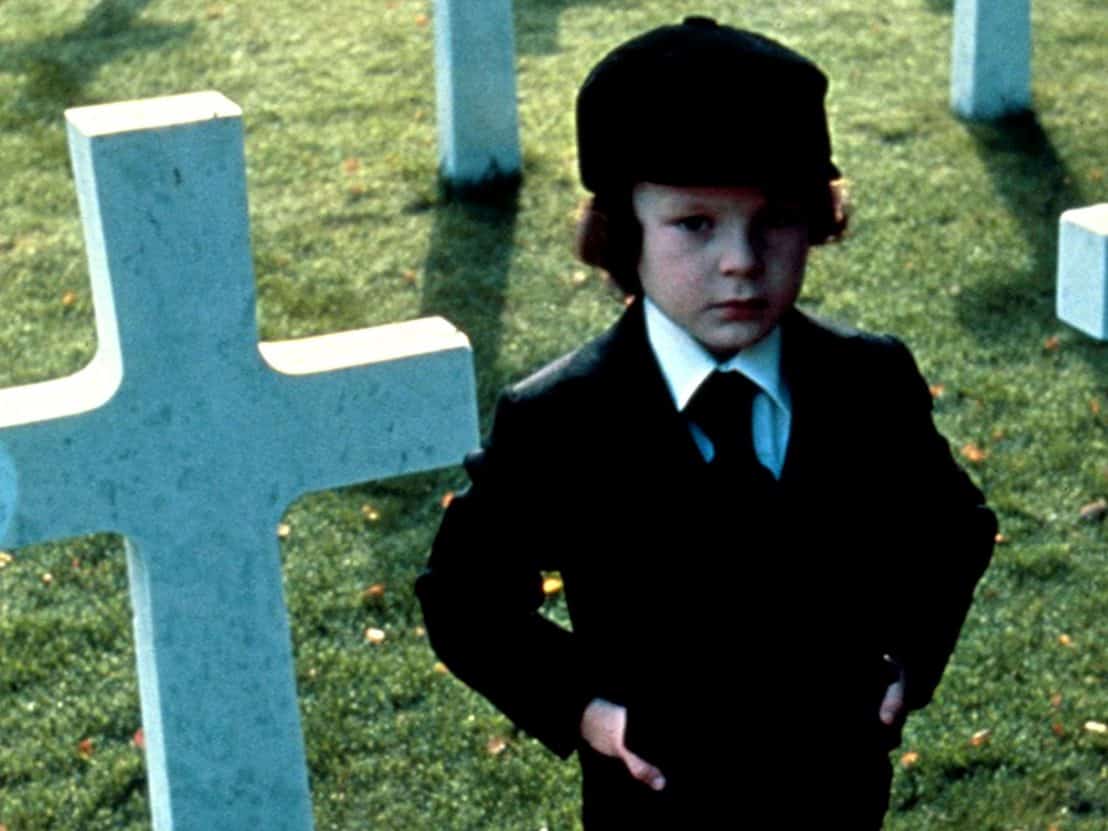
Richard Donner’s The Omen would redefine the image of the devil on screen while creating its own religious mythology. By drawing inspiration from Rosemary’s Baby and The Exorcist, The Omen would twist our notions of childhood innocence, as the mark of the devil sat beneath the thick black locks of a five-year-old boy.
However, The Omen’s journey to the screen wasn’t without its challenges, with nearly every major studio turning down what was initially titled ‘Antichrist’. When 20th Century Fox honcho Alan Ladd Jr. saw the David Seltzer script, he enthusiastically collaborated with Seltzer and Donner to flesh it out, suggesting a title change and an alternate final scene. These changes would ultimately ensure that Damien’s first outing would spawn a whole trilogy.
The Omen would joyously play with every parent’s worst nightmare: the life of your child versus the lives of others. At the same time, rumours of a deadly curse during production would only strengthen its advertising and box-office pull. However, in the end, it is the audience’s reaction to the devil in kids’ clothing that makes The Omen a game-changer. Often copied but never equalled, Donner’s movie is one of the finest horrors ever made.
The Crypt – the home of classic horror movies
TRICK R’ TREAT (2007)
By Neil Baker
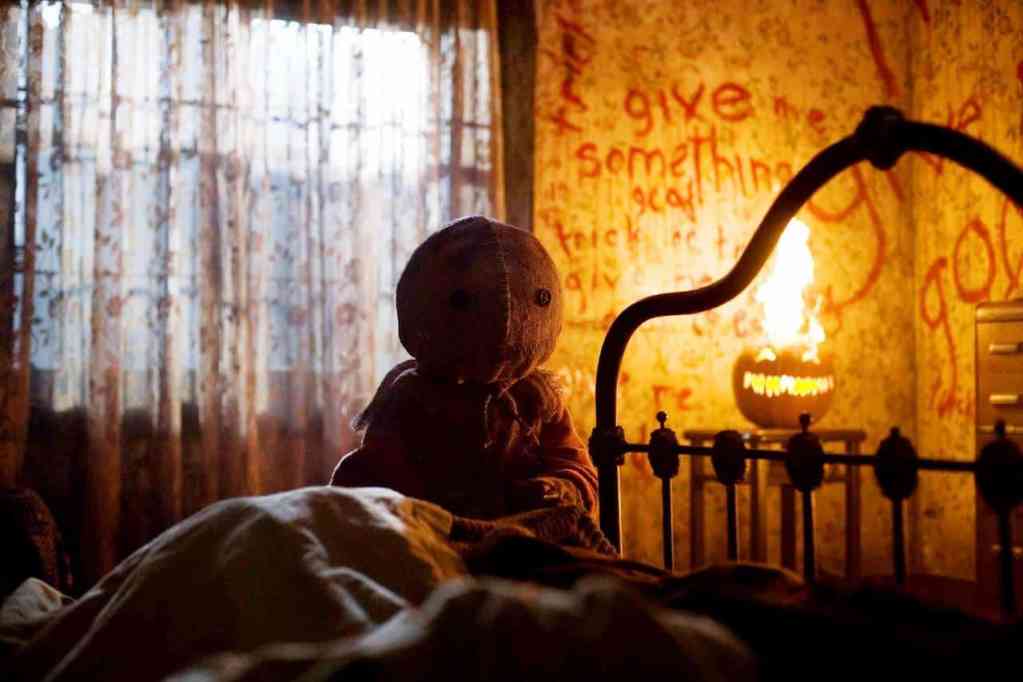
Michael Dougherty’s Trick ‘r Treat is one of the best Halloween night movies ever made. Taking clear inspiration from Creepshow, Dougherty’s anthology is filled with dark humour, jump scares, and delicious comic book horror. It’s a sublime blood-soaked homage to EC Comics, ’80s slashers, and ’70s TV horror. However, Trick ‘r Treat is most fascinating when lacing its horror with a nod to A Christmas Carol as we are introduced to one of the creepiest and weirdly cute killers ever committed to film, Sam, the spirit of Halloween past and present.
So grab some pumpkin-shaped snacks, dim the lights and enter a world of glorious Halloween-inspired comic book horror with Dougherty’s Trick ‘r Treat.
THE SIXTH SENSE (1999)
By Neil Baker
Writer Dan Schaffer’s trajectory is marked early in the proceedings as technology, Artificial Intelligence, and humanity converge. The ever-increasing use of smart tech in managing our daily lives sits front and centre alongside the powers that underpin it. Here, the very freedoms we pride ourselves on are slowly consumed in an online world of information, misinformation, and fantasy. Therefore, the themes at play in Peripheral are both timely and essential.
But, unfortunately, also too big for the story at hand. Peripheral has a glaring problem: it fails to take these themes in new and creative directions on-screen, with much of the film’s potential lost at sea through poor characterisation and lazy clichés.
The Crypt – the home of classic horror movies
SAINT MAUD (2019)
By Neil Baker
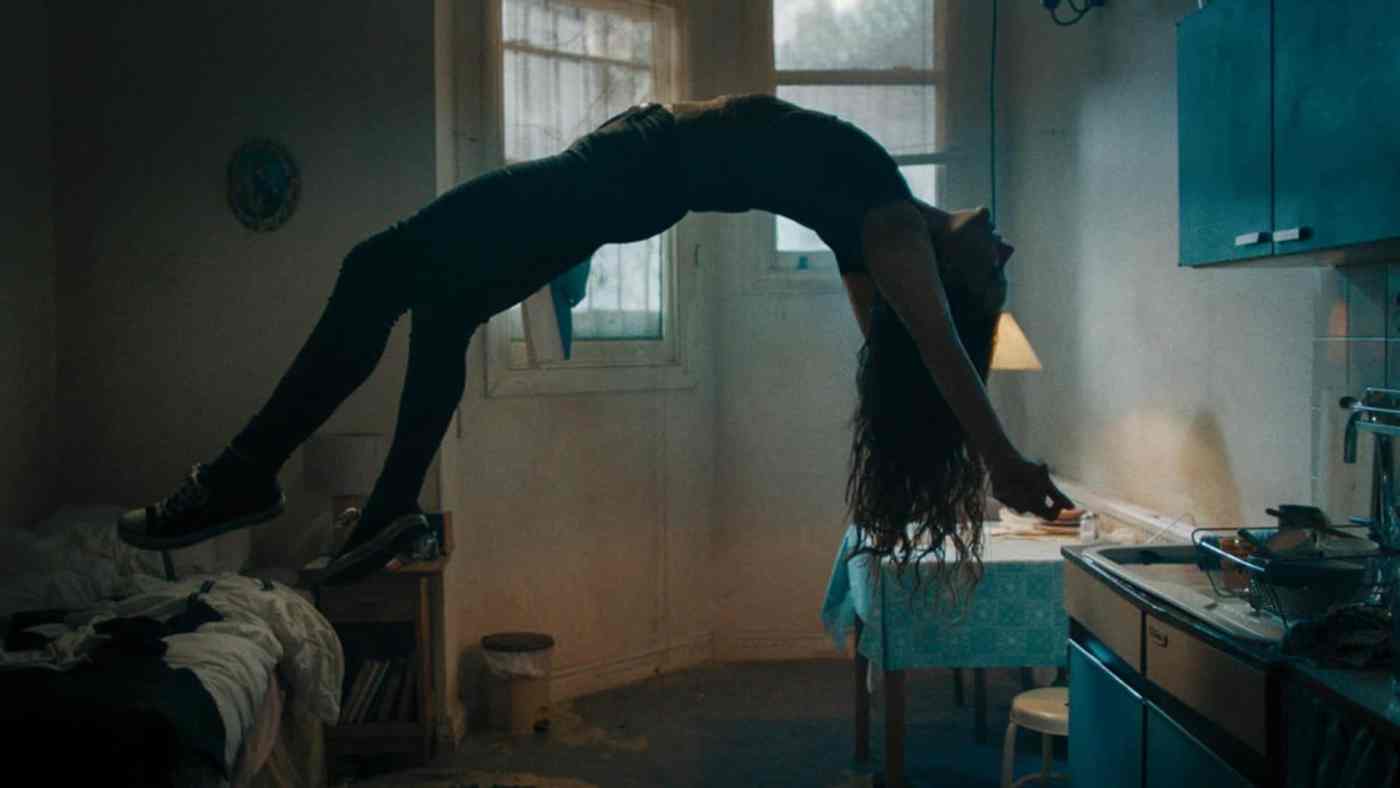
What do you get if you mix the tense atmosphere of Taxi Driver (1976) with the cutting horror of Carrie (1976) and Repulsion (1965)? The answer lies in the razor-sharp psychodrama and terror of Rose Glass’ debut feature, Saint Maud—an exquisite exploration of religious extremism and twisted reality. Glass asks us to question the grey area between empathy and horror by weaving a complex web of mental decline. The result is a visual and auditory journey into hell that slowly eats away at your nerves as we follow a young, troubled nurse into a rabbit hole of terror, extremism, self-harm and social isolation.
We enter Rose Glass’s rabbit hole of terror, surrounded by the glistening lights of a British seaside town, but as we crawl deeper, the lights fade, and the way out becomes unclear, forcing us further into the darkness. The interface between Maud’s reality and her inner torment becomes increasingly blurred as we approach the shocking and heart-pounding finale. Morfydd Clark’s ‘Maud’ plays with our empathy through her vulnerability and apparent innocence. While Jennifer Ehle’s Amanda is spiky, demanding, and challenging, but equally vulnerable. Both characters share mental and physical weaknesses, as they suck us into a psychodrama of exquisite performances.
The dark and dangerous dance between the two women is set against Ben Fordesman’s stunning cinematography and Paul Davies’s creeping sound design. However, it is Rose Glass’s inspired direction that makes Saint Maud one of the best horrors of the past decade. Glass balances objectivity and subjectivity, allowing us to enter Maud’s damaged world of religious extremism while also observing from the sidelines as her world falls apart. Saint Maud is nothing short of formidable, terrorising our minds as its complexity engulfs us in a tsunami of terror.
NEAR DARK (1987)

By Neil Baker
Near Dark may not have achieved commercial success upon its 1987 release, but it has since become a cult classic. Kathryn Bigelow’s 1987 vampire western would blend horror and romance with the classic road movie, creating a unique vampire film that gave birth to a whole new style of cinema. Beneath its vampiric horror, Near Dark explores themes of family, belonging, and personal identity as Caleb Colton joins a nomadic vampire clan, his past human life colliding with his new existence.
Bigelow’s film shares many similarities with classic LGBTQ+ dramas, as it explores the importance of found family for those cast as outsiders. Much like The Lost Boys, Near Dark is a fascinating queer horror, despite never being labelled as such. Coupled with a score by ‘Tangerine Dream’, Bigelow’s nomadic vampire classic would inspire many films and TV shows, from First Blood to Bones and All. Like The Lost Boys, which was released the same year, it would reinvent the vampire and shift the vampire narrative towards something gritty, human, and bold.
The Crypt – the home of classic horror movies
BRIGHTBURN (2019)

By Neil Baker
Everyone from here to Krypton knows Superman’s origin story: an alien baby boy sent to Earth from a home planet facing imminent destruction. The baby’s spacecraft crashes into a cornfield, where a childless couple adopts and raises him. In Superman, the child’s superhuman abilities become a force for good as he grows into adulthood. But what if this journey had a different ending? What if the child was full of fear and anger, their destiny pre-planned by an alien race hell-bent on invasion? Brightburn may have the answers.
By merging the story of Superman with The Omen, David Yarovesky, James Gunn, Brian Gunn, and Mark Gunn have the utmost fun placing Superman’s abilities in the hands of a confused and hormonal teenager. As in The Omen, the child’s loving parents are forced to face the horrific realisation that they have harboured a killer as Brandon (the brilliant Jackson A. Dunn) murders everyone in his path.
VILLAGE OF THE DAMNED (1960)

By Neil Baker
Based on John Wyndham’s novel “The Midwich Cuckoos,” themes of fear, community invasion, isolation, and change surround Wolf Rilla’s stunning 1960 slice of British science fiction horror, Village of the Damned.
Set in the English village of Midwich, Village of the Damned quickly introduces us to an unnerving mystery as the entire town falls into a strange, deep sleep for several hours on a warm summer afternoon.
After they wake, the women of childbearing age soon discover they are pregnant and duly give birth to a host of children who all look similar. Each kid has piercing eyes, super intelligence, platinum-blonde hair, and telepathic and telekinetic powers that manipulate and control the villagers around them through a hive mind.
Rilla never delves into who these children are or what they are; instead, Village of the Damned is a science-fiction exploration of social change following World War II. From its twisted portrait of the perfect Aryan race to a reflection of late 50s and early 60s social paranoia, Village of the Damned is a masterclass in socially reflective horror.










Follow Us