


Adolescence isn’t easy, from raging hormones to peer pressure and the need to find your place in a world that is just beginning to open up. Turbulent Teens brings you 25 unmissable movies exploring the rollercoaster of adolescence, tackling themes ranging from rebellion to sex, and peer groups to puberty.
Jump to a film
1. Harold and Maude (1971)
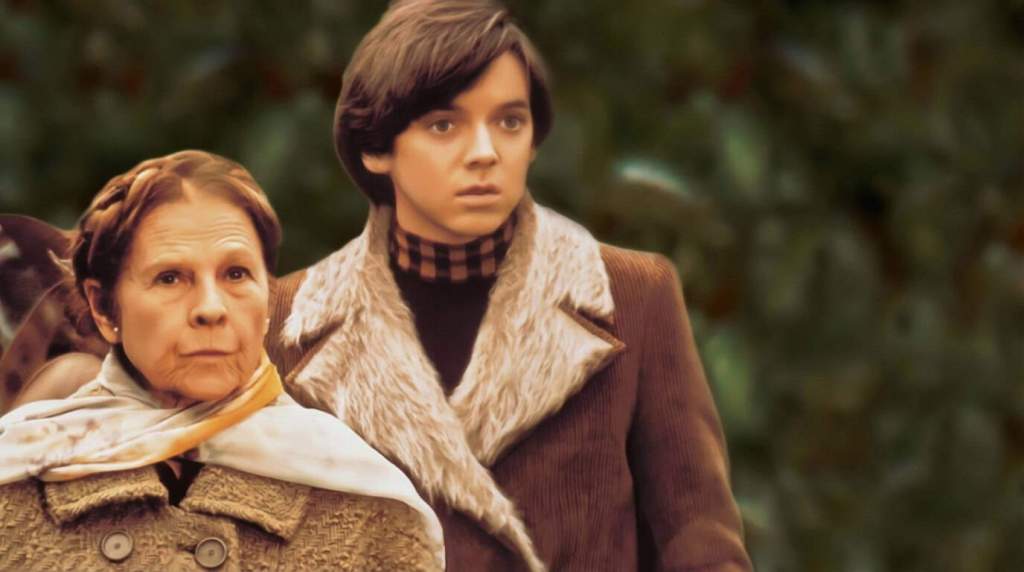
To say Harold Chasen’s life is turbulent is an understatement; after all, he spends all his time devising new suicide scenarios while taunting his emotionally distant mother (Vivian Pickles). Harold (Bud Cort) is disturbed! But he is also looking for something we all seek at one time or another: the meaning of life.
Upon attending an individual’s funeral, he doesn’t know, Harold meets 79-year-old Maude (Ruth Gordon). Maude is a live wire —eccentric, kind, and mysterious —and to Harold, she is magnetic and beautiful. As Harold and Maude grow closer, they slowly become one as they explore the meaning of life and the foundations of love, friendship and companionship.
Harold and Maude may have bombed at the box office, but it has since earned cult status thanks to its wickedly sharp comedy, incredibly tender love story, and humanism. Alive with the music of Cat Stevens, Harold and Maude is a hilarious, heartbreaking, beautiful, and rare film that carries a deep, significant meaning —one that continues to resonate as two souls find each other in the right place at just the right time.
2. The Outsiders (1983)

Based on the 1967 novel of the same name by S. E. Hinton, Francis Ford Coppola’s The Outsiders would launch the so-called ’80s Brat Pack. But despite a who’s-who of talent on screen, including Emilio Estevez, Rob Lowe, and a young Tom Cruise, the movie belongs to C. Thomas Howell, Matt Dillon and Ralph Macchio, and to the stunning cinematography of Stephen H. Burum.
Francis Ford Coppola’s exquisite journey into the no-man’s land between childhood and adulthood writhes with themes of class struggle, gang culture, brotherly love and confusion – its razor-sharp commentary a world away from the dulcet tones of Stevie Wonder’s ‘Stay Gold’ that opens the film.
The setting is Tulsa, Oklahoma, and the time period is the early 1960s. Here, two gangs — the Greasers and the Socs — find their allegiances and lives divided by wealth, educational opportunity, and family surname. But that doesn’t stop Ponyboy Curtis (C Thomas Howell) from falling for Cherry Valance (Diane Lane), a soc in all but name. But before you think this is a simple rewrite of West Side Story, Ponyboy’s best friend, Johnny (Ralph Macchio), accidentally kills a soc in self-defence.
Dally (Matt Dillon) gives them cash and tells Johnny and Ponyboy to get out of town, leading them to a dangerous, abandoned church where love, heroism, and tragedy await. The Outsiders is at its strongest when discussing the interface between poverty and opportunity. Here, the fault lines that still divide the United States are laid bare as we witness two boys explore the social barriers and restricted opportunities surrounding them in a story that shares many of the same beats as West Side Story and Rebel Without a Cause.
As Ponyboy and Johnny hide in a church, it’s the poetry of Robert Frost and the words of Margaret Mitchell’s Gone With the Wind that offer solace, the first offering a discussion on the fleeting beauty of youth and the second the nature of chivalry and masculinity. Johnny and Ponyboy are not just friends or gang acquaintances; they are two sides of the same coin and brothers in all but blood.
Turbulent Teens – 25 Unmissable Movies
3. Kes (1969)

Ken Loach’s second feature film, Kes, would see him adapt Barry Hines’ novel A Kestrel for a Knave, working closely with the author to maintain the book’s themes. Here, Loach would explore the British education system and its failure to support working-class children, often forcing them into manual labour despite their skills and abilities.
Influenced by the ‘Kitchen Sink‘ movement and Italian neo-realism, Loach would craft a film bathed in documentary-like realism as he unpicked late ‘60s Britain and the class divide that haunted education, employment and opportunity. Loach beautifully captures the hostile environment surrounding young Billy and the moments of calm and solitude he finds through his Kestral, Kes, as the adult world threatens to derail his freedom. Loach layers Billy’s journey with moments of humour, love, and profound sadness as Kes lays bare the realities of poverty, class oppression and isolation. While we would hope things have now moved on, Billy’s life and Loach’s commentary sadly continue to feel all too relevant in Britain today.
4. Rebel Without a Cause (1955)
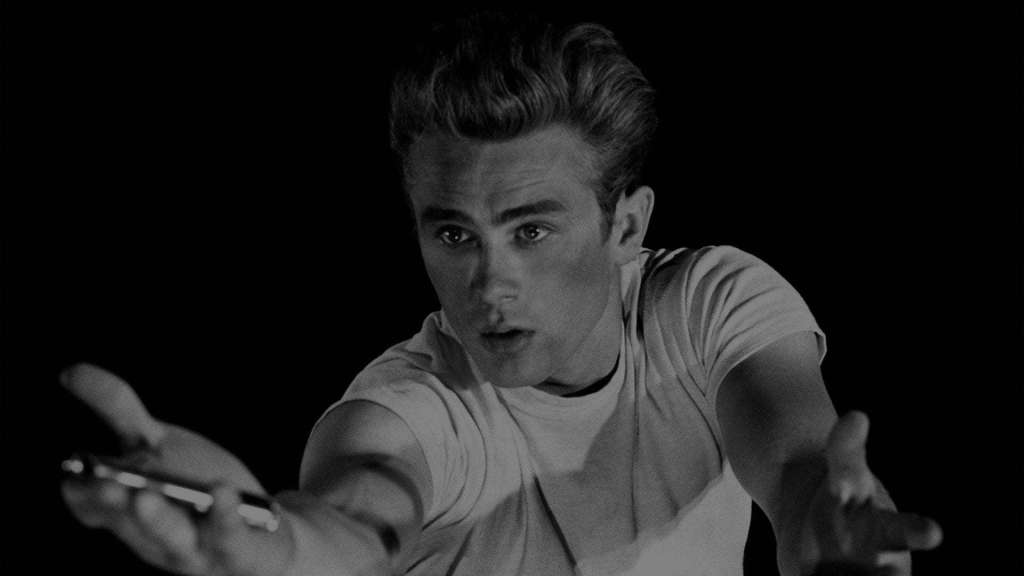
Nicholas Ray’s Rebel Without a Cause was a genuinely ground-breaking attempt at excavating the moral decay of America’s youth while pushing back against the conservative parenting styles of the nuclear family and their psychological effects on the coming generation. The title is adapted from Robert M. Lindner’s 1944 book Rebel Without a Cause: The Hypnoanalysis of a Criminal Psychopath. But Ray’s Rebel Without a Cause would transcend the psychiatric insights of Lindner’s academic study as he explored the social psychology of the newly emerging ‘teenager’ and the perceived adult fears of juvenile delinquency and rebellion.
James Dean perfectly embodies the icon of the ‘youth in revolt’, combining his teenage disillusionment with a fragile masculinity held together tightly by Dean’s masterful performance. It’s an understatement to say that everything in Rebel Without a Cause has significance and meaning – from JD’s continual milk drinking to Plato’s masculine development throughout the film. It’s a surprisingly resistant text to the dominant ideology present in Hollywood at the time, questioning everything from the strength of the Nuclear Family to how masculinity is presented through archetypal male heroes.
Rebel Without a Cause is a seminal text for understanding the rapidly changing American zeitgeist of the 1950s and 1960s, both on and off-screen. Yet, despite multiple Academy Award nominations, the film received mixed reviews upon its opening. Much of this was due to a contentious narrative many perceived as challenging traditional American values. For example, The New York Times would label it “violent, brutal and disturbing.”
However, decades later, Rebel Without a Cause remains a regularly dissected and analysed movie, with many commentators unpicking its themes, from masculinity and queerness to family structures and socio-political discussions. While many films of the classic Hollywood era are touted as ‘ground-breaking’ or ‘revolutionary,’ Rebel Without a Cause is one of the few films that genuinely earns this label.
Ray’s film captures a timeless coming-of-age story that still feels relevant today. It captures a zeitgeist that America may never have grown out of and continues to define its worldview and behaviour. But it also serves as an epitaph of the acting powerhouse that was James Dean, in what is undeniably one of his greatest performances. Dean takes the raw vulnerability of youth and his character’s fractured masculinity to a new level. The result places him alongside Montgomery Clift and Marlon Brando as a leading pioneer of a method-acting approach that wowed a new generation.
Turbulent Teens – 25 Unmissable Movies
5. The Dreamers (2003)
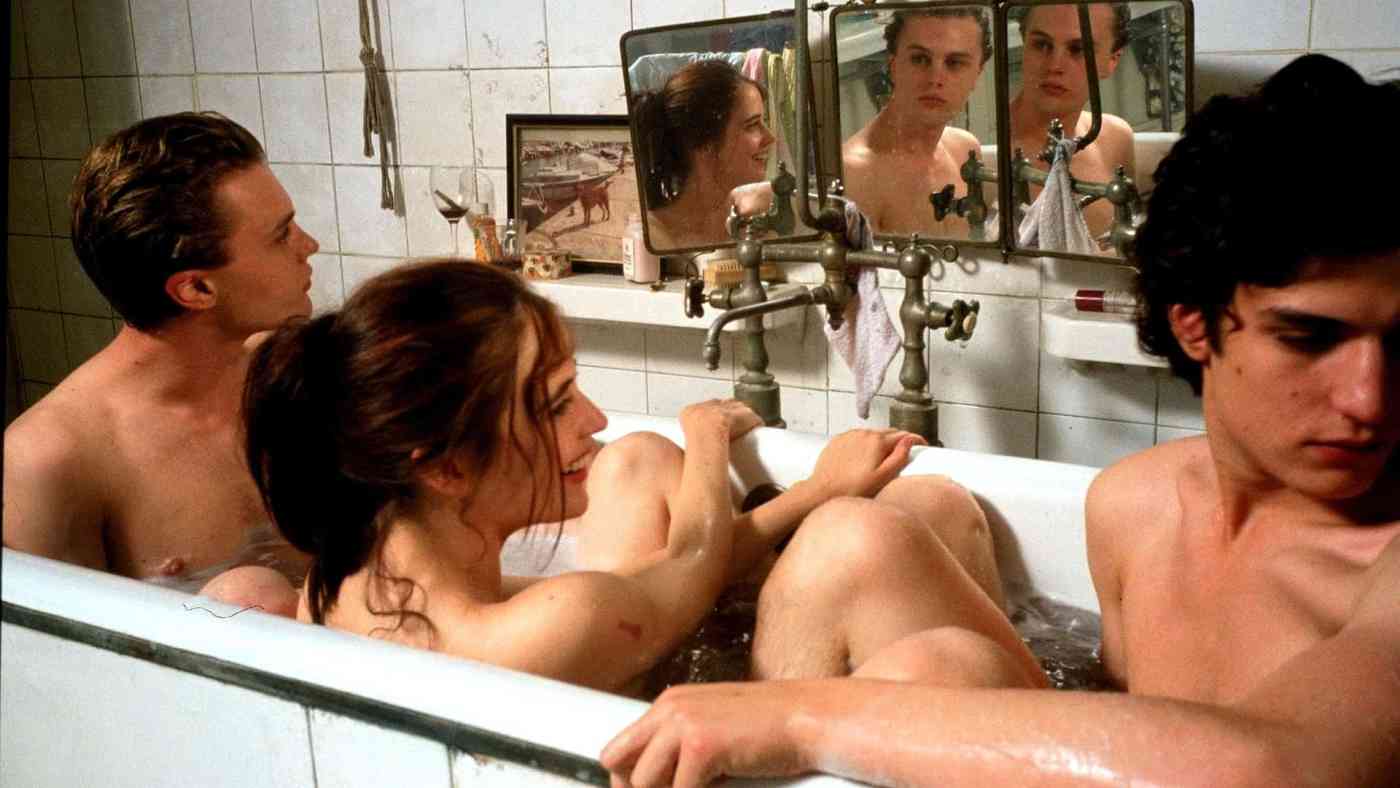
The ’60s would see a new generation define the Western world’s cultural landscape. This new generation was bold, creative, and driven by a collective need to break free from the sterility of the past. They rebelled against their parents’ view of the world and challenged traditional political thinking, while also giving birth to a new form of cinematic art and expressionism.
Bernardo Bertolucci’s The Dreamers is set during the student protests and riots that engulfed Paris in 1968, but this is no ordinary coming-of-age story of rebellion. Bertolucci’s narrative about art, film, and personal reinvention is driven by hormonal energy and sex. It’s about the need for escape and belonging, and the rebellious urge to redefine the boundaries of sex and love, as we follow Matthew (Michael Pitt), an American exchange student, and the free-spirited twins Théo (Louis Garrel) and Isabelle (Eva Green).
Alive with hormonal energy, excitement and uncertainty, Bertolucci captures the vibrant colours of youth in a way few films have managed through the heat of infatuation and the joy and pain of sexual discovery. The Dreamers eloquently plays with expressionism and escape, and is never afraid to explore the blurred lines between art, sex and cinema as American conservatism meets European liberalism on the streets of Paris.
6. Eighth Grade (2018)

Eighth Grade is unique; it captures a universal perspective on an immensely subjective experience. If you had said before 2018 that a male comedian in his late twenties would perfectly capture the feelings of a female middle-schooler in the online age, many, including me, would have scoffed. Yet, that is precisely what Bo Burnham achieved with his stunning directorial debut.
This treasure was crafted through Bo Burnham’s comedy routine over many years as he grappled with themes of sexuality, the sense of self, mental illness, and anxiety amidst an online audience. Maybe for that reason, Eighth Grade is one of the most anxiety-inducing films I have ever watched, a trait typically reserved for terrifying horror or heart-pumping thrillers. Of course, for some, Eighth Grade is a horror as it puts the terror of mingling as a teen on full display, with a grossly honest depiction of how truly awkward adolescence is.
In interviews, Burnham commented on the importance of the eighth grade (Year 9 in the UK) as a crucial year for forming self-awareness, and perhaps that’s what makes the film strangely terrifying. We walk alongside Kayla Day (Elsie Fisher) as she struggles with social connections, yearns to return to childhood and desperately seeks adult experiences. It is as if Burnham somehow bottled the modern essence of being thirteen before releasing it on an unsuspecting audience. The way that Kayla, Olivia, and Gabe interact is authentic, as are the anxieties and uncertainties with an internet-age bow.
However, for all of Burnham’s mastery, newcomer Fisher was the real star. Bo decided on Elsie because “she was the only one who felt like a shy kid pretending to be confident – everyone else felt like a confident kid pretending to be shy.” That statement alone reflects the experience of so many of us. I don’t believe we ever stop pretending to be confident – fake it till you make it, right? This is why Eighth Grade is such a heart-pounding experience. It feels like you’ve been dropped into a nightmare from secondary school, and you’re perpetually in fight-or-flight mode. You desperately want to reach out and tell Kayla, “This will pass,” just as you wished someone had told you the same.
One of Eighth Grade’s most fascinating assets to this day is Anna Meredith’s soundtrack, where scenes pulsate with electronic melodies and technological sonnets. In Meredith’s musical world, each sound underscores the emotions that Kayla emits throughout the film to her online audience and friends. But when she finally speaks with her dad, it’s silent, her fire-side chat with Mark (Josh Hamilton), the film’s beating heart.
7. White Squall (1996)
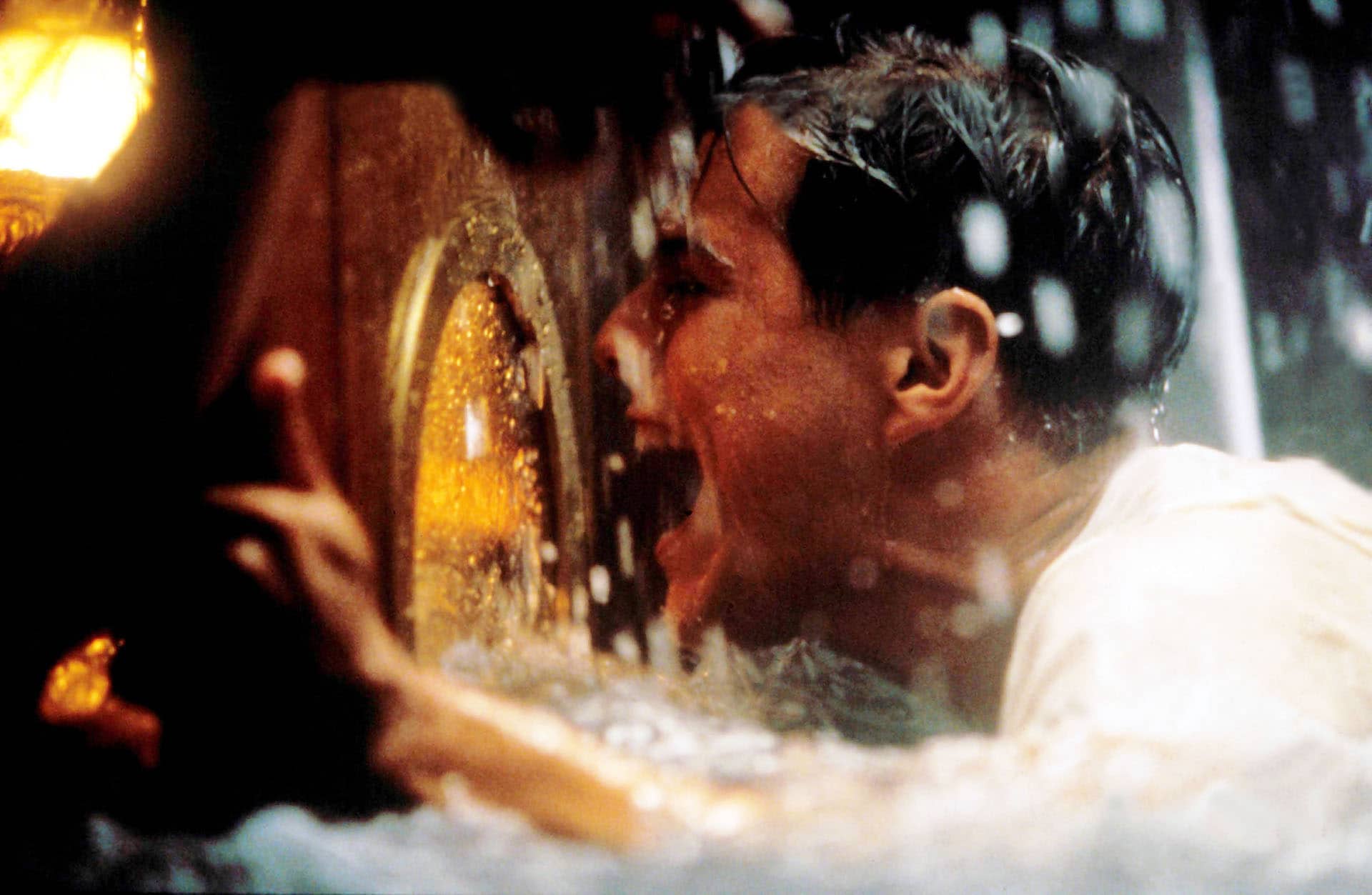
Some films vanish without a trace for no real reason, and White Squall is one of those movies. Directed by Ridley Scott with an all-star cast of up-and-coming actors, including Scott Wolf, Ryan Phillippe, Balthazar Getty, Jeremy Sisto and Ethan Embry, White Squall should have knocked the ball out of the park on its theatrical release. However, despite being led by Jeff Bridges, Caroline Goodall, and John Savage, and distributed by Hollywood Studios (Disney), White Squall was the second Ridley Scott movie to flop in a row, following 1492: Conquest of Paradise (1992).
In 1961, thirteen teenage boys set off for a year in the Caribbean on the Ocean Academy Albatross schooner. Under the guidance of their Captain, Christopher Sheldon (Jeff Bridges) and his wife Dr Alice Sheldon (Caroline Goodall), the boys would learn teamwork, mathematics, seamanship and more as they worked together across the Ocean. However, in 1961, the Albatross was hit by a reported White Squall, and the boy’s journey and education ended in tragedy. Scott’s fictionalised account of the journey plays fast and loose with the facts but is elevated by the outstanding performances of its young cast.
White Squall is, in essence, a coming-of-age movie about the bonds of brotherhood, the expectations of masculinity that are often difficult to navigate in youth, and the desperate need to escape to find oneself.
Turbulent Teens – 25 Unmissable Movies
8. Days of the Bagnold Summer (2019)
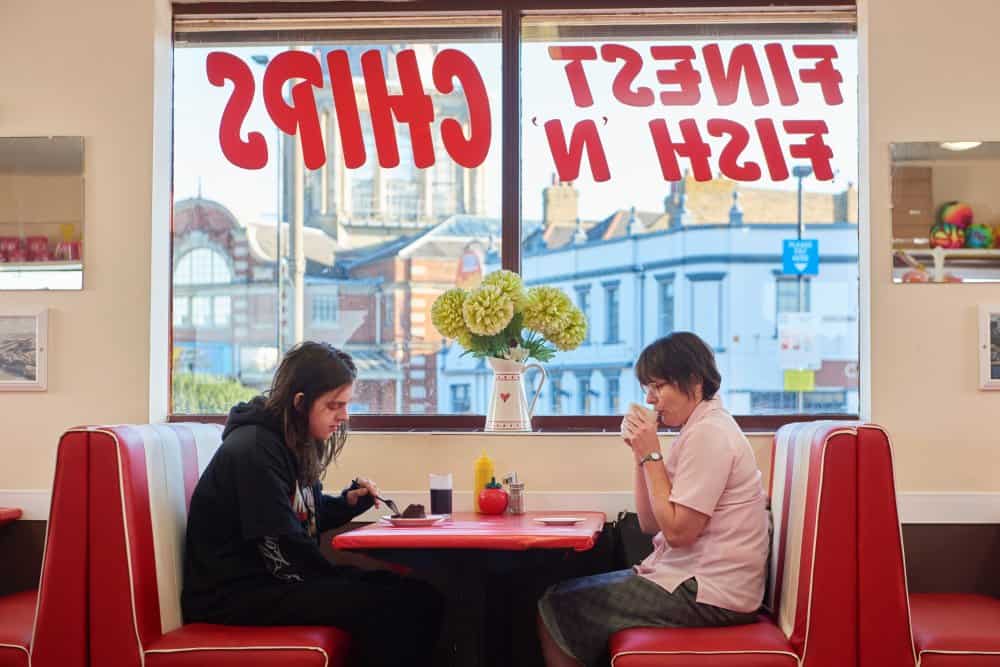
Do you remember the long summer holidays away from school at the tender age of 15? As we grow older, many of us now look back on those summer breaks through rose-tinted glasses, but they were often painful, disappointing, and challenging for both our parents and us. During those forced holidays, our hormonal confusion and desire for freedom clashed with relentless boredom and frustration, leading to uncomfortable conversations, brief moments of pleasure and embarrassing excursions.
The reality of those long summer vacations is rarely reflected in film, with many movies opting to tell us tales of rebellion, defiance, sex and drugs over teenage life’s tedious and frustrating realities. Simon Bird’s Days of the Bagnold Summer joyously breaks that convention. Bird offers us a delightfully intuitive comedy as we follow mother and son, Sue and Daniel Bagnold (Earl Cave and Monica Dolan), during a lazy, challenging and transformative summer holiday. Bird celebrates the uneasy, uncertain love between a mother and son as adolescence takes hold, reflecting an unspoken reality: adolescence and midlife both suck!
9. The 400 Blows (1959)

François Truffaut’s autobiographical debut remains one of the most powerful, sublime and cutting explorations of youth committed to celluloid; it is a masterpiece that leaves an enduring mark. Antoine Doinel (Jean-Pierre Léaud) is a troubled boy from an unhappy home who steals to pass the time, is a truant, and sits on the periphery of society, never fitting the expectations or rules adults impose. For a class assignment, Antoine copies a passage from Balzac’s Quest of the Absolute (1834) to tell the story of his grandfather’s death. However, his teacher doesn’t celebrate his appreciation for literature or his creativity in using and adapting the text; instead, he punishes Antoine, pushing him further to the edge and out of school.
From this point on, Antoine’s life is caught in a spiral that sees his mother, stepfather, and community continue to fail him as a detention centre for troubled young people comes into view. Nobody celebrates his love of literature, art or life, and no one sees beyond the “troubled” label he has been given. Antoine’s only saviour will be himself if he can escape the repressive and restrictive adult world surrounding him. As Truffaut’s film ends, that escape comes into view, the possibility of a new beginning shining through the darkness.
Les quatre cents adopts first-person filmmaking, giving birth to the French New Wave. But for all its artistic prowess and power in shaping films to come, the lived experience behind Truffaut’s film remains its most compelling element, as Truffaut invites us to explore the pain, rejection, and confusion of his youth through Jean-Pierre Léaud’s naturalistic performance.
Turbulent Teens – 25 Unmissable Movies
10. Once Upon a Time in America (1984)

Sergio Leone’s epic tale of friendship, betrayal and revenge is possibly one of the finest Depression-era dramas ever made. Yet despite his swan song picture receiving a raucous 20-minute standing ovation at Cannes, it earned just $5.3 million on a $30 million budget, making it a box-office flop. This may be why this razor-sharp exploration of immigration, isolation, economic depression and crime is so often overlooked.
Once Upon a Time in America is as emotionally relentless as it is gritty and beautiful, as we follow a group of friends, Noodles, Patsy, Max, Cockeye and Dominic, from early adolescence to adulthood in the developing New York City. Leone opens the film with four streetwise kids who understand the hidden rules of New York’s backstreets. The kids thrive and survive on a mix of low-level crime and violence, protecting each other from the dangers of the adult world that swirls around them. These are the children of immigrants, their lives caught in a trap of self-preservation and social isolation defined by identity, position and class – the only escape route achieved through power, notoriety and status. However, this escape route is built on a child’s view of the world, with little understanding of the long-term costs of their actions.
As they grow into adulthood (Robert De Niro, James Woods, William Forsythe, James Hayden), the scale and nature of their crimes, along with the brief notoriety they receive, are shrouded in an atmosphere of impending doom. After all, power eventually fades, and criminal success can quickly turn to individual tragedy.
Despite the film’s overarching darkness, Leone’s Once Upon a Time in America transcends the boundaries of the classic gangster movie. Leone delivers a beautifully framed exploration of how the choices we make in our youth shape the trajectory of our adult lives. The final scenes are wrapped in memories that can’t be changed, disagreements that can’t be healed, and friendships that died because of a need for position, status, and survival.
Turbulent Teens – 25 Unmissable Movies
11. Dazed and Confused (1993)

It’s the final day of school during the summer of 1976 in Austin, Texas. As the classrooms empty, nervous junior high graduates face the horror of “hazing” by a group of seniors led by O’Bannion (Ben Affleck). This ritual involves a paddle and a derrière, protected only by a thin layer of denim.
Richard Linklater’s masterpiece perfectly encapsulates the changing teenage subcultures of ’70s America through a cloud of weed, exhaust fumes, peer pressure, and booze. Like American Graffiti many years before, Linklater explores the transition from school to adult life while reflecting on the final years of a dramatically changing youth culture. This is America before the sharp transition to a 1980s culture of capitalism, personal wealth, power and possessions. It’s a culture bound together by emerging women’s liberation, initiations, peer group belonging and bonding. Here, the prerequisites of popularity are defined not by what you have but by how cool you are in the eyes of others and your musical tastes.
Like the smoke from a joint riding on the light summer breeze, we watch as one night unfolds, a night not unlike many others but captivating all the same, in a movie that feels as directionless and cool as the teens at its heart.
12. A Love Story (1970)

Few films encapsulate the emotion and intensity of teenage life like Roy Andersson’s beautiful and complex tale of young love in ’70s Sweden. Anderson tenderly explores the first throws of love, jealousy and emotion against a backdrop of dysfunctional family life. In A Love Story, the beauty of Bergman dovetails with a darkly comic, tender coming-of-age tale that demonstrates how family life shapes and affects the life chances of young people. However, for all its visual beauty, it is the film’s realism, particularly in its exploration of first love, sex, and emotional development, that makes it a work of art.
Often overlooked, A Love Story is undoubtedly one of the most beautiful explorations of first love ever brought to the screen. Anderson’s tale carries a Romeo-and-Juliet-inspired intensity as two young lovers meet, fall apart amid family struggles, and attempt reconciliation in one of the best coming-of-age movies ever made.
13. Spud (2010)

Donovan Marsh’s adaptation of John van de Ruit’s best-selling coming-of-age comedy, Spud, could be described as a South African Adrian Mole. But there’s so much more to this film than the painful and awkward trials and tribulations of puberty. Marsh’s film is about discovery, identity, self-worth and, above all, friendship. Young John Milton (Troye Sivan) is underdeveloped for his age and has yet to find solitary hair under his arms, let alone anywhere else! However, to make things worse, he is a working-class boy from a loving but dysfunctional family, about to attend a middle-class boarding school.
As Milton is dropped off at the gates by his dad, he knows his size could be his undoing. As he joins the raucous dorm, it’s not long before he is christened ‘Spud.’ But at least he isn’t the only different kid; Gecko (Jamie Royal) doesn’t fit either, and the two quickly become friends. Then there’s his English teacher, the unpredictable, unconventional, but fascinating Mr Edly (John Cleese), also known as The Guv. As South Africa changes, new friendships and relationships emerge, and as an alcoholic teacher becomes a mentor, Milton slowly but surely finds the confidence he never thought he possessed.
With an exceptional performance from the young Troye Sivan, alongside a sublime ensemble cast, Spud is a pure delight. Yet, despite the expertly timed comedy and endless heartfelt emotion, Spud is a movie that never made the much-deserved splash it deserved here in the UK.
14. Boyz n the Hood (1991)

John Singleton’s uncompromising exploration of inner-city life for young African Americans not only broke the glass ceiling but also took a sledgehammer to it, creating one of the most influential and important films of the 1990s. While many may argue Boyz n the Hood is a typical coming-of-age film of the period, nothing could be further from the truth. Here, Singleton’s movie not only embraced the spirit and drive of Spike Lee’s Do the Right Thing (1989) but further explored the reality of inner-city life for African-American teens in the early 1990s.
Singleton would directly confront systemic racism, neglect, and police/community relations at a time when the Rodney King case only further highlighted the institutional racism still rampant in American society. Boyz n the Hood would be the first of several movies from Singleton exploring race and culture in the United States, and it remains his finest work.
Turbulent Teens – 25 Unmissable Movies
15. Lean on Pete (2018)

Andrew Haigh’s Lean on Pete is a stunning exploration of one young man’s journey through the emotional, social, and personal turmoil of family breakdown and neglect. Haigh’s tale of modern America and the relationship between family, community, and opportunity is challenging, relentless, and rooted in conversations about the social divisions of the United States. Through the journey of Charley (Charlie Plummer), Haigh captures the loneliness and isolation of teenage life, as well as the devastating realities of childhood poverty and neglect, as we follow Charley and an ageing racehorse named Pete.
Plummer’s performance is stunning as he delicately explores the coming-of-age process through the eyes of a hurt and isolated young man who has lost all trust in humanity. Charley’s only peace, calm and solace comes from an animal who listens without judgment. But, as Charley discovers, the world is far from a forgiving place, and no matter how far and how fast you run, we all have to face the demons of our past eventually.
16. Léolo (1992)
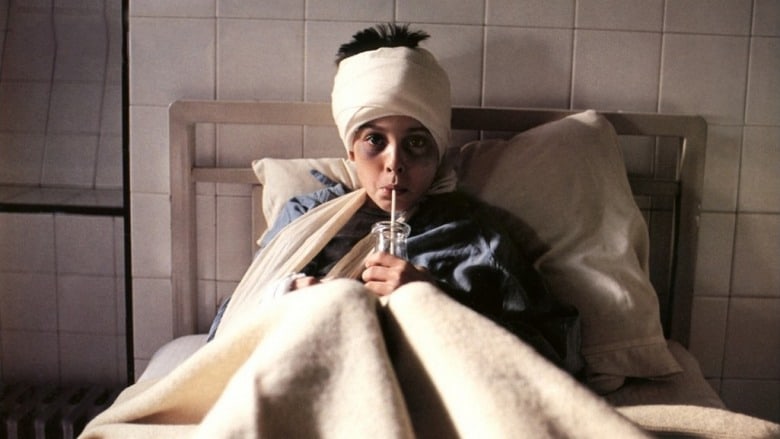
Whether Jean-Claude Lauzon‘s French-Canadian film is a dark fantasy or a powerful exploration of adolescent mental health, sexual discovery, and dysfunctional family remains debatable. Lauzon’s film shifts between Léo’s fantasy world and the darkness of the real world surrounding him. His imaginary world is full of childhood fears, comedy, fantasies and uncertain but exciting new sexual thoughts. At the same time, his external world is rooted in fragmented family relationships, declining mental health and community isolation.
While Lauzon’s film may initially inhabit Italian-inspired dark comedy, Léolo takes a much more serious turn as we realise that Léo has no choice but to live in the fantasy world of his writing, the real world far too painful and upsetting for his young mind. As Léo says, “Solitude is my castle. That’s where I have my chair, my table, my bed, my breeze and my sun. When I sit anywhere but in my solitude, I sit in exile. I sit in Fakeland. Because I dream, I’m not”. Here, Lauzon offers us a profoundly challenging and complex portrait of adolescent mental health and escapism through the often grotesque dream-like state of a boy trying to make sense of an incomprehensible adult world.
17. Footloose (1984)

It’s the film that launched Kevin Bacon into the stratosphere, the soundtrack that is a must-own album, and a movie with an ending that leaves your heart full of joy. Herbert Ross’ Footloose was a box office smash despite being mauled by more than a few critics in 1984, and it’s easy to see why as Kevin Bacon taps his feet and shakes his hips in skin-tight denim against a Midwest American backdrop and a score of ’80s pop bangers.
However, underneath the denim and dance, Footloose is a story about community, censorship, oppression and unresolved grief. It’s the story of how adults, religious groups and communities often choose to blame art, film and music for the apparent problematic behaviours of their kids, while allowing adult sins to fester out of sight. Even more surprising is that this tale of an insular, religious small town where dancing was illegal was based on the real-life story of Elmore City, Oklahoma. Home to less than 1,000 people, Elmore was a dance-free town until 1980! For 95 years, the town believed that “no good ever came from dance,” until a group of young people finally stood up and said, “Why?”
Originally titled “Cheek to Cheek”, writer Dean Pitchford would take the Elmore City story and mould it into a modern pop musical, one that would, in many ways, pave the way for Top Gun in 1986. As a result, it’s the music and the pop-video-inspired set pieces that many people remember from Footloose, from Kenny Loggins‘ signature track to Bonnie Tyler’s “Holding Out for a Hero” and Deniece Williams’ “Let’s Hear It for the Boy.”
But beneath the pop sits the tale of Rev Shaw Moore (John Lithgow), his wife Vi (Dianne Wiest) and daughter Lori (Ariel Moore), none of whom have ever recovered from the death of their son and brother in a tragic road accident. Following his son’s death, Rev Moore encouraged the town council to ban dance, a knee-jerk reaction that sought to apply blame for the accident on a party the kids were travelling home from when their car left a bridge. But when the out-of-town Ren McCormack (Kevin Bacon) arrives with his dancing feet and passion for music, Rev Moore and the town council face a challenge as Ren plans to hold a school dance not seen in the town since the tragic accident years before.
From ’50s debates about the corruption of rock n’ roll to ’60s conversations about the promiscuity of pop and ’80s fears of video nasties, public panic concerning the young often targets art. Frequently, these public outcries are based on nothing but hearsay, whispers, and press-induced outrage, serving as a shield for conversations about the real horrors of our human world.
For example, while the Catholic Church encouraged its followers to worry about condoms becoming the norm, countless children were abused behind closed doors. At the same time, while violent men beat up their wives with no fear of repercussion, society was encouraged to worry about the gay men who might convert innocent boys to their demonic and effeminate ways. Public panic and moral outcry have always, and will always be, a tool to divert attention from society’s real problems, using minority groups, young people and the powerless as scapegoats. Footloose beautifully and powerfully portrays this truth. In this small Midwestern town, some young men call those who don’t fit their hyper-masculine mould “faggots” and hit their girlfriends freely, while the town worries about dance!
Like Pastor Skip in Saved! (Next film listing) Lithgow’s Rev isn’t a bad man; he is an adult who hasn’t dealt with his own shit and uses religion as a tool of control to make himself feel better. His unresolved grief is something everyone must suffer until he realises that this misuse of power often leaves others free to implement their own misguided rules. In a pivotal scene, Moore sees townfolk burning books they believe could corrupt the young, just as dance does. This raises a moral question: if the good Rev believes dance should be banned, then surely words, pages, and thoughts can be removed as well to maintain order. At this point, Moore knows he has gone too far, allowing Ren’s dance to proceed as his own healing journey finally begins.
Footloose raises essential questions about the power many religious figures wield in imposing rules that, more often than not, relate to their own unresolved and hidden issues. Dance isn’t an immoral act; it’s a gift. Footloose is also an early-1980s gift that many mistakenly label a simple teen musical, altogether missing the point of its essential messages on freedom versus control and inhibition versus freedom of expression.
18. Saved! (2004)

On the surface, director Brian Dannelly’s Saved! would appear to be your standard teen high school comedy, with popular kids, geeks, outcasts and rebels all taking their place on the traditional High School stage. But Saved! is far from your average teen comedy; like Footloose (previous film listing), it’s an exploration of religion, community control, and the need to allow young people to forge their own path in establishing who they are, what they believe, who they want to be, and who they want to love.
As the summer sun beats down on small-town America, we meet the passionate evangelical ‘good girl’ Mary (Jena Malone). Mary’s life is all about God, Jesus and the Christian Jewels (a popular religious clique at school who organise events and sing in assemblies). Even Mary’s mum (Mary-Louise Parker) symbolises spiritual perfection, as the No. 1 Christian interior decorator. But Mary’s perfect Christian boyfriend, Dean (Chad Faust), is about to drop a bombshell as he announces he might be gay. Suddenly, a giant blood-coloured gay moon eclipses the summer sun, and Mary is filled with a horror she has never experienced. Therefore, Mary takes it upon herself to cure Dean by any means necessary.
Mary’s cure involves extended kissing sessions and breast fondling, but Dean lacks any passion as the gay monster eats away at him. After catching him gazing at a toned male in a dirty magazine, Mary boldly decides to have sex with Dean, who duly uses the magazine images to help his performance. But even this does not cure Dean’s homosexuality, and his parents quickly send him to Mercy House, a Christian boarding school specialising in drug rehabilitation and ‘degayification’.
Knowing she failed in the Lord’s mission, American Eagle Christian High School begins a new school year. But Mary’s world is about to become even more complicated as she discovers the result of her radical attempts to cure Dean. Pregnancy! She can’t tell her ultra-evangelical friends, especially Hilary Faye, who is disgusted by her disabled brother (Macaulay Culkin) having a relationship with the only Jew in school, the rebellious Cassandra (Eva Amurri).
You may be expecting me to praise Saved! for its sharp dissection of religion and the ever-present double standards it represents. Saved! does indeed take a razor-sharp scalpel to the hate and intolerance of many groups who hide behind a thin veil of love and unity. But Saved! also has no intention of ridiculing faith or belief, and it’s here where Dannelly’s movie is ingenious—at its heart, Saved! highlights the ability of all religions to embrace change, diversity and equality if they choose to do so. Like Footloose two decades before, life is an ever-changing dance, and Saved! offers us the hope that religions understand the need to join that dance and embrace its ever-evolving diversity, creativity and joy.
19. The Young and the Damned (1950)
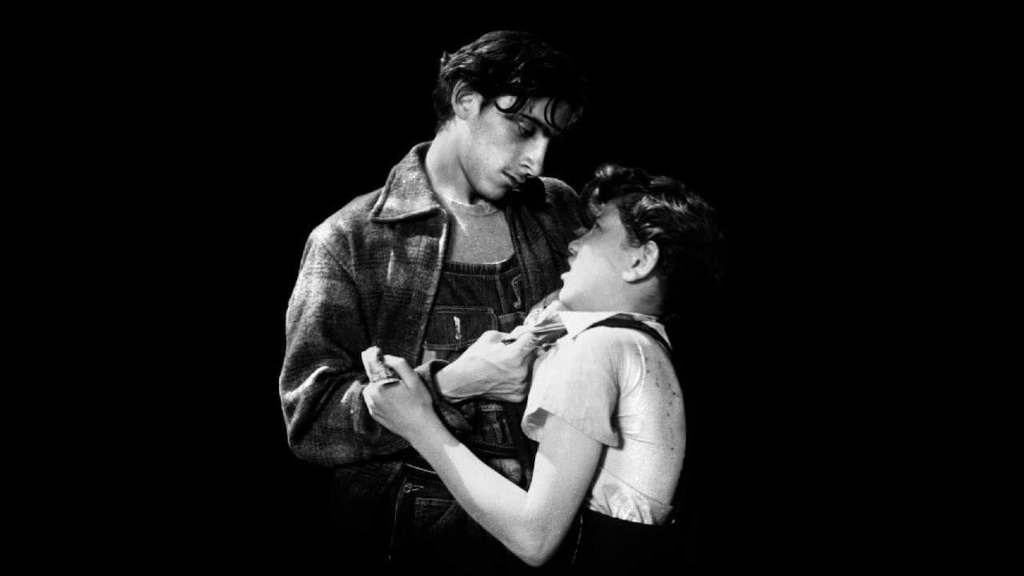
By Agnes Sajti
Highly controversial on its release, Luis Buñuel‘s film is an uncomfortable and brutally honest exploration of the vicious cycle of poverty and crime. Our main characters are pre-teen kids who live in unimaginable poverty and suffer from a lack of parental guidance or adult support. These young adults find it impossible to distinguish right from wrong as they learn from one another. Buñuel explores how extreme poverty strips people of their humanity and degrades their ability to find peace, security and freedom as they grow. However, at no point does Buñuel act as judge or jury. Instead, The Young and the Damned leaves any moral questions and social discussions firmly in the hands of the audience.
Many aspects of Buñuel’s film resemble Italian Neorealism, especially in its conversations about poverty, class construction, and adolescence. Yet The Young and the Damned also carries surrealist undertones wrapped in psychological analysis. For example, when Pedro brutally kills two chickens, the principal of the rehabilitation programme believes he can change Pedro’s behaviour if he is shown love, respect and trust. He believes Pedro’s behaviour is rooted exclusively in his unloving, miserable home environment.
These themes are widely explored in Buñuel’s filmography, notably the question of instinctive behaviour patterns, typically sexual, as seen in Viridiana (1962) and Belle De Jour (1967). Meanwhile, Buñuel’s trademark surrealist imagery also appears in Pedro’s nightmares as Buñuel breaks the fourth wall of cinema.
The result is possibly one of the most depressing and cruel depictions of a futureless youth constrained by social poverty and alienation ever committed to celluloid. There is zero hope for the young people we follow as we realise that their problems lie deep within the roots of social inequality. Here, Buñuel leaves us with a ruthless critique of the issues presented and a shocking dissection of poverty that continues to speak to our modern society.
20. Monos (2019)

As the clouds roll in under the summit of an unknown mountain somewhere in Latin America, a group of teenagers, known as Boom Boom, Rambo, Dog, Smurf, Lady, Swede, Bigfoot, and Wolf, stand staring down at the clouds. Each one is schooled in the art of combat by a short, mysterious man before being gifted a cow for fresh milk. Meanwhile, hidden in the caves beneath their feet sits Doctora (Julianne Nicholson), an American woman held against her will. So begins Alejandro Landes’ beautiful yet haunting tale of young people left to their own devices in a haze of hormones.
Part Lord of the Flies and part Apocalypse Now, Landes creates a dream-like atmosphere while holding the reasons for our young soldier’s mission at a distance. Monos is a study of peer influence, tribal belonging, control and adult indifference – the group’s culture and practices at odds with the cities of their birth. Themes of gender fluidity, sexuality, fear, and unquestioning belief surround each conversation and interaction, the dystopian atmosphere of the camp leading its members down a dark and slippery slope of fragmentation and tribal violence.
Turbulent Teens – 25 Unmissable Movies
21. I Killed My Mother (2009)

In 2009, Xavier Dolan emerged as one of the most exciting young writers and directors of his generation with his debut, I Killed My Mother. Dolan would explore the anger, frustration, and hurt of teenage life through family conflict, unspoken love, and the need for escape, as a mother and son clashed in a dance of independence.
Dolan wrote the screenplay for I Killed My Mother at the tender age of sixteen, and as a result, he conveys the volatility of youth in a way few adult writers could. Themes of family breakdown, emerging sexuality and an urgent need for independence dovetail with the need to escape parental control in a film that understands the complexity and fireworks of the teenage/parent relationship.
22. Mommy (2014)

I Killed My Mother may have announced the arrival of Xavier Dolan, but Mommy would cement his place as one of his generation’s most exciting writers and directors. Mommy would embrace the loneliness and uncontrollable anger of teenage rebellion, as well as the heartbreak of parental support against all odds, through a poignant, emotional, and beautiful story of a mother’s struggle to support her son. Here, themes of isolation, rebellion, freedom, and social imprisonment surround each character as they scream for escape, clawing at the social bars that contain them.
Mommy is Xavier Dolan at his very best, as he challenges the audience with powerful discussions of belonging, love, and despair, through a captivating screenplay and outstanding performances that writhe with emotion and energy. Once seen, never forgotten, Mommy is a modern cinematic masterpiece.
23. Dogtooth (2009)

Dogtooth is NOT your ordinary coming-of-age film. You will not find the empathetic, character-driven sensibility of John Hughes here, nor will you be able to relate to the teenagers’ struggles. It’s a profoundly misanthropic film, but that’s entirely what you’d expect from Yorgos Lanthimos.
A Greek patriarch asserts his dominance over his children through keeping them contained within their family compound, teaching them an alternative view of the world that’s entirely created by him, like a pseudo-God figure. They’re intentionally taught incorrect definitions of words, often pitted against one another in animalistic-like contests of physical strength and endurance. What prevents them from leaving is the fear that the unknown monsters lurk beyond – the only way they can leave is when their ‘dogtooth’ falls out.
This is often regarded as Lanthimos’ breakout film, having screened at the 2009 Cannes Film Festival and winning the Prix Un Certain Regard – it would go on to be nominated for the Best Foreign Language Film Oscar. It’s a film draped in surrealism, both aesthetically and narratively. Also, the relationships between parents and children, and among children themselves, are remarkably complicated, and often their actions speak much louder than words. Lanthimos’ films often preclude any clear meaning or allegory, and thus several readings can be mapped onto his work.
The reading I’ve always subscribed to in Dogtooth is a satirical take on the Edenic myth – the children are taught not to do certain actions, but corruptive outside influences lead them to develop interests that run counter to their father’s wishes. It’s certainly unlike any coming-of-age film you’ve ever seen before – because the children come of age in spite of the father’s attempts to keep them regressed to child-like dogs.
It’s also no coincidence that there is an emphasis on canine metaphors and physicality. There’s a curious link between the children in the compound and the father’s efforts to train the family dog in a pen somewhere in town. Once again, there’s no clear conclusion to be drawn from what Lanthimos shows us, and deciding what we believe his images tell us is all part of the fun.
Turbulent Teens – 25 Unmissable Movies
24. Girl (2018)

Inspired by the real-life story of Nora Monsecour, Lukas Dhont’s debut feature received both praise and criticism following its premiere at Cannes in 2018. The praise centred on Dhont’s urgent and timely exploration of the emotional and physical complexity of transitioning for many young people. In contrast, the criticism centred on his choice to cast a cisgender young man in the lead role. For me, the criticism, while understandable, was misplaced in a film that placed the trans journey centre stage.
Lara (Victor Polster) is a young trans woman passionate about her future career as a ballerina at one of Belgium’s most prestigious dance schools. Like the other girls, Lara has to contend with the school’s strict training programme. But unlike the girls who whisper and gossip behind her back, she is also dealing with the physical, emotional and social transition to the person she knows she is. The medium of film has always carried the power to challenge public perceptions, increase audience understanding and lay bare the complexity of being you in a world that wants you to conform to a set of strict ideas.
Victor Polster’s performance is truly exceptional, making the criticisms levelled at him even more unfortunate. Polster offers a nuanced, profoundly emotional portrayal of a teenager in transition, demonstrating the complexity of emotions and feelings surrounding an urgent desire to embrace the inner and outer self.
Dhont places the powerful emotions surrounding Lara in a ballet world, with body conformity, change, and art woven into a breathtaking and urgent dance toward freedom, self-love, and transformation. Dhont rejects many of the usual clichés found in LGBTQ+ films, as Lara’s father attempts to guide and support her transition while understanding that the journey is outside of his complete control. After all, Lara isn’t just transitioning. She is facing the sexual awakening all teenagers attempt to navigate, one that is all the more complex as she also explores her emerging sexuality in relation to her new gender identity.
25. Mid90s (2018)
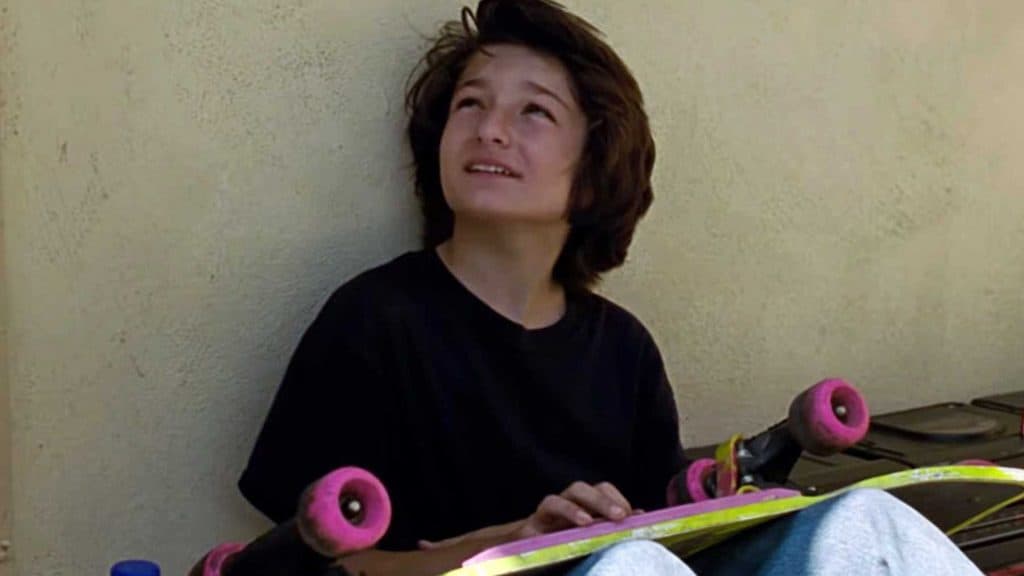
During a long, hot summer in 1990s Los Angeles, 13-year-old Stevie (Sunny Suljic) finds belonging and acceptance among a group of older street skaters as his body changes and his need for independence grows. Stevie is desperate to escape the shadow of his aggressive and conflicted older brother, Ian (Lucas Hedges), and his loving yet distant working mother, Dabney (Katherine Waterston). As Stevie’s bond with his new peer group increases, he finds himself taken on a rollercoaster journey of self-discovery, sex, adventure and tragedy.
Jonah Hill’s Mid90s excels at enveloping its audience in the grain of pre-digital American filmmaking, drawing on the work of Gus Van Sant and Gregg Araki to capture natural performances on screen. Hill primarily employs an unknown young cast to create a sense of realism and documentary-like precision, but Sunny Suljic stands head and shoulders above the ensemble. Suljic reflects not only the joy and discovery of early teenage life but also the anger, naive experimentation and the need to belong at any cost. Here, the role of the peer group as a found family is delicately unpicked through Stevie’s growing social confidence, burgeoning masculinity, and his slow, painful separation from family.










Follow Us