
Beautiful Thing at 25. Jonathan Harvey talks to Neil Baker about the creation, impact, and legacy of his groundbreaking play and film as they celebrate their 25th anniversary.
Let’s take a trip back to the summer of 1996; The Spice Girls were wannabes, Dodgy were wondering whether they were “Good Enough”, and Baddiel, Skinner, and The Lightning Seeds were obsessed with “Three Lions”. Meanwhile, in cinemas, The Muppets were visiting Treasure Island, and aliens were blowing up The White House just in time for Independence Day. At the same time, the political world was rocked by a deadly IRA bomb in Manchester, injuring 200.
For the LGBTQ+ community in Britain, the ongoing fight for equality and representation began to challenge the accepted homophobia in schools, media, and employment, paving the way for some of the most significant changes in LGBTQ+ equality from 1997 to 2000. Change was on the way in Britain, and a groundbreaking 1993 play by Jonathan Harvey, Beautiful Thing, was about to leap from the stage to the screen, changing countless young lives forever.
Beautiful Thing is the sweet, delicate yet bold tale of two boys – one bullied at school, and the other at home – who find love on the Thamesmead estate in London. Harvey’s play was groundbreaking for a whole generation of gay teens, and twenty-five years later, it remains a sweet, tender, funny and touching love story that reflects the challenges of the 90s gay teen experience in a country tentatively opening the closet door.
To mark the 25th Anniversary, I sat down with Jonathan Harvey to discuss the creation, impact and legacy of Beautiful Thing.
Q: As we celebrate Beautiful Thing’s 25th Anniversary, can I start by asking you about your journey into playwriting?
I wanted to be an actor when I was growing up. I was a real show off, and I was in many productions at the Liverpool Youth Theatre. I was a very memorable munchkin in The Wizard of Oz, and I still remember, to this day, being singled out after the dress rehearsal as the only munchkin with an American accent. Then, when I hit my teenage years, I got really bad acne, and I didn’t want anyone to look at me, never mind pay money to look at me. So, despite my interest in theatre, I shied away from doing anything performative. But even though I didn’t have the confidence to perform, I loved nothing more than the excitement of the stage; I was one of those kids who joined a music library in Liverpool so I could listen to all the musical soundtracks and dance around my living room to My Fair Lady, despite not knowing what it was all about.
Growing up in Liverpool in the 1980s, I was surrounded by many inspiring writers. I could put the TV on and watch Brookside or Boys from the Blackstuff, or go to the cinema and see films like Educating Rita. Those examples might not have been there if I had lived in a different place. Writing suddenly became something I wanted to pursue, and when I was studying for my A Levels at school, the Liverpool Playhouse ran a young writers’ festival. It was a season of plays in their studio theatre, and it was a pound to get in if you were under 18, which I was. I’d never been to a theatre like that before; it was intimate, like someone’s living room. You could see the whites of the actor’s eyes, and they could trip over your feet if they were in the wrong place. It was visceral and exciting with plays like Shamrocks and Crocodiles by Heidi Thomas, who is now the showrunner on Call The Midwife and wrote the series Lilies. It was a real breeding ground for new talent, so I decided to enter when they held a competition.
I wrote my first play on my 18th birthday, using an electric typewriter that my mum and dad had given me for my birthday. It was a very derivative play inspired by all those I’d seen. That’s how I got my kickstart to a career in writing.
Q: What did your parents think about a career in writing? Were they supportive?
They were really proud; my whole family came to see that play. There were some issues later on, though, when I started writing gay plays! I came out when I was 18, and I wrote Beautiful Thing when I was 23. I think it was one thing to know that your son was gay, and it was another thing to sit in a room full of people who knew your son was gay and who had never met you. But it was a very minor hiccup, and we all got over it.
Q: That brings me to Beautiful Thing. It was written during the time of Section 28, HIV and AIDS and accepted homophobic bullying in many schools. How did the social and political backdrop of Britain influence your writing?
I was very aware of it all because I was a teacher near Thamesmead, where the story is based. I certainly didn’t come out to my kids; it wasn’t the done thing. I was only a teacher for three years, but long enough to remember the impact of Section 28. I remember finding a filing cabinet in my classroom with a guide for coming out at school for children and teachers. It was a really old document from the London Educational Authority, covered in dust because we weren’t supposed to talk about those issues anymore. I think my kids probably knew I was gay, but it was never discussed.
As I was writing Beautiful Thing, there were debates about the age of consent, news stories that used words like sodomy and loads of dramas exploring HIV and AIDS. There was, you know, a feeling that if you came out as gay in the theatre world, you would be dead by the time the curtain came down. I wanted to write something that was grounded in the reality of coming out, a love story about two boys under the age of consent, 21 at that time. However, I wanted it to have a positive outcome and a happy ending.
Q: As you were writing, did you think Beautiful Thing would have the impact it did on so many young LGBTQ+ people?
I never really thought about the potential impact. I was young and writing it on the edge of my bed in Southeast London instead of doing some marking over the summer holidays. I remember thinking that if it helped one person, it would be a job done, but I never expected it to go anywhere. It was after it premiered at the Bush Theatre that it mushroomed into something different.
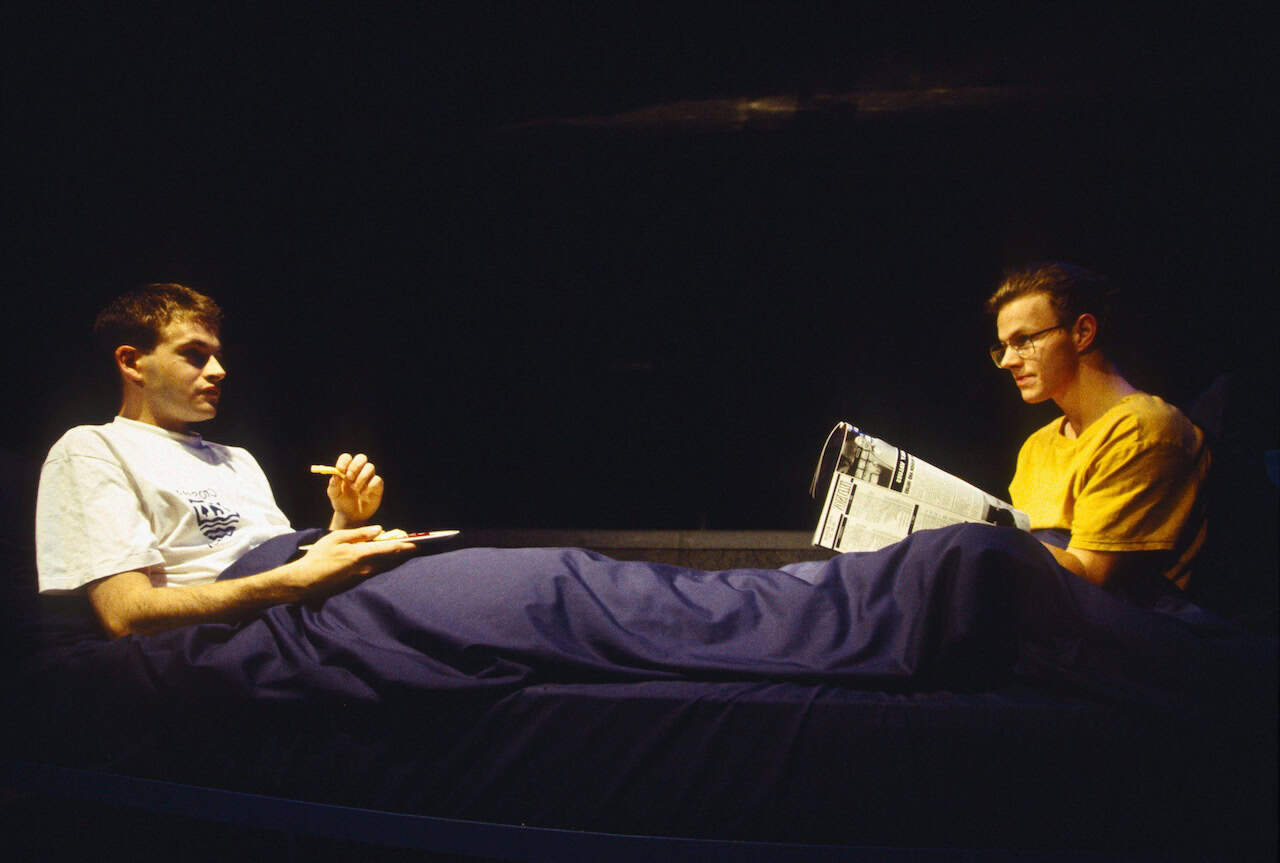
Bush Theatre Production
Q: Were you surprised by the public reaction to Beautiful Thing after it premiered at the Bush Theatre?
The reaction was gradual, and there’s always the risk of looking back with rose-tinted spectacles. It sold out at the Bush and did really well. Audiences liked it, but a few rude, homophobic reviews made me feel like the worst writer in the world. When we took it on tour, a Christian group in Bury St. Edmunds protested outside the theatre, saying it was offensive. However, by the time we opened in the West End, every review was glowing. It was a slow process, and sometimes the excitement was mixed with a feeling of ‘What have I done!’
Q: When did discussions begin about a potential film?
It’s so long ago! But I remember my agent arranged a meeting with Film Four, who were really interested in the play and wanted me to write a short film. But I had no desire to write a short film for them. I wanted to work in television, but film wasn’t a big interest for me. I think, if my memory serves me right, it was later that they came back to me about a potential film adaptation of Beautiful Thing. I’d never written a film and couldn’t really picture what a film version would look like. Some producers were like, ‘We think a prominent actress should play Sandra, but my friend Tony Garnett offered valuable advice and said, ‘The minute you have someone well-known playing the mum, the audience will only look at her; if you go with a cast of unknowns, the audience will believe every single frame of the film. So, Tony stepped in as producer and said they were considering asking Hettie Macdonald to direct. Hettie had directed the stage play. And again, he was right because Hettie was amazing.
Q: The casting was inspired as Scott and Glen were the boys next door; they were believable, grounded and defied stereotypes. Were you involved in the casting decisions?
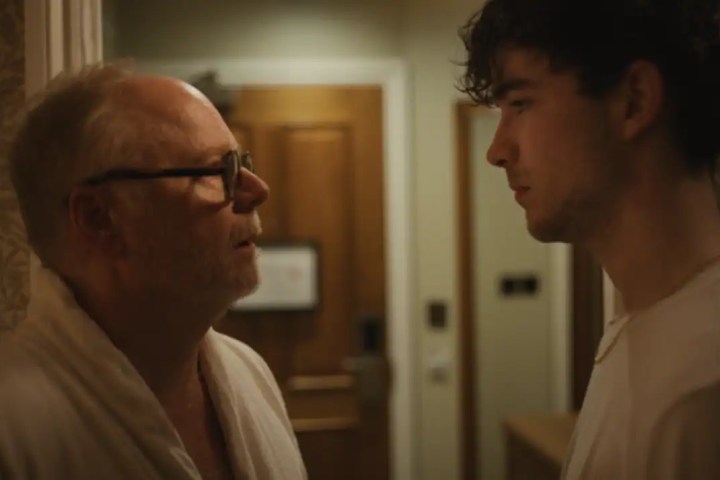
It was so exciting. We couldn’t have cast Glenn and Scott on stage because you needed boys who were a bit older and had the chops to sustain a two-hour performance. But on screen, we could go younger. They were utterly great and made the movie tick. The other big revelation for me was Tameka Empson, who blew us away as Leah. That’s a friendship I have treasured over the years. Happy memories.
Q: Looking back, did you ever think Beautiful Thing would have the impact it did? Or that it would still be selling out theatres today?
I wanted to share a story about two working-class gay boys, hoping people would enjoy it. I never really anticipated the impact it would have. I suppose it arrived at the right time. I’m really proud of the film and every staged production that audiences have enjoyed over the past thirty years.











Follow Us