
Looking for something to watch? Take your pick in our Box Set Binge collection of TV and streaming treats. From a deadly check-in at the luxury hotel of your dreams to a trip back in time to a school named Grange Hill, this is a collection of tantalising and terrific TV updated monthly.
Jump Straight to a Show
IT: WELCOME TO DERRY

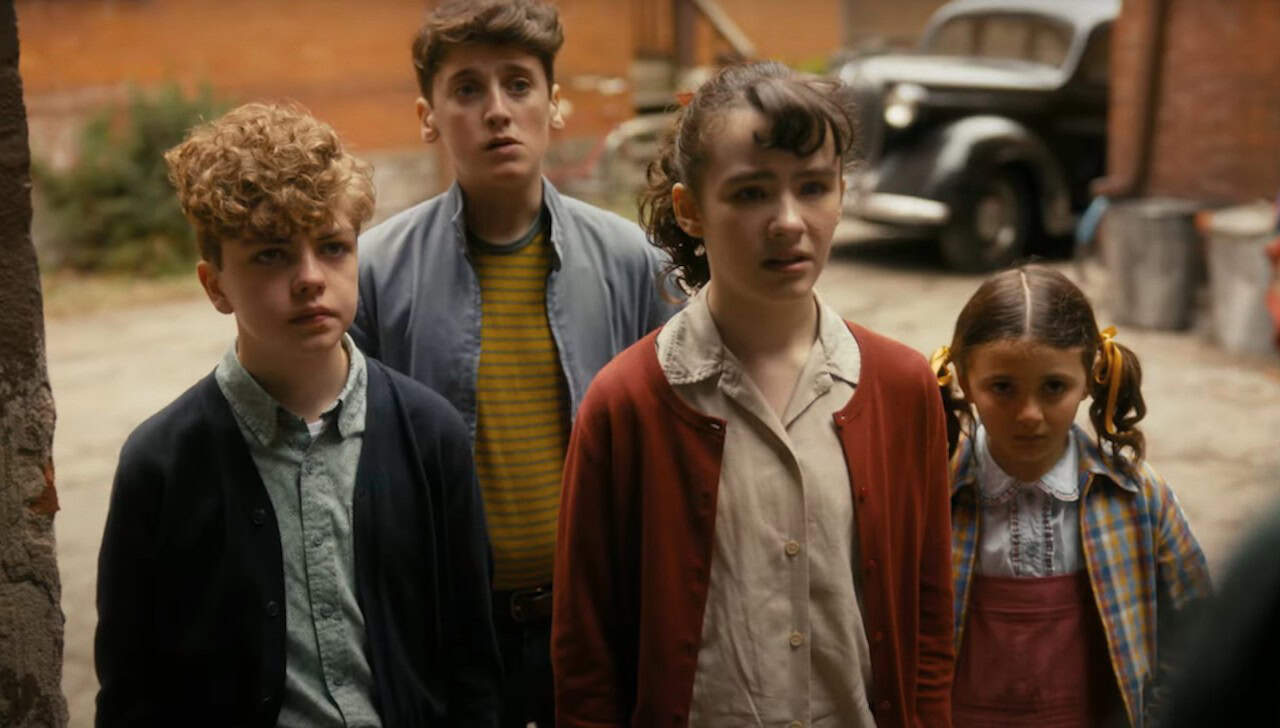
Many horror fans rightly questioned whether an IT prequel was either needed or warranted before Andy Muschietti, Barbara Muschietti and Jason Fuchs’ IT: Welcome to Derry had even left the starting block. That was not due to any concerns regarding Muschietti’s ability to bathe us in the horror of Derry; after all, his two-part film adaptation of Stephen King’s epic novel received positive reviews. No, concerns centred more around whether this would be a pure nostalgia trip, rather than an expansion of King’s story and the associated universe. Thankfully, IT: Welcome to Derry is a masterful addition to King’s universe and a truly terrifying expansion of his work that feels like it comes from his own pen.
Opening in 1962 as snow falls on Derry, Maine, a 12-year-old boy (Miles Ekhardt) decides it’s time to escape his abusive home life by hitchhiking his way out of town as the snow gets ever deeper. It’s not long before he’s picked up by a family, but as we’re about to discover in spectacular fashion, this family carries a deadly secret. These opening scenes are enough to have your nerves jangling and your eyes covered before the main story has even begun in a show that revels in twists, shocks and truly breathtaking performances for a stellar young cast.
There’s a bravery in making us wait for Bill Skarsgård’s terrifying clown to appear, and it’s a bravery that isn’t misplaced from the opening scene. Add to this melting pot of horror, social commentary and coming-of-age drama the wonderful expansion of Dick Hallorann’s story, and IT: Welcome to Derry becomes one of the finest TV horror outings since the second season of Ryan Murphy’s American Horror Story.
Explore More


WOLF HALL

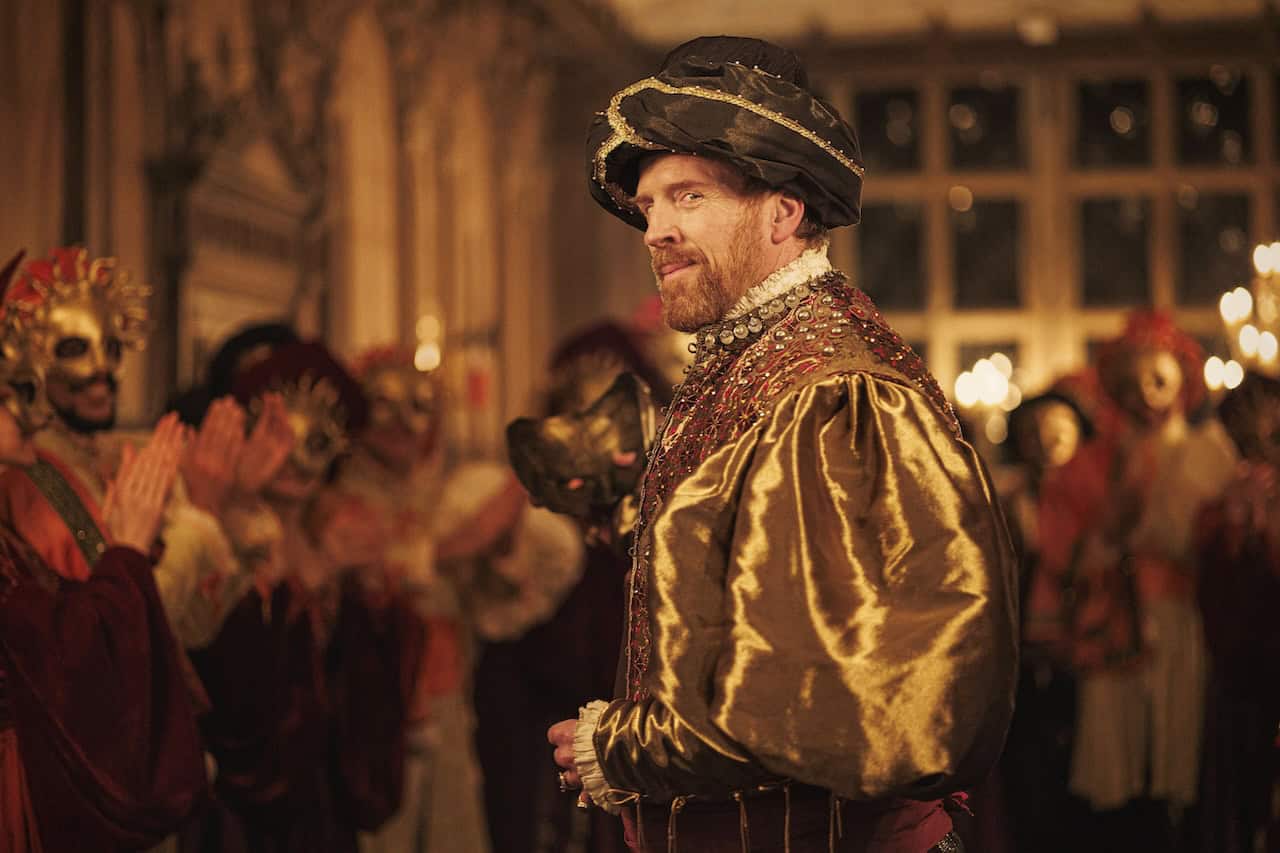
Based on Hilary Mantel’s sumptuous novel, the 2015 BAFTA Award-winning BBC series Wolf Hall was as hypnotic as it was beautiful, as the truly brilliant Mark Rylance guided us through Thomas Cromwell’s rise under the gaze of a fiery, unpredictable King Henry VIII (played by Damian Lewis).
For Cromwell, his rise and his neck are only secure by dealing with the tricky problem of one Anne Boleyn (Claire Foy) while seeking guidance from Wolsey (Jonathan Pryce), a man who knows just how quickly Henry can turn on those he once called a brother. It’s an age-old tale of politics, deception, and power that we are all familiar with. But Wolf Hall handles the historical drama that changed a nation and a monarchy with such humanity and intelligence that it becomes a slice of history where you can feel each emotion and almost smell the candles burning to the wick at Hampton Court Palace.
To put it simply, Wolf Hall is one of the best TV dramas of the past fifty years and one of the most beautiful.
Reuniting the creative team from Wolf Hall, nearly ten years after the first series, The Mirror and the Light, once again directed by seven-time BAFTA award winner Peter Kosminsky and adapted by Peter Straughan, may have been a long time coming, but it was worth the wait.
It is 1536, and Anne Boleyn is dead along with five of her coterie, but Thomas Cromwell has emerged from the bloodbath intact, his power only enhanced. Meanwhile, Henry has settled for a short-lived happiness with his third queen, Jane Seymour (Kate Phillips). However, as Cromwell attempts to navigate the moral complexities and swaying loyalties of a power-hungry King, no one is safe.
Eagerly awaited and years in the making, Wolf Hall: The Mirror and the Light traced the final four years of Cromwell’s life, completing his journey from self-made man to the most feared, influential figure of his time. A politician, a fixer, a diplomat and a father, Cromwell was a man who defied and defined his age.
MARY & GEORGE


History is full of remarkable stories; many are so fascinating and rich that when they come along, you can’t help but wonder why they haven’t been adapted for the screen sooner.
In British history, Tudor England (1485–1603) has long been the focus of lavish dramas from Wolf Hall to The Tudors. However, with over 1,000 years of history, our nation has countless stories to tell, and the House of Stuart, from 1603 to 1714, is among the most fascinating. The Stuarts ruled a “United” Kingdom for the first time. However, in reality, the kingdom was far from united.
Their rule would see the gunpowder plot, Catholic oppression, and a civil war that would lead to the beheading of Charles I, the son of King James. However, after a brief republic under Oliver Cromwell, Charles II would return to rule in a nation with a parliamentary democracy and a monarchy. Two people sat at the heart of King James and Charles I’s court, a mother and son whose names have long been sidelined: Mary & George Villiers.
Mary & George’s remarkable journey would see them travel from Brooksby, Leicestershire, to the heart of King James’ court in London. While much discussion remains as to whether George was indeed King James’ lover and true partner for many years, one thing is clear: Mary was a woman who knew what she wanted and saw her son George’s beauty as an opportunity to make it happen.
Based on Benjamin Woolley’s novel, “The King’s Assassin: The Fatal Affair of George Villiers and James I” DC Moore’s (Killing Eve) adaptation is sumptuous, enthralling, witty and devilishly horny as the exquisite Julianne Moore, the dashing and brilliant Nicholas Galitzine and the masterly Tony Curran lead a truly delectable ensemble in this tale of deceit, love, lies, poisoned prunes, desire and power.
Every second of Mary & George is to be savoured like a fine wine, as it pays homage to the sexuality of The Tudors, the deadly game of cat and mouse in The Favourite, and the political intrigue and gameplay of Wolf Hall. It is, in short, a glorious, proudly queer and fascinating exploration of King James’ court and the events, relationships and deals that would ultimately lead to civil war and the beheading of his son Charles I.
THE WHITE LOTUS

Class dynamics, societal inequalities, power, position, lies, and sex comprise the deliciously rich, delightfully enthralling, and downright brilliant The White Lotus, written by Mike White.
Each season—beginning with the Hawaii-set first and continuing with the Sicily-set second uses the idyllic backdrop of an opulent resort to examine the darker undercurrents of its guests’ lives. The show juxtaposes the polished veneer of privilege with the messy, often uncomfortable realities lurking beneath the surface. This duality is reflected in the lives of the wealthy guests and the experiences of the resort staff, whose labour and sacrifices go largely unacknowledged.
At the heart of this HBO delight is the exceptional writing of Mike White, who effortlessly draws the audience into his web of human behaviours through a truly wonderful collection of fully rounded characters, played by an exceptional ensemble cast. From Murray Bartlett’s Armond in season one to Jennifer Coolidge’s eccentric and lonely Tanya and Leo Woodall’s devilish Jack in season two, to name just a few, every character is compelling and rich in detail.
The White Lotus also distinguishes itself through its visual and auditory style. The lush, picturesque settings of each season starkly contrast with the interpersonal tensions and ethical dilemmas unfolding among the characters.
The cinematography often frames the characters to highlight their isolation or complicity within the power structures they inhabit. Additionally, Cristóbal Tapia de Veer’s haunting, unconventional score is integral to the show’s atmosphere, blending tribal beats with eerie melodies to underscore the narrative’s simmering tension and unpredictability.
SUCCESSION

Premiering on HBO in 2018, Succession deftly explores themes of power, loyalty, and family dysfunction against the backdrop of a global media empire in a manner that would make Shakespeare himself proud.
Through its complex characters, razor-sharp writing, and incisive commentary on wealth and privilege, Succession captivated audiences from the first episode to the last as we followed the Roy family, led by the patriarch Logan Roy (Brian Cox), a domineering figure whose health and advancing age set the stage for a battle over the company’s future. Often akin to a sharp dissection of the real-life drama at the heart of the Murdoch empire, his children—Kendall, Shiv, Roman, and Connor—vie for their father’s approval while scheming to secure their own positions within the empire.
Each member of the Roy family is deeply flawed yet compelling, oscillating between moments of vulnerability and ruthless ambition. Kendall Roy, played masterfully by Jeremy Strong, embodies the tragic arc of a son desperate to prove himself but repeatedly undone by his own insecurities and addiction struggles. Shiv Roy (Sarah Snook) exudes confidence and intelligence but grapples with her own ethical compromises and the glass ceiling within the male-dominated corporate world. Roman Roy (Kieran Culkin) offers a mix of sharp wit and emotional immaturity, masking deep-seated insecurities beneath his caustic humour.
Meanwhile, Connor Roy (Alan Ruck), the eldest sibling, exists on the periphery of the power struggle, embodying the absurdities of wealth and privilege.
Box Set Binge – a smorgasbord of binge-worthy TV and streaming treats
ADOLESCENCE


Jack Thorne and Stephen Graham’s powerful one-take mini-series, Adolescence, is far more than just a scintillating, devastatingly emotional, and expertly crafted TV show; it’s one of the most urgent dramas of the past twenty years as it lays out before us a new cancer eating away at far too many boys and young men in online forums, video-sharing websites and peer groups. Sites like Kick, TikTok and Instagram have become breeding grounds for young male anger, and a new ideology, often linked to political extremism that seeks to assert that men’s rights are under threat, and women are to blame.
Far too many young boys and men, who are attempting to find their way in a turbulent world where concepts of masculinity and male identity can feel obscure, find themselves virtually recruited by ‘influencers’ whose only wish is to spread their poison. Adolescence isn’t afraid to explore this truth through the story of Jamie Miller, the truly outstanding Owen Cooper.
From opening scenes that see us witness the chaos, pain and trauma of police officers smashing in the doors of a loving family home, only to arrest a fourteen-year-old boy who looks dazed, terrified and vulnerable, to initial police interviews, where a father (Stephen Graham) desperately attempts to protect his son, Adolescence doesn’t ask for your undivided attention, it demands it.
Remarkable in its craft, outstanding in its performances, and captivating in its social drama, Adolescence is a terrifying warning of the hate and misogyny freely running through our streets, schools, and online communities and an urgent wake-up call to us all not to let our boys and young men become victims of this extremist ideology.
SLOW HORSES

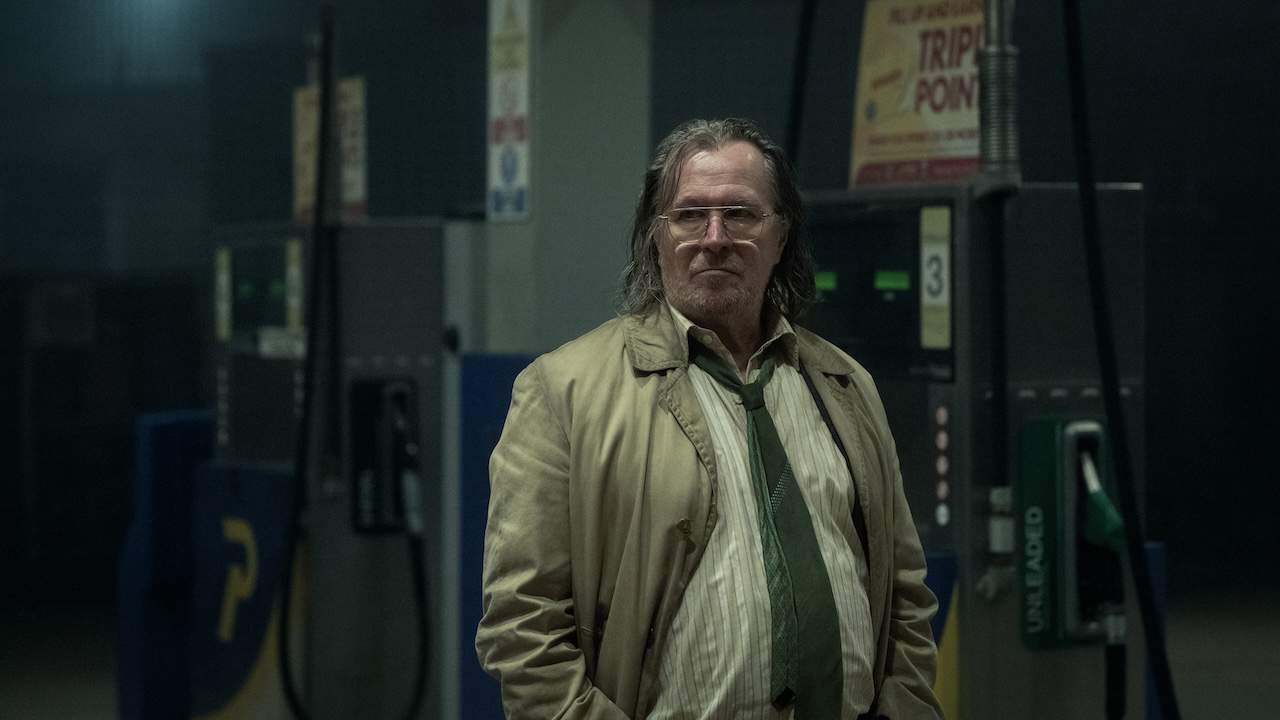
Based on Mick Herron’s novels and adapted for TV by Will Smith (The Thick of It), Slow Horses isn’t just one of the best TV shows of the past five years; it’s one of the most bingeable. Packed to the rafters with humour, grit, espionage and action, Slow Horses is electric TV. The series starts with River Cartwright (Jack Lowden) fucking up his promising MI5 career in a bungled operation. As a result, River finds himself banished to the arse hole of MI5, Slough House, a place where shit intelligence officers go to shuffle paperwork for the rest of their careers. River is joined by a troupe of failed spies, including the spikey and brilliant 70s throwback Jackson Lamb, played by the outstanding Gary Oldman.
But far from being quiet, Slough House, under Lamb’s unconventional leadership, is at the forefront of clandestine operations, spy rings and the ghosts of past exploits. Apple TV+ and See-Saw have assembled a truly stellar cast for Slow Horses, and over the course of the first three seasons, the dark comedy, action, and intrigue delightfully build into one of the most addictive shows of recent years.
From Jack Lowden to Gary Oldman, Jonathan Pryce, Freddie Fox and Kristin Scott-Thomas, Slow Horses is far more than just a satisfying spy romp; it is a sublime slice of TV worth the Apple TV+ subscription fee alone.
Explore More
BABY REINDEER
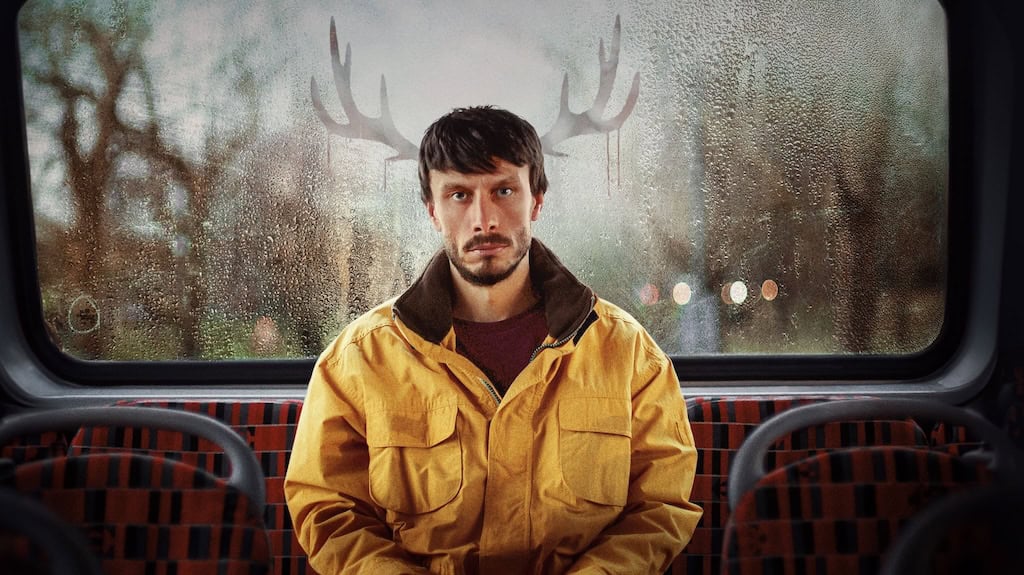
Now and then, a TV drama emerges that upends expectations and challenges its audience to explore the darkest corners of our shared human experience. Quietly arriving on Netflix without fanfare, Richard Gadd’s adaptation of his one-man play (based on a true story), Baby Reindeer, is one of those rare TV events.
Darkly comic, deeply emotional and utterly compelling, his story of abuse, stalking, mental health, and personal recovery is truly outstanding as it challenges its audience to look beyond simple behaviour labels and explore concepts of cause, effect, empathy and healing that are often uncomfortable. With truly exceptional performances from Gadd and Jessica Gunning, it may be one of the most powerful TV dramas of 2024.
BIG BOYS

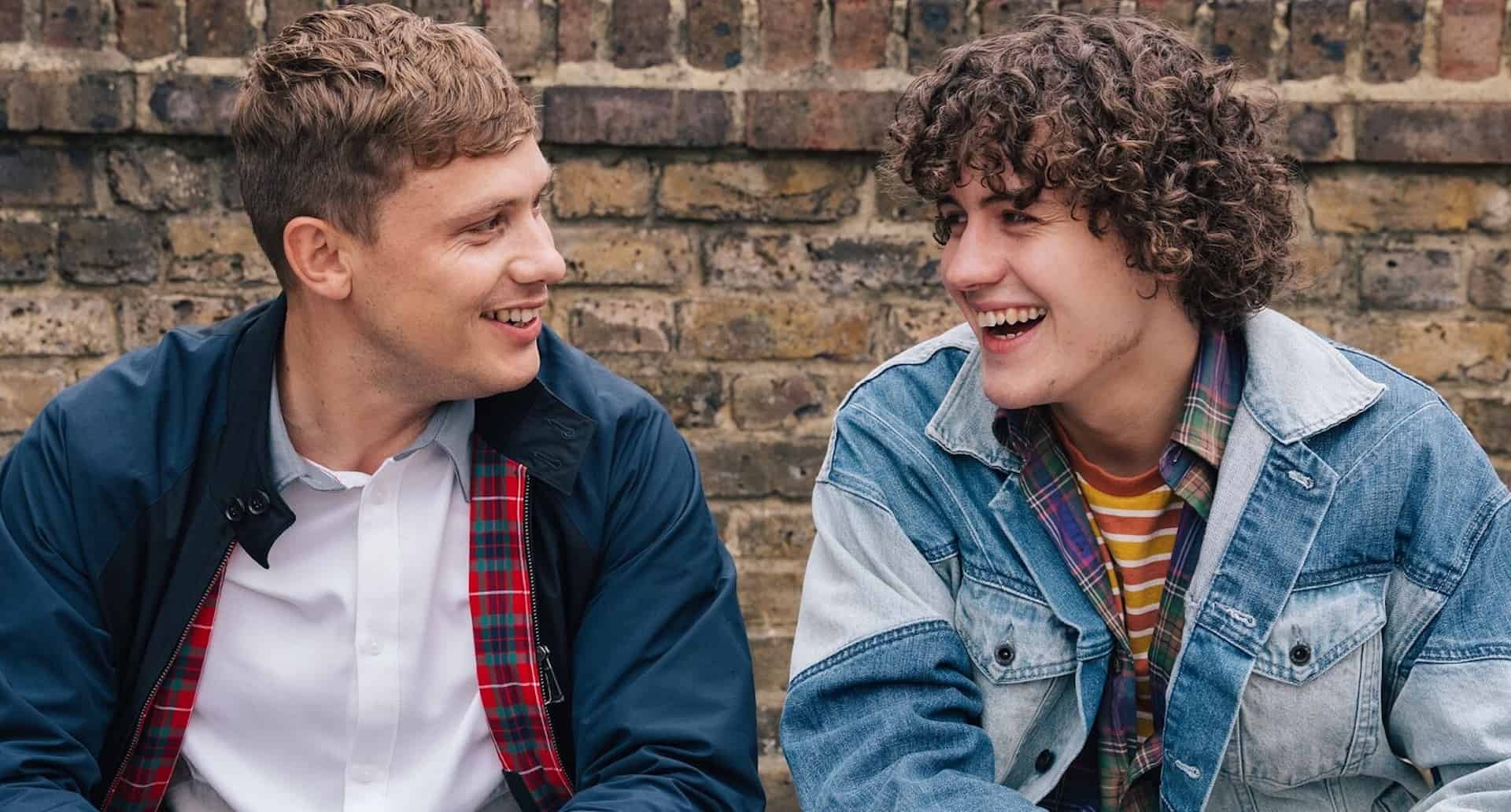
Throughout series one, two, and three of the outstanding Big Boys, Jack Rooke beautifully balances effervescent comedy with discussions of childhood trauma, loss, friendship, identity, mental health, and anxiety, joining the likes of Alan Bennett, Jonathan Harvey, and Lisa McGee in lacing sublime comedy with heartfelt emotion.
But the success of Big Boys isn’t all down to Rooke’s exceptional writing; it’s also about the performances that help bring his characters to life in vivid technicolour. Llewellyn and Pointing are outstanding, bouncing off one another while hitting every comedic and emotional note. Watching them tear down the damaging social stereotypes surrounding male friendship, mental health, and love is truly wonderful, deeply emotional and heart-warming, and it’s what makes Big Boys tick.
Add a fantastic ensemble cast, featuring Camille Coduri, Marc Warren, and Harriet Webb, and Big Boys becomes a delightful cocktail of heartfelt emotion, belly laughs, and beauty.
Box Set Binge – a smorgasbord of binge-worthy TV and streaming treats
AHSOKA

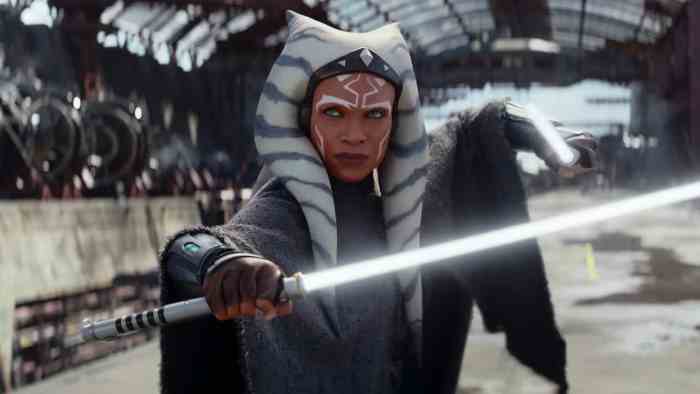
Taking Star Wars: The Clone Wars, Star Wars: Rebels and Heir to the Empire as its core inspiration, the latest Disney+ show, Ahsoka, feels like a welcome return to the foundations of George Lucas’ universe. Ahsoka shines from the outset thanks to the performances of Rosario Dawson, Natasha Liu Bordizzo, the late, great Ray Stevenson, Ivanna Sakhno, Lars Mikkelsen, and David Tennant, and delights with the return appearance of Hayden Christensen’s Anakin.
Ahsoka bathes in the diversity, adventure and wonder of a galaxy far, far away, reminding us just how special George Lucas’ characters and worlds are. Disney’s Star Wars outings have been a mixed bag of brilliance, disappointment, creativity and fan service over the years; thankfully, Ahsoka is a joy, leaving you desperate for more as each beautifully crafted episode concludes, and much of this success comes from its embrace of Heir to the Empire and the legacy of the Clone Wars and Anakin’s fall.
Like Disney’s The Mandalorian and Andor, Ahsoka offers hope that Disney can embrace Lucas’ vision and sweep us away with intergalactic intrigue, adventure and excitement. May the force be with you.
THE UMBRELLA ACADEMY

Based on the Dark Horse comic series, The Umbrella Academy arrived on Netflix with a bang in 2019. In its first season, The Umbrella Academy turned the superhero genre on its head with its eccentricity, energy, killer gags and endless charm as we were introduced to Vanya/Viktor (Elliot Page), Luther (Tom Hopper), Allison (Emmy Raver-Lampman), Diego (David Castañeda), Ben (Justin H. Min), Number 5 (Aidan Gallagher), Lila (Ritu Arya) and Klaus (Robert Sheehan).
Far from being the first TV show to experiment with the superhero format in this way (Sheehan’s sublime performance in Misfits comes to mind), The Umbrella Academy presented a similar aesthetic with a Netflix-sized budget.
Following its inventive and delightfully sharp first outing, Season Two felt like a modern, violent take on Quantum Leap, yet was equally built on the academy’s ability to weave comic violence, dark humour, and action with social themes ranging from black civil rights to women’s equality and LGBTQ+ freedoms.
The show may have faltered slightly in its third season, but its fourth and final season would see us bid an emotional goodbye to characters who earned their place in TV history. Many hated the ending offered, but for me, it was everything The Umbrella Academy was built on, as it threw us a final curveball that wrapped up everything with a rare and resounding finality.
Box Set Binge – a smorgasbord of binge-worthy TV and streaming treats
LOST BOYS AND FAIRIES
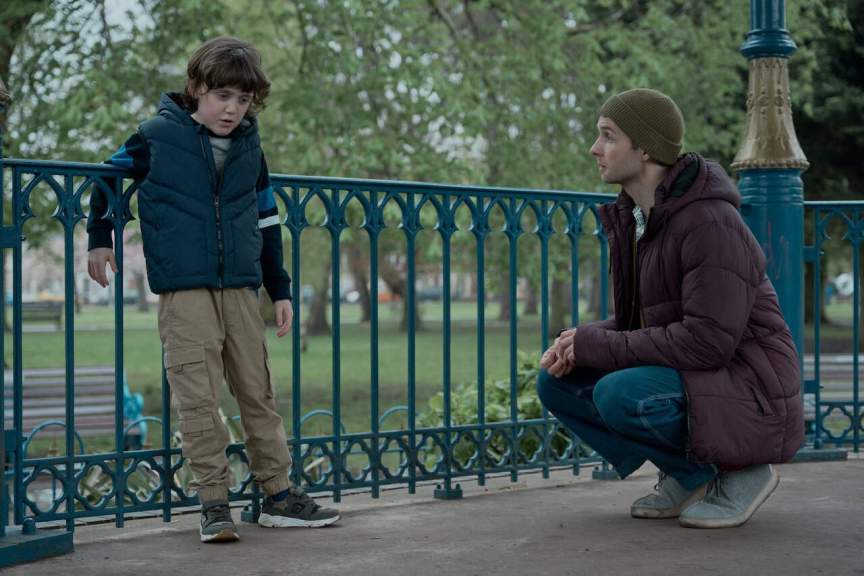
Set in Cardiff and embracing the Welsh language in a way not seen before on prime-time BBC TV, Daf James’ stunning drama follows performance artist Gabriel, played by the fabulous Sion Daniel Young, and accountant Andy, played by the brilliant Fra Fee, as they consider adoption.
Alongside their appointed social worker, Jackie (played by the amazing Elizabeth Berrington), they embark on a long, challenging, and personal selection process that will change their relationship and home forever, pressing more than a few buttons from their childhood. This is especially true for Gabe, who, while stating in public that he has dealt with the gay shame of his religious, rural upbringing, one that saw him bullied at school as his relationship with his stern father faltered, still has unresolved emotions and feelings relating to his sexuality and Welsh identity. At the same time, Andy is more secure and more desperate to become a dad, sharing his life experiences with a child who has had a difficult start.
Andy and Gabriel’s journey is heartbreaking, joyous, humorous, musical and magical as they meet a young seven-year-old boy (Leo Harris) who has had a rough and violent start to his life. He is everything they thought they didn’t want, yet also everything they need. But as the slow, delicate process of relationship building begins, their relationship will be tested, their past traumas aired, and their hopes for the future cemented in a groundbreaking TV drama that defies genre labels.
CHANGING ENDS

Growing up gay in 1980s Northampton is no bed of roses for the young Alan Carr, but it is made even more complex by his dad being the manager of the Cobblers (Northampton Town Football Club).
Written by Alan Carr and Two Doors Down’s Simon Carlyle, Changing Ends is a delightful exploration of Carr’s early life, from his first day at secondary school to his love of drama and early comedic talent. To say Alan doesn’t quite fit in would be an understatement. His passion for The Golden Girls, dislike of football, oversized glasses, gappy teeth, squeaky voice, and penchant for performance make him unique in suburban Northampton life. Luckily, his mum, Christine (Nancy Sullivan), is full of love and support, no matter her son’s differences. At the same time, his football manager dad, Graham (Shaun Dooley), is utterly confused by his son’s behaviour as he struggles with a football club at the bottom of the fourth division and a ground falling apart at the seams.
At the heart of this joyous and tender coming-of-age comedy is the young Oliver Savell, who perfectly captures Carr’s camp, theatrical and cutting humour through a performance that is as near to perfection as you can get. The result is a hilarious and heartwarming semi-autobiographical comedy that shines through its performances, wit and endless charm.





Follow Us