

Page 2 – Let’s Talk About Sex! Movies
EYES WIDE SHUT (1999)

By Sabastian Astley
Eyes Wide Shut is far from a reflection of the festive spirit, but if Die Hard is now classed as a Christmas film, then so is Kubrick’s swan song. In many ways, it’s the perfect anti-Christmas film, exploring a family breakdown at the “happiest” time of the year. Disturbed by the sudden sexual revelation of his wife (Nicole Kidman), Dr Bill Harford (Tom Cruise) struggles to move past the recurring mental image of her with another man. Here, his obsessions eat away at his soul as he embarks on a trip into a secret psycho-sexual Manhattan fantasy.
Eyes Wide Shut remains fascinating because everyone seems to be in on the joke of Harford’s meaningless exploration, except for Cruise. Kubrick almost appears to be playing the grandest trick possible by tormenting the character and the actor in unison. However, while Cruise’s serious performance shouldn’t work, it does.
Eyes Wide Shut would push Cruise and Kidman’s relationship to the brink with a mammoth 15-month production; in fact, many have since argued that this was the point at which their marriage became impossible. Was this Kubrick manipulating the boundaries between reality and fiction, using Kidman and Cruise as his pawns? We will never know what Kubrick had in mind during filming, which may be why Eyes Wide Shut remains a fascinating but uncomfortable watch.
Why Kubrick set Eyes Wide Shut during the holidays remains a mystery, with no festive link to the original 1926 novella, Rhapsody: A Dream Novel. Some writers, like Brianna Zigler, have theorised that this is Kubrick’s anti-consumerist critique of what Christmas has become —a solid take. However, you could also read this as a Kubrickian take on a Christmas romp that celebrates Kubrick’s dark sense of humour and disposition for psychological drama. Either way, Eyes Wide Shut remains an enigma wrapped in fairy lights and sex, a darkly delicious finale from a cinematic and artistic genius.
BABYGIRL (2024)

By Neil Baker
Romy (Nicole Kidman) has it all; she is the CEO of her own company, has a family she loves, and has a husband (Antonio Banderas) who treats her like a queen. But under the surface, her suppressed desires are reaching boiling point, and an opportunity to finally explore the fantasies she has kept locked away for so long is about to come knocking as a new intern at her company, Samuel (Harris Dickinson), opens a door that can never again be shut.
Romy may be in control of everything in her life, but what she craves in secret is to be controlled, to be a “Babygirl” to a dominant man who makes the rules in the bedroom and follows her instructions outside of it. She wants to be treated as a pet in a game of subservience and domination, yet equally intends to retain her sense of power outside of the bedroom.
Samuel sees Romy’s innermost fantasies from the first meeting because he shares them. Samuel wants to be an alpha male in the bedroom to a powerful woman. He wants to play with the power dynamics inherent in every office across the land, and unlike Romy, he isn’t going to suppress the desires he wants to explore over the festive holidays.
Explore More

SHIRLEY (2020)
By Neil Baker
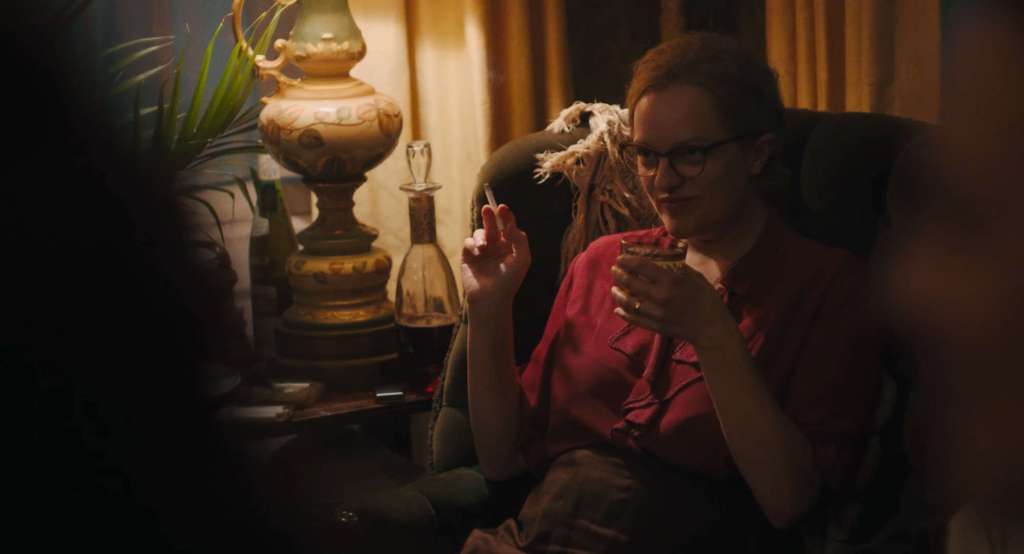
What happens when you mix the classic biopic with elements of fantasy, fiction and psychological terror? The answer is the deliciously dark, enthralling, and compelling Shirley, a film that takes the real-life story of Shirley Jackson and merges it with a fictional young couple sucked into a psychological and sexual game of cat-and-mouse. Josephine Decker’s Shirley has no intention of playing by the rules as the naive and enthusiastic Rose (Odessa Young) and her loving, career-driven new husband, Fred (Logan Lerman), arrive at the home of Shirley (Elizabeth Moss) and Stanley (Michael Stuhlbarg).
In what feels like a homage to Bram Stoker’s Dracula, the story opens with Rose and her husband, Fred, en route to a new life in Vermont, where Fred will assist Shirley’s husband, Stanley, with his academic research. But as they await their young playthings, Shirley and Stanley have other plans: a dark social experiment in literature, class consciousness and sexuality.
Josephine Decker and screenwriter Sarah Gubbins’ tale of 50s sexual conformity and oppression is far more than a historical dissection of the time; it’s a deep and thrilling journey into the mind of a literary genius who defied her time and place.
THAT COLD DAY IN THE PARK (1969)

By Neil Baker
Sexual repression is dangerous; it carves a hole in the centre of an individual’s soul that cannot be filled or ignored, a hole that gets bigger and bigger the more you force your desires down. It’s a cold, wet day in Vancouver when the affluent, quiet and slightly aloof Frances (Sandy Dennis) spots a Boy from the window of her apartment (Michael Burns) sitting on a bench as the rain pours, wearing only his jeans and a sodden shirt. Frances can’t bear watching the boy struggle in the rain.
Once her guests have left, she walks down to the park and invites him in to get dry. The boy accepts the invitation and remains silent as Frances runs him a hot bath and hangs up his clothes to dry. As the boy bathes, Frances’s icy frigidity begins to thaw; who is this mysterious boy? Does he have a home? For the first time in years, this lost and lonely young woman has a silent but intriguing young man for company, a marked change from the closed, dusty group of old friends she sees at stilted dinner parties, lawn bowls and drinks receptions, where the much older Dr Charles Stevenson attempts to woo her, not knowing he repulses her.
Adapted by Gillian Freeman from Richard Miles’ 1965 novel, That Cold Day in the Park was Robert Altman’s second feature and one of his most fascinating. Released as the sixties gave way to the ’70s, That Cold Day in the Park explores two opposing worlds of sexuality and freedom, one born from the summer of love and the other rooted in lingering 1950s sexual repression.
As these two worlds attempt to coexist in a Vancouver apartment, what starts as an innocent game quickly becomes a psychodrama, then violently lurches into horror in the final act.
THIS IS NOT BERLIN (2019)

By Neil Baker
From the Kama Sutra to Michelangelo’s David, sex is art, and art is sex. Throughout history, desire, beauty, and allure have been explored through various media, including paintings, literature, sculpture, clay, performance, photography, and film. Hari Sama’s semi-autobiographical This is Not Berlin is alive with sex and rebellion, the intoxicating spirit of art and the energy of 1980s counter-culture. By intertwining the classic coming-of-age movie with an exploration of a newly emerging national identity and sexual freedom, Sama’s film captures the moment when adolescent rebellion and art converge on the streets of Mexico City.
Since childhood, Carlos (Xabiani Ponce de Leon) and Gera (José Antonio Toledano) have been classmates and close friends. Carlos lives with his younger brother and mother, who suffers from severe depression. In contrast, Gera’s home life is stable, with his well-off parents providing for all his needs. Despite their different home lives, Gera and Carlos hold a deep friendship. Gera is fiery, volatile and rebellious, while Carlos is quiet and thoughtful. But as they sneak into an underground music club, both boys are about to find their lives, passions and loves thrown into a new and exciting adult world of rebellion, drugs, sex, and art just as AIDS rips through the city.
Sama beautifully captures the vulnerability of young people taking their first steps into an exciting yet dangerous world, as Carlos and Gera’s friendship changes forever in a city that never sleeps.
AFTERSCHOOL (2008)
By Neil Baker
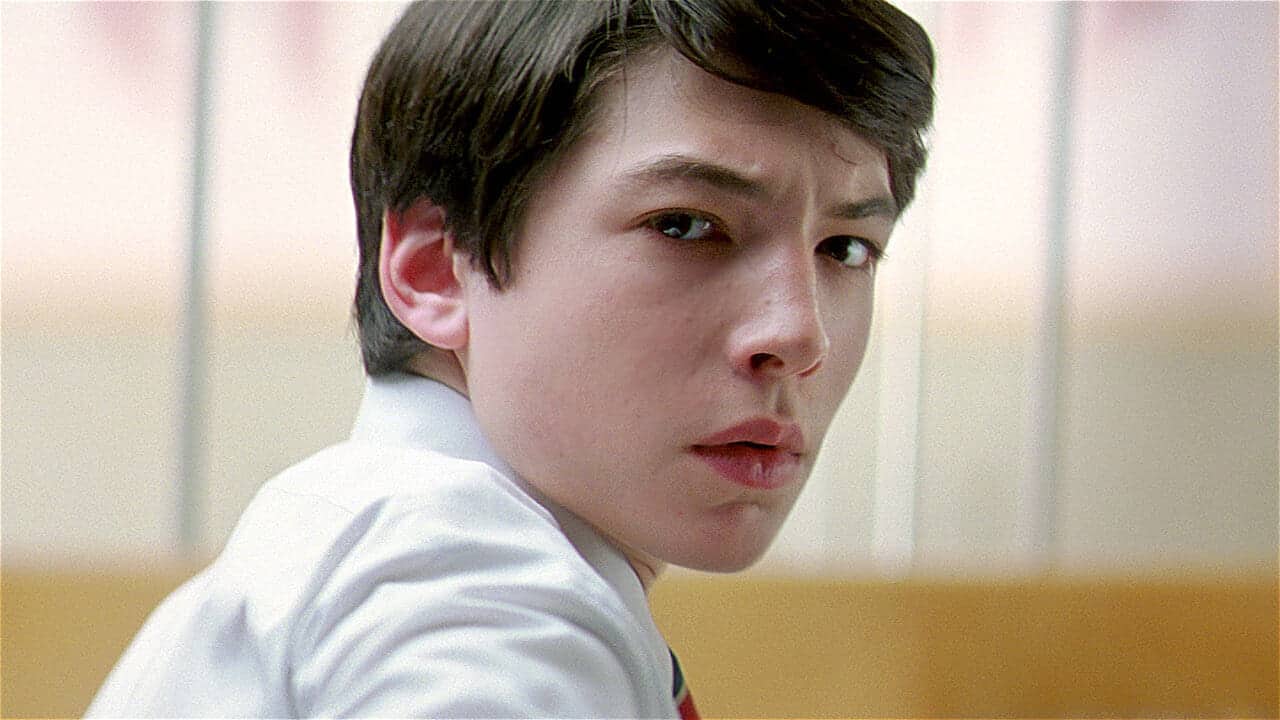
If Michael Haneke’s Benny’s Video observed and dissected the arrival of video culture and home filmmaking among early-1990s teens, Antonio Campos’ 2008 feature debut, Afterschool, explored the rise of internet porn, instant video sharing, and YouTube. Antonio Campos paints a disturbing picture of a newly emerging adolescence in which online and offline personas merge. At Campos’ prestigious boarding school, parents step in when needed, and the truth is often an inconvenience that comes at a cost.
In the hands of his young lead, Ezra Miller, a boy mildly obsessed with a new world of online porn and violence, Campos dissects the world of instant media against a backdrop of a growing wealth divide and increasing social paranoia. The resulting journey is profoundly uncomfortable but ahead of its time as it explores sex as a digital commodity and truth as an obstacle to progress. Here, the young people at the heart of the story are both manipulated and manipulators in a brave new world.
Let’s Talk About Sex! 24 movies
FEMME (2023)

By Neil Baker
The best thrillers play with the multiple identities that surround each of us, blurring the lines between compassion, empathy, and fear. Take, for example, Hitchcock’s Psycho. Norman is both dangerous and vulnerable, a psychologically torn young man formed through a past of hidden abuse and manipulation who defies simple social labels. The same can be said of George MacKay’s volatile Preston as Nathan Stewart-Jarrett’s revenge-torn Jules enters into a relationship with the man who viciously attacked him months before. However, while Jules knows that Preston is his attacker, Preston is unaware of the cat-and-mouse game Jules is playing in a movie that dovetails nerve-shredding tension with deep discussions on the roots of homophobia and the protective personalities we all form in private and in public.
Femme is based on Sam H. Freeman and Ng Choon Ping’s 2021 short film starring Paapa Essiedu and Harris Dickinson. Here, the directors build upon the neo-noir style of their short in creating a contemporary erotic thriller that understands and unpicks the root cause of so much of the homophobia that continues to thread through our society: sexual insecurity, fear and hyper-masculinity.
Cinematographer James Rhodes’s use of neon colours, streetlights, intimate soft glows, and dark, foreboding shadows builds an exquisite sense of unease, sexual tension, and threat as Sam H. Freeman and Ng Choon Ping allow the outstanding performances of MacKay and Stewart-Jarrett to take centre stage.
KNIFE + HEART (2018)

By Neil Baker
What do you get if you take 70s gay porn and mix it with the classic 80s slasher? The answer is Knife + Heart. Set in Paris, matriarch and auteur Anne (Vanessa Paradis) spends her time persuading amateur men to perform in a series of gay porn movies. Each young hopeful leaves their menial day job in the hope of fame while finally being allowed to embrace their sexuality free from hate or oppression – their taught and toned bodies becoming the stuff of gay legend in queer XXX cinemas.
However, when Anne’s buff young film stars begin to die at the hands of a mysterious leather-faced murderer equipped with a deadly bladed dildo, Anne quickly changes the title of her new movie to ‘Homocidal’ and embarks on a creative mission to uncover the killer’s identity through film.
Yann Gonzalez’s film not only celebrates the history of gay porn and horror but wraps his narrative journey in a series of social discussions as 70s gay liberation was replaced by fear, discrimination, and AIDS took hold. The result is a gay slasher that pays homage to William Friedkin’s Cruising, the budget gay porn of the 70s, Giallo, and the simmering sexual tension of Stranger by the Lake.
There are nods to classic horror, from An American Werewolf in London to The Texas Chainsaw Massacre, A Nightmare on Elm Street, and The Bird with the Crystal Plumage. Yet Knife + Heart also feels utterly unique—a camp horror film full to the brim with broader discussions of the intersection between sex and art in film. As a result, Gonzalez offers us something unique and compelling in the landscape of LGBTQ+ horror as he bathes us in an intoxicating and proudly queer mix of artistic styles that are as sharp as the razor-lined dildo the killer wields.
Let’s Talk About Sex! Movies
54: DIRECTOR’S CUT (2015)
By Neil Baker
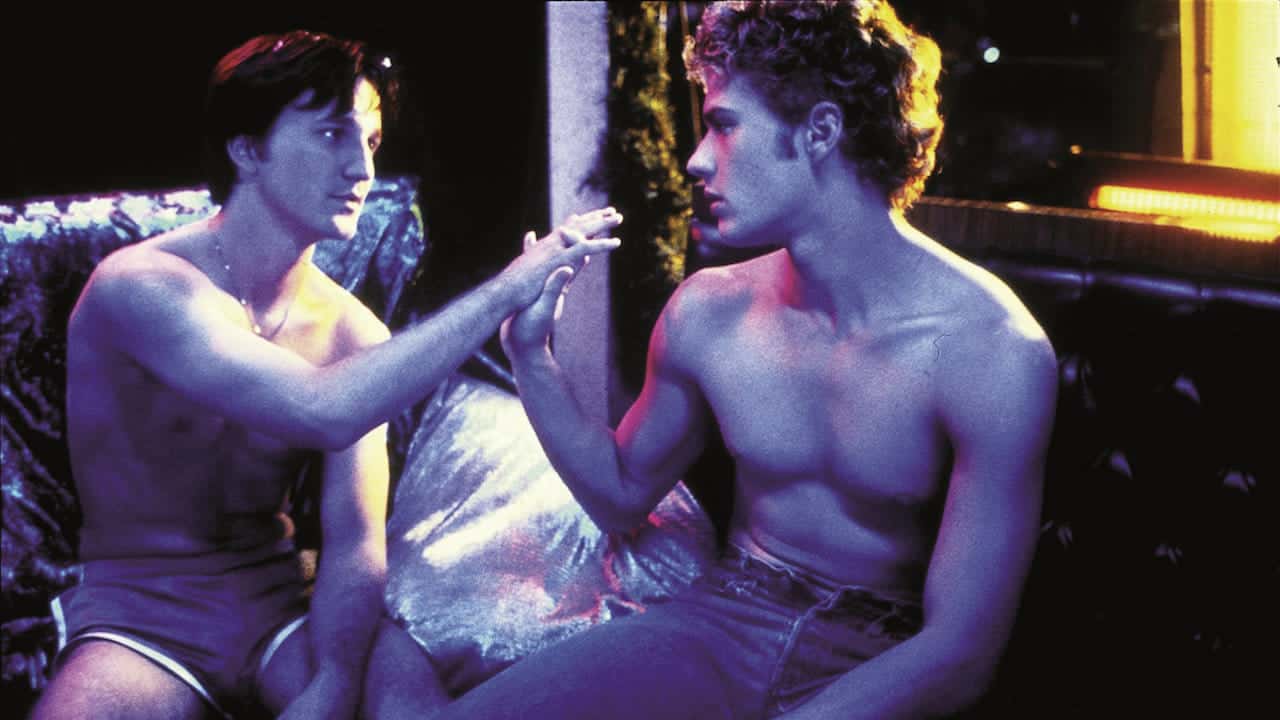
Sex sells. Disco entrepreneurs Steve Rubell and Ian Schrager understood the importance of sex in putting on a show everyone wanted to be a part of in the creation of Studio 54. 54 wasn’t just a club; it was a lifestyle, a fever dream, and an escape. It offered the rich an opportunity to meet the beautiful and the beautiful a chance to woo the rich in a club where rules didn’t apply. In 1998, director Mark Christopher and stars Mike Myers and Ryan Phillippe brought the hedonistic glory of Studio 54 to the big screen with the story of a New Jersey boy caught in the headlights of Rubell’s disco empire.
54 was slated by critics, with many criticising Philippe’s character, while others pointed to a lack of raw sex appeal and subversive energy. But it soon became clear that the theatrical version had been butchered by its executive producer, Harvey Weinstein, with the queer undercurrents all but removed for its cinema release. Thankfully, in 2015, 54 was put back together using rescued footage. While it’s not perfect due to the degraded video, Mark Christopher’s homage to hedonism, sexual freedom, and disco finally had its long-overdue moment in the spotlight.
SALTBURN (2023)

By Neil Baker
Great Britain is a country marked by a significant divide in opportunity, wealth, and privilege. It’s a divide we proudly exported worldwide under the empire, and continues to see Britain largely governed by inherited power and a “who you know” culture of old-school ties. This wealth divide gives rise to Bullingdon Club leaders like Boris Johnson, who believe they are above the rules they dictate, and many business leaders who discuss diversity in soundbites with little understanding of the communities they speak about.
Many films have sought to explore and expose the wealth divide at the heart of British life, from If… (1968) to The Riot Club (2014), each dissecting the inherited power and privilege that underpin the British state. Emerald Fennell’s Saltburn joins this prestigious club of films as it joyously takes a scalpel to the British wealth divide before sprinkling lashings of salt on the open wounds.
With lashings of delightfully dark comedy, Fennel’s film, like Triangle of Sadness, isn’t just interested in dissecting wealth and privilege but the power and political gameplay that leads to the throne. As a result, Saltburn feels like Game of Thrones meets Brideshead Revisited, as the chess game that starts in Oxford and continues in Saltburn reaches its delightfully dark, wicked climax.
Fennel’s film bathes in the sultry summer sun of an estate inhabited by eccentric, polite yet obnoxious people who lack any understanding of the world outside the gates; Saltburn is their kingdom, their castle, and their prison as they lounge, eat, drink, and discuss the beauty of their privilege. Here, an outstanding ensemble cast relishes every word of dialogue, delivering outrageous gags and conversations that demonstrate their separation from reality. But it’s Keoghan and Elordi who steal the show.













Follow Us