
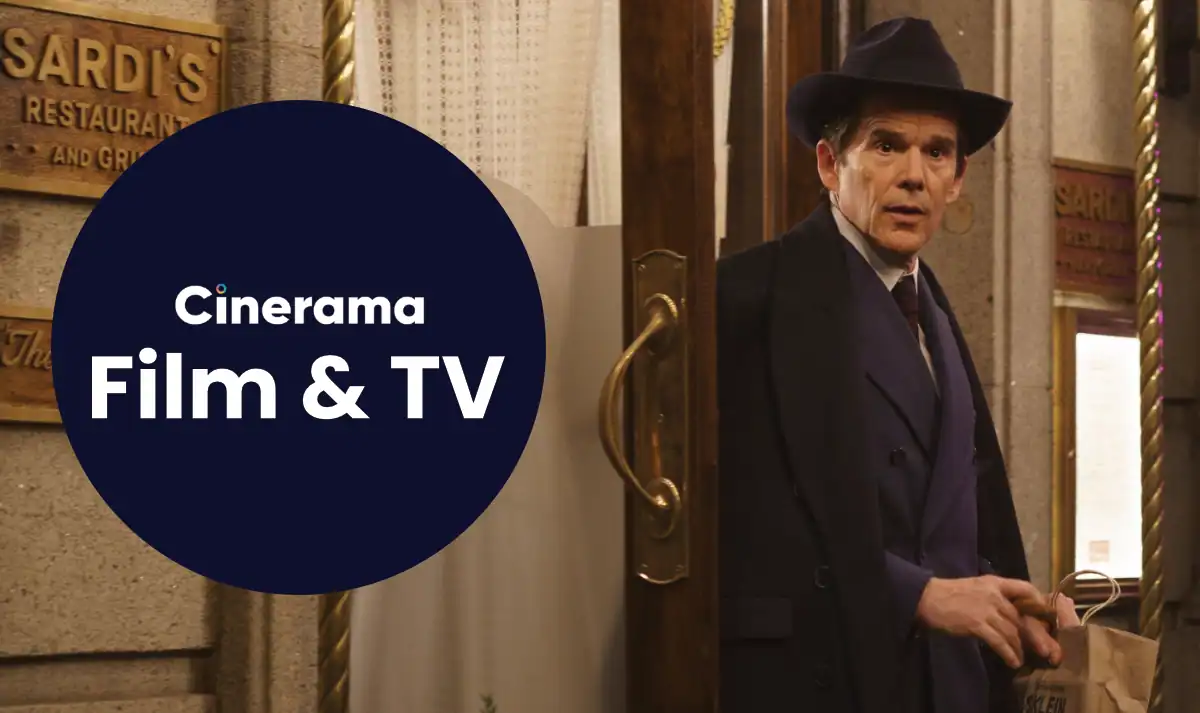
Blue Moon, screening at the BFI London Film Festival, is a mixed bag, one that this critic wishes he liked more. It’s easy to admire the film’s ambitions: it’s glossy and thematically interesting, with an underbelly of tragedy to its characterisation. Pity that the script is so heavy-handed that it drags the rest of the picture down.
Before Sunrise, and the subsequent Before trilogy, is one of Richard Linklater’s finest films. Despite its minimal approach and leaden reliance on dialogue, the film blossoms with Linklater’s fairytale direction, the vibrancy of the setting, and the sheer chemistry between its leads. Ethan Hawke, one-half of the Before trilogy duo, reunites with Linklater for Blue Moon, a biopic that adopts a chamber piece approach, with its dialogue-heavy script drawing inspiration from Before Sunrise. Yet the result sadly leaves much to be desired.
Lorenz Hart (Hawke) was a renowned American lyricist who, alongside writing partner Richard Rodgers (Andrew Scott), wrote a treasure trove of iconic songs like My Funny Valentine, The Lady is a Tramp and, of course, Blue Moon. Yet the film is set years after Hart and Rodgers’ partnership ended. Following a cold opening in which we see Lorenz collapse from the effects of pneumonia, we jump back to the main event. It’s 1943, and Rodgers, together with new writing partner Oscar Hammerstein (Simon Delaney), has just debuted Oklahoma!, the duo beginning to feel the buzz of its unprecedented acclaim.
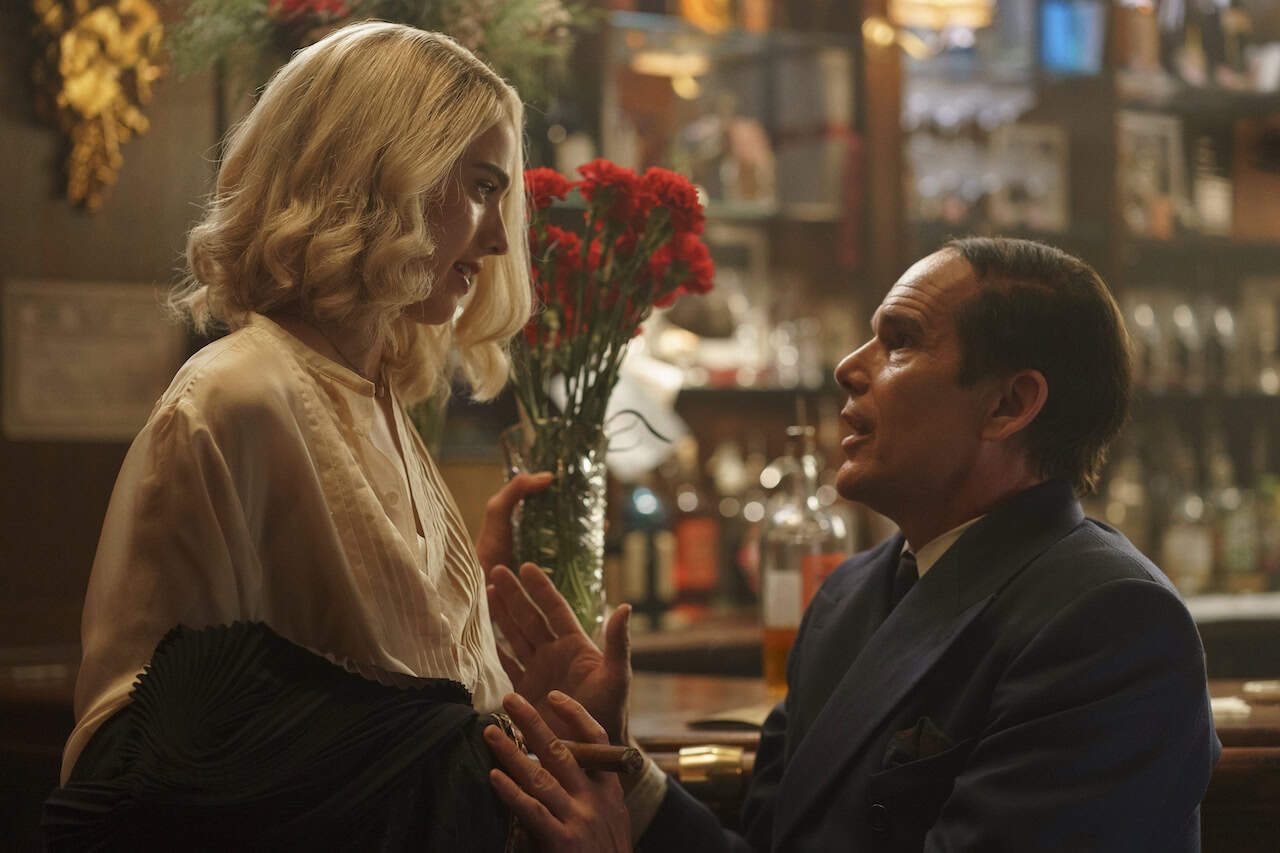
By contrast, Lorenz has sunk deeper into self-destructive habits of smoking, drinking and depression. Contrarianly decrying Oklahoma! to be mawkish and trite, he slips away from the opening night show and takes refuge in Sardi’s bar, where the Oklahoma! afterparty is scheduled to take place. There, he demands a conveyor belt of drinks and begins to spout anecdotes and personal stories to the confused piano player, Morty (Jonah Lees), and the fed-up bartender, Eddie (Bobby Cannavale), who tries and fails not to serve Lorenz drinks.
Chamber piece movies can be logistically tricky, but they pay off stupendously with the right script. Look no further than 12 Angry Men, the greatest of all chamber piece films. Robert Kaplow’s script certainly captures the degree to which Lorenz loved the sound of his own voice, as he badgers on and on, usually topped off with a vulgar innuendo, as he doesn’t confirm but makes no attempt to deny his bisexual preferences. Blue Moon is a character piece, with Lorenz adapting to the changing circumstances of the bar around him, be it the arrival of his dashing protege Elizabeth (Margaret Qualley) or the start of the afterparty.
There’s a poignant calculatedness to this approach, for as overwhelming as Lorenz’s pontifications are, there’s an unmistakable pathos to him. This is a man who’s aware of his brilliance yet laments the fact that said brilliance hasn’t brought him anything stable in life, in stark contrast to his former writing partner. To a degree, this may have been down to Lorenz being a non-heterosexual in a time when heteronormativity was staunchly enforced, but his hopeless romantic habits, twinned with his crippling reliance on alcohol, do not help him. Lorenz is a larger-than-life persona with a razor-sharp mind. Yet, he often seems too self-defeating to indulge in his own gifts, as painfully described by Rodgers when he reflects on their tumultuous partnership.
We get the feeling of a profoundly lonely man unable or unwilling to escape his downward spiral. The film opens with two contrasting quotes: one describes Lorenz as dynamic, and the other as sad. Both sentiments are true, as Lorenz’s lightning-fast witticisms and coquettish demeanour conceal a great dissatisfaction with himself. The film frequently references 1940s cinematic milestones, but none more so than Casablanca, with the setting of the bar evoking a deliberate homage. The quoting of the film gets tiresome, but the one genuinely gut-wrenching scene is when Lorenz is chatting with Elizabeth, and he quotes the iconic line “nobody ever loved me that much”. Seeing how he applies that quote to his own life and philosophy is heartbreaking, as Hawke puts Lorenz’s concealed vulnerabilities on display for all to see.
As engrossing as this sounds, the gimmick of Blue Moon sadly wears thin pretty quickly. The dialogue gets too repetitive in its hammering of the thematic point, dragging the already slow pace, despite its mere 100 minutes, to that of a snail’s crawl. The kinetic energy of the picture comes from when Lorenz chats with Eddie, their frenemy-esque chemistry giving him an outlet to vent and us a chance to see his deeper layers. When he is made to interact with other characters entering and exiting the bar, the film loses momentum, as even the contradictory nature of Lorenz’s various conversations feels hollow and unvaried.
The performances are magnetic, whether it’s Qualley’s balance of charisma and gentleness, Hawke’s fluctuating range, or Scott desperately trying to maintain politeness. But they’re in service to a script that feels as if it’s constantly stalling between scenes, the shallow pool of discussion topics feeling as needlessly compact as Linklater’s stagey direction. At the risk of sounding heartless, Lorenz’s monologues are so frequent they eventually become little more than cloying woe-is-me soundbites.
Although limited by their single location, the best chamber pieces still find ways to glean material and sneak visual playfulness into the storytelling. Consider how Before Sunrise had the whole city of Vienna to play with, or how the longitude of the camera gradually and subtly changed in 12 Angry Men. Blue Moon feels as homogeneous in its mise-en-scène as its script in its textual and subtextual elements. Tracking shots do well to put us in the setting with Lorenz, the bar being a colourful piece of production design. However, the theatrical approach to filmmaking undermines the rawness of the emotional layers; the electric conversations feel inauthentic due to the over-staged nature of the direction and editing. Like its protagonist, it’s a film that doesn’t know when to stay quiet, lacking enough diversity in its visual look to keep us invested. The otherwise compelling themes and astute performances become weighed down by the overwhelmingness of its style and the staleness of its substance.
Blue Moon is a mixed bag, one that this critic wishes he liked more. It’s easy to admire the film’s ambitions: it’s glossy and thematically interesting, with an underbelly of tragedy to its characterisation. Pity that the script is so heavy-handed that it drags the rest of the picture down. Those who struggle with overly talkative pictures will be alienated within the first 10 minutes. Still, even those who appreciate such pictures may find themselves weary as the dialogue continually goes in circles, serving shallow ravings and a story of a tragic star that feels overseen and better told in dozens of other pictures. Linklater and Hawke remain formidable talents in the contemporary scene, but you’re better off sticking with the Before trilogy.
Blue Moon is screening at the BFI London Film Festival and will be released in cinemas nationwide on January 29, 2026.











Follow Us