
Page 6 – Cinerama Capsule: Quick Read Film Reviews
My Dead Ones (2019)

Director: Diego Freitas
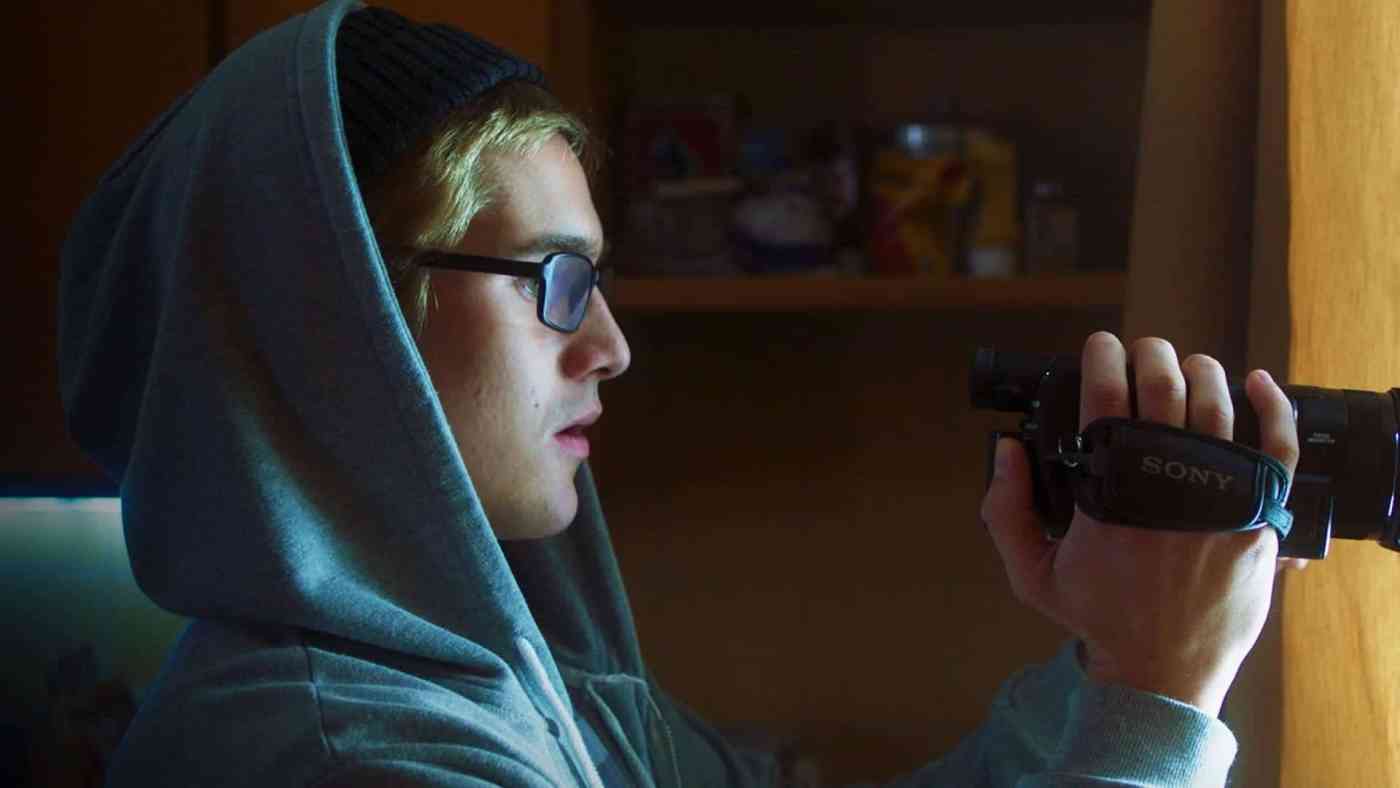
With a captivating central performance from Nicolas Prattes as a damaged and psychologically disturbed teenager, My Dead Ones offers us a knotty exploration of fractured realities through a lens of voyeurism. Director Diego Freitas weaves his horrific tale by adopting David’s singular perspective as a vulnerable, fractured young man. David’s entire worldview is unreliable and chaotic, his whole life wrapped in a fantastical world of horror that both unnerves and exploits the viewer.
However, this very complexity also highlights My Dead Ones’ biggest flaw: its convoluted twists and turns leave those unable or unwilling to keep up far behind, long before its meditative conclusion. Here, the Hitchcock-inspired complexity of David’s character and his fluctuating sexuality are left hanging, as is the link between David’s macabre filmmaking and his view of it as experimental art.
The Cabinet of Dr. Caligari (1920)
Director: Robert Wiene

Where did cinematic horror begin? Many will reference early Universal monster epics, or F.W. Murnau’s 1922 Nosferatu. However, horror truly began with Robert Wiene’s 1920 film The Cabinet of Dr. Caligari. This sublime silent film expanded the notion of horror beyond the ghost stories of early cinema into psychological and visual terror.
First screened in Berlin almost 100 years ago, the film’s design features sharp angles, Picasso-like buildings, and winding streets, creating a feverish dream that slowly evolves into a haunting nightmare. To this day, The Cabinet of Dr Caligari feels like a nightmarish maze with no escape, trapping you in its surreal, haunting world while carving an eternal place in your mind and soul.
On the Basis of Sex (2019)

Director: Mimi Leder

Ruth Bader Ginsburg is a true legend of the American equal rights movement. Her resilience and fortitude led to a career that not only advanced women’s rights but also strengthened America’s standing in equal-rights legislation and practice. A career as rich as RBG’s should therefore have been nectar to a director, providing a biopic that challenged and inspired in equal measure. Unfortunately, On the Basis of Sex fails to deliver, opting instead for a melodramatic and mundane narrative.
Performances lack spark, opting for an almost melancholic tone at points where they should inspire, challenge and engage the audience. This is a disappointment, given the cast’s talent, which includes Felicity Jones and Armie Hammer. However, the screenplay’s lack of passion keeps this movie from reaching its full potential.
The Kid Who Would Be King (2019)
Director: Joe Cornish
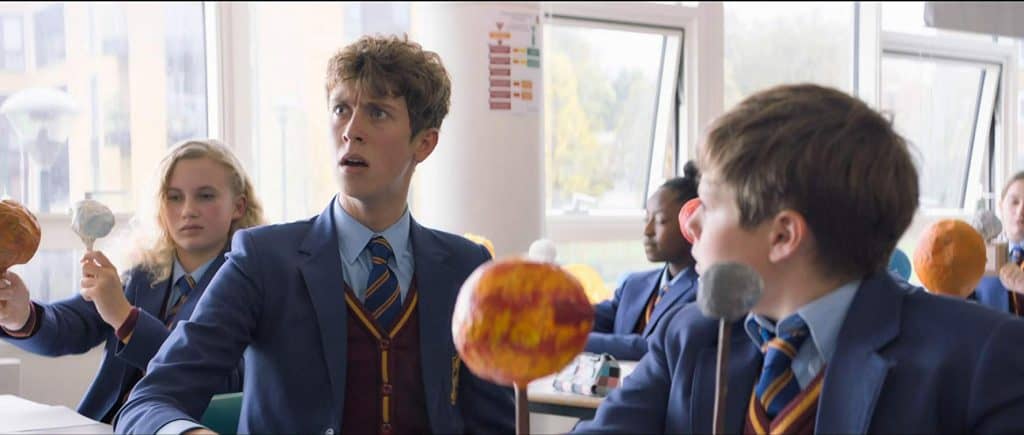
The Kid Who Would Be King is a highly creative delight that so far hasn’t received the attention it deserves. Joe Cornish weaves together the anxieties of modern childhood, BREXIT Britain, and Arthurian legend in a truly wonderful fantasy adventure. Alex (Louis Ashbourne Serkis) thinks he’s just an average kid, and his life is a mundane set of trials and tribulations.
However, Alex’s life is about to change when he stumbles upon the mythical sword in the stone, Excalibur, after escaping his school bullies (Lance and Kaye). The interface between the legend of King Arthur and contemporary Britain may seem unlikely, but it works through a delightful screenplay and a superb young cast.
The Kid Who Would Be King believes in the power of young people to change the world and build something better than what we have now, and that’s a belief we can all support.
Cinerama Capsule: Quick Read Film Reviews
The Boy Who Harnessed the Wind (2019)
Director: Chiwetel Ejiofor

The Boy Who Harnessed the Wind tells the remarkable and heartwarming true story of a teenage boy who provides electricity and water for his Village in Malawi during a devastating drought. Ejiofor’s multi-layered film intertwines global issues with a deeply compelling family and community-focused drama. Here, The Boy Who Harnessed the Wind offers us a window into communities where education can truly set people free, yet is often denied due to a poverty of opportunity. The exploration of the interface between technology and community tradition is beautifully constructed, as are the overlapping themes of an unequal global economy.
Greta (2019)
Director: Neil Jordan

Neil Jordan (Breakfast on Pluto, The Butcher Boy and Company of Wolves) is well known for dovetailing adult fantasy/horror with contemporary social themes. However, with Greta, Jordan opts for a far more mainstream thriller/horror that delights in parts but struggles to sustain the tension of the first two acts as we approach the third.
Frances (Chloë Moretz) has recently moved to New York from Boston following her mother’s death, and there she works as a waitress while enjoying New York life with her flatmate Erica. However, when Frances finds a misplaced bag on the subway, her life is about to change forever when she returns it to a lonely widow named Greta (Isabelle Huppert). But what begins as an act of kindness quickly spirals into a deadly dance of obsession and control.
Greta is bathed in moments of glorious tension built upon a Hitchcock-inspired story. Here, Moretz and Huppert truly shine as their characters enter a deadly game of cat and mouse that twists and turns against a Manhattan backdrop.
All Is True (2019)
Director: Kenneth Branagh
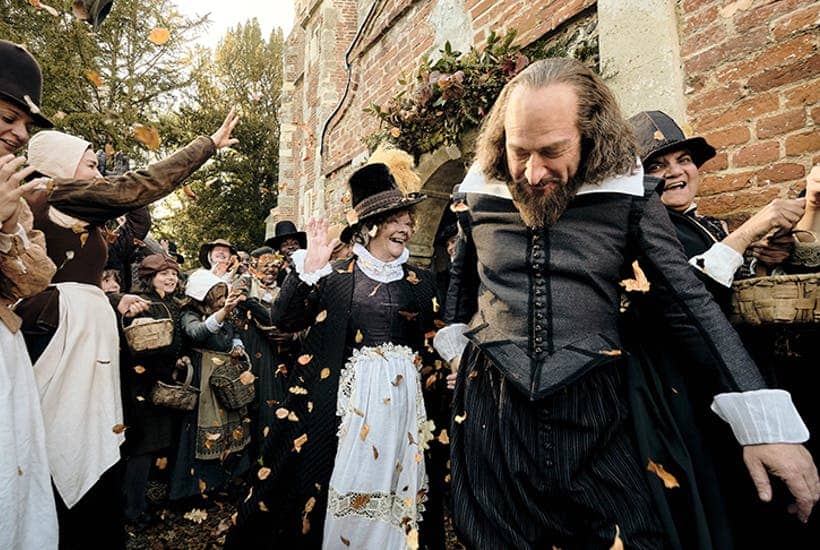
Kenneth Branagh and an all-star cast, including Dame Judi Dench and Sir Ian McKellen, present a poetic, well-crafted tale of the final years of William Shakespeare’s life. All Is True shines in its use of Shakespeare’s plays and sonnets to explore the final years of a man whose life has been dedicated to his craft, grounding the story in a quiet yet assured tale of mortality, family, and love. Performances are captivating, allowing an experienced cast to shine with a script that offers humour, wit and sadness in equal measure. All Is True never attempts to gloss over or romanticise the puritanical age in which Shakespeare lived, and the atmosphere of shame, control and inequality. This only further empowers the genius of his writing and its enduring appeal in our modern society.
Vice (2019)
Director: Adam McKay
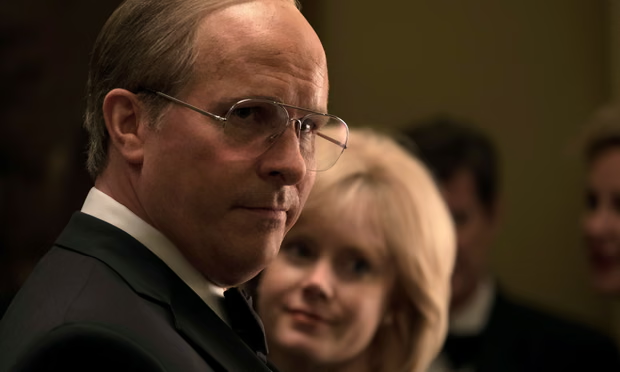
Powerful, challenging and utterly compelling. Vice is one of the most intelligent and accessible pieces of political filmmaking to grace our screens in many years. Deeply uncomfortable at times, yet beautifully directed and performed, Vice is a masterful exploration of power, misinformation and manipulation in modern democracy. This is the prequel to the world we now live in, and Adam McKay asks us to reflect on the journey that brought us here and on our ability to speak truth to power.
Slaughterhouse Rulez (2018)
Director: Crispian Mills

If your parents, no matter how well-meaning, decide to send you to a boarding school named ‘Slaughterhouse’, they plan to rent your room permanently. And if that school, no matter how posh, has a colossal fracking site next door, run!
If only someone had told young Don Wallace (Finn Cole) that, he would have never spent his term fighting monsters with a taste for human flesh. But then he also wouldn’t have met snuff-loving roommate Willoughby Blake (Asa Butterfield), posh girl Clemsie (Hermione Corfield) or the innocent, bullied Wootton (Kit Conner). Meanwhile, the headmaster (Michael Sheen) supplements the school’s finances with dodgy dealings and kickbacks, while housemaster Meredith (Simon Pegg) turns to the bottle.
Ultimately, this creates a highly dysfunctional school environment long before its hidden horrors are revealed. So buckle up for a night of schoolyard terrors, rotten smells, snappy monsters and bloody mortarboards. Just don’t forget the snuff, cricket bats and shin guards; the new school term was never meant to be this mad!
The Workshop (2018)
Director: Laurent Cantet

Laurent Cantet’s latest film offers a complex and at times unnerving exploration of literature, free speech, political extremism, and the rise of polarised views in France. This is not a uniquely French subject, and while watching it, I also found myself thinking about our polarised political system, where many young people are pushed to the margins of belief. The Workshop deftly navigates the line between understanding, anger, family, and teen identity, never offering easy answers to the audience.
Cinerama Capsule: Quick Read Film Reviews
Assassination Nation (2018)

BFI London Film Festival
Director: Sam Levinson

Offering us a tough, relentless, scary, and often humorous commentary on modern Western society, this smart and insightful mash-up of Heathers and The Purge takes square aim at social media, our male-dominated society, and the generational political divide that led to Trump’s election. Assassination Nation pulls no punches in its takedown of modern life, driven by three-line tweets, quick and destructive judgment, and a media landscape that encourages all three. The performances from Odessa Young, Hari Nef, Suki Waterhouse, Abra, Bill Skarsgård, and Colman Domingo are to die for!
Cinerama Capsule: Quick Read Film Reviews
Robin Hood (2018)
Director: Otto Bathurst

Robin Hood adaptations seem to have a knack for falling into the same cinematic holes as countless King Arthur flicks, and this one may not be as bad as last year’s King Arthur, but its modern, muddled take on folklore is just as tedious. Here, a stellar cast, including Taron Egerton and Ben Mendelsohn, is left little room to develop their characters, due to a one-dimensional screenplay in which even the lighter moments amid the tiresome action fall flat. With little emotional connection to its characters, this version of Robin Hood sadly never finds its meaning or heart.
Aquaman (2018)
Director: James Wan

Can Aquaman save the DCEU? Well, not quite, but he does offer us some damn fine popcorn entertainment in a movie that is slightly bonkers, and visually stunning with some cracking performances and far too much CGI. Aquaman never intends to provide us with a full origin story for our fishy muscle-toned sea god, and it’s all the better for avoiding the origin trap. However, despite the underwater fun, one can’t help but wonder where this DCEU is going. My bet is that it’s about to sink like a stone to the bottom of a watery grave, unless someone can save it! I hope I’m wrong.
The Wife (2018)
Director: Björn Runge

Character drama doesn’t get much better than Björn Runge’s expertly directed tale of secrets, love and unspoken pain, with Glenn Close giving an Oscar-worthy performance alongside the outstanding Jonathan Pryce. This is a drama in which a mere look or gesture speaks a thousand words, as long-suppressed internal worlds scream for release and recognition. The Wife isn’t just sublime drama; it’s filmmaking and performance at their most raw, affecting, and engaging.
Cinerama Capsule: Quick Read Film Reviews
Postcards from London (2018)
BFI Flare
Director: Steve McLean

Steve McLean’s first feature since his biographical fantasia Postcards from America (1994) may echo the title and, to some degree, the style of its underrated predecessor, but its tone is altogether different.
The story within Postcards from London is almost irrelevant, as we are taken on an artistically bold and colourful ride through Soho alongside Jim, played by the fantastic Harris Dickinson, last seen in the exceptional Beach Rats, and four male escort guides and comrades, including the fabulous Jonah Hauer-King.
There is no traditional story arc at play for these young, hot London hustlers, as art, imagination, gay history, and social discussion merge into a colourful cornucopia of desire, longing, and youthful exuberance. This is likely to elicit a love-hate response from audiences given expectations, but no one can deny McLean’s ability to discover some of the best young male talent currently available.
Personally, I found Postcards From London an utter joy to watch, with superb performances and a beautifully imaginative script that pays homage to Derek Jarman. But the real treasure here is Dickinson, Hauer-King and a cracking ensemble of talent who will, trust me, become household names in the coming years.
The Happy Prince (2018)
BFI Flare
Director: Rupert Everett
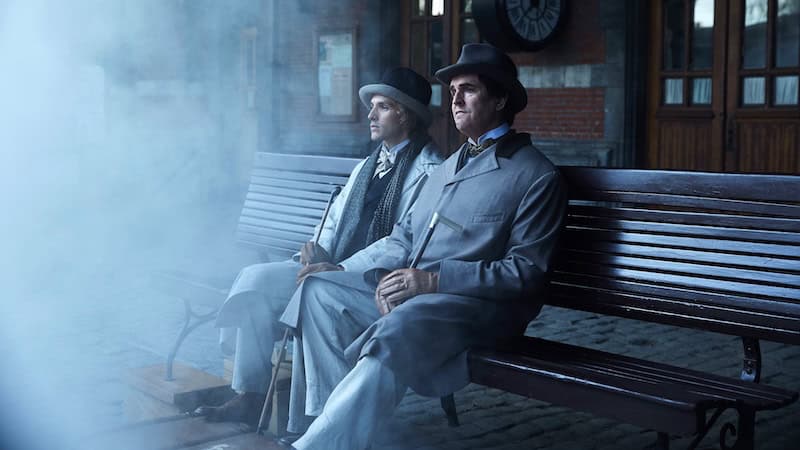
We all reach a moment in life when we know the days ahead are shorter than those behind us. For Oscar Wilde, played here by Rupert Everett, the years where the days grew shorter were spent in disgraced exile in Naples and Paris following his release from prison in London after his conviction for gross indecency. Yet even in exile, the figure of the man who brought him down, Lord Alfred Douglas, played by Colin Morgan, loomed large, haunting Wilde’s every move and thought.
The Happy Prince is a beautiful and brave film by Rupert Everett, following Wilde’s final years as we explore his memories, regrets, and hopes. Everett delivers a masterful performance and stunning direction, alongside a truly fantastic ensemble cast, including Colin Firth, Morgan, Emily Watson, and Benjamin Voisin, in a film that is both tender, sad, and joyous as Wilde faces his mortality with wit, charm, regret, and misplaced loyalty.












Follow Us