
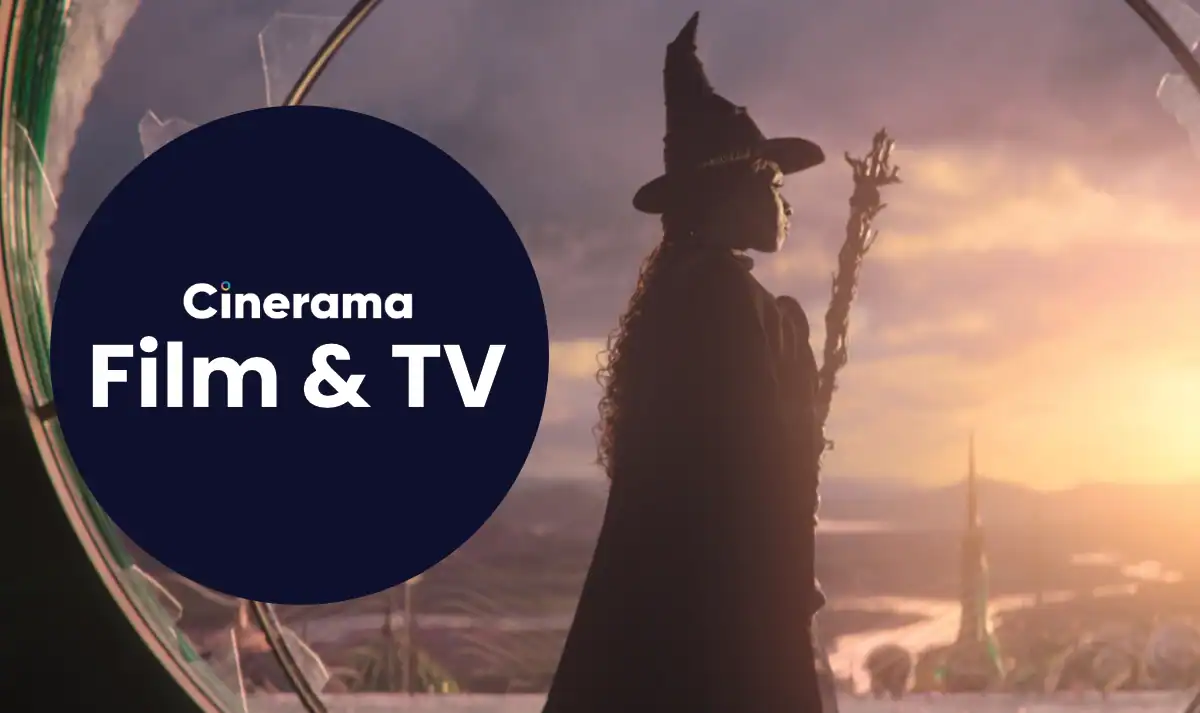

Wicked Part One is held back precisely because it’s a Part One story. With too much narrative and technological padding for its own good, its sense of awe is periodically obfuscated and even lost. But when it shines, it is enrapturing. Wicked (Part One) arrives in cinemas nationwide on Friday, November 22.
In 2003, Wicked, a Broadway adaptation of Gregory Maguire’s novel, took the world by storm. Crafted as a prequel to the beloved Wizard of Oz, one that portrayed the Wicked Witch of the West as tragically misunderstood, the show went on to win three Tony Awards, cementing its legacy beyond its Ozian origins. A cinematic adaptation had been discussed for years, but now Jon M. Chu of In the Heights has finally brought it to life, albeit by splitting the work into two films (part two is set to release next year). That choice unquestionably affects the storytelling, but the spectacle on display maintains a euphoric sense of enchantment.
Years before Dorothy arrived in the Land of Oz, the Wicked Witch of the West went by the name Elphaba (Cynthia Erivo). Born with green skin and magical abilities she can’t control, she is shunned her whole childhood by her fellow residents of Oz and even her own father. Even her acceptance into the prestigious Shiz university, where Elphaba is to learn sorcery, is tainted by the student body, making her an outcast initially led by Galinda (Ariana Grande-Butera), who will eventually become Glinda the Good. This cinematic first act explores the dynamic between Elphaba and Galinda, as the duo transitions from enemies to friends, while also delving into the political corruption at the heart of Oz, which ultimately leads to Elphaba’s transformation into the Wicked Witch.
As the title implies, the show, and consequently this film, fundamentally questions the nature of wickedness. Is it something one is born with or a role thrust onto them by others’ preconceptions? As the Wizard (Jeff Goldblum) observes, “A surefire way to bring people together is to give them a common enemy to hate”. However, it is also a means of maintaining power, or at least the façade of it. This first part of the story, as captured by this film, acts as a tale of disillusionment in which Elphaba’s attempts to fit in and desire to serve under the Wizard are destroyed by the cold, hard facts of Oz’s corruption and prejudices, whether against her or the sentient animal community that Elphaba comes to empathise with.
Serving this tale of disenchantment is, ironically, some enchanting production design. The Wizard of Oz is perhaps the most famous use of Technicolour in film, and Wicked Part One follows suit by utilising a range of colours within its look. From the blistering greens of Elphaba’s skin and the Wizard’s Emerald City to the opulent whites and blues of Shiz Academy and its student uniforms to the vibrant pinks of Galinda’s entire wardrobe, the film explodes with vibrancy. The scale and ambition of the project are on display for all to see, generating an epic, vocally awe-inspiring grandeur that’s hard not to lose oneself in. That this bright colour palette conceals the darker underbelly of its themes makes for a compelling contrast in tone and substance, harkening back to the theme that sometimes we misconstrue what qualifies as wicked.
Yet where these practical set pieces are teeming with life, the VFX is somewhat hit-and-miss. The opening scene, just like the play, is a sequence that depicts the Witch’s fate in The Wizard of Oz, and the digital imagery is so obvious that it feels like a cutscene from a video game. Thankfully, the practical sets and costumes take over, but the use of green screen is not always subtle, and when spotted, it detracts from the immersive appeal of the production design. At times, it even affects the aesthetic, the brilliant colours becoming muted in the face of harsh lighting choices and a reliance on digital backgrounds.
Perhaps this obviousness makes the pacing more noticeable. At 160 minutes, this first part runs almost the length of the whole Broadway show, resulting in narrative padding that doesn’t always feel justified. As important as it is to showcase Elphaba’s alienation and Galinda’s struggle between vanity and genuine goodness, the film spends so much time on setup that we begin to notice its runtime. It basks in its epic scale, but it indulges in itself too much, the immersion breaking under the weight of rampant setup and prolonged choreography – the dance between Elphaba and Galinda at the Ozdust ball seems to go on forever. At the risk of sounding impatient, the film takes quite a while to get to the good parts.
However, those aforementioned good parts are absolutely brilliant. The songs were always going to be a highlight due to their recognisability and popularity, but Chu and team bring them to thrilling life. Elaborate choreography, playful camerawork that spins and flows alongside the dancers, and highly charged singing dominate this picture, especially in the latter half when Elphaba’s turn and the more overtly political themes of the story emerge. The iconic Defying Gravity song shapes the entire climax, resulting in one of the best finales of any film in 2024. One wishes the entire picture had been as electric and emotive as this stretch, but it alone is worth the price of admission.
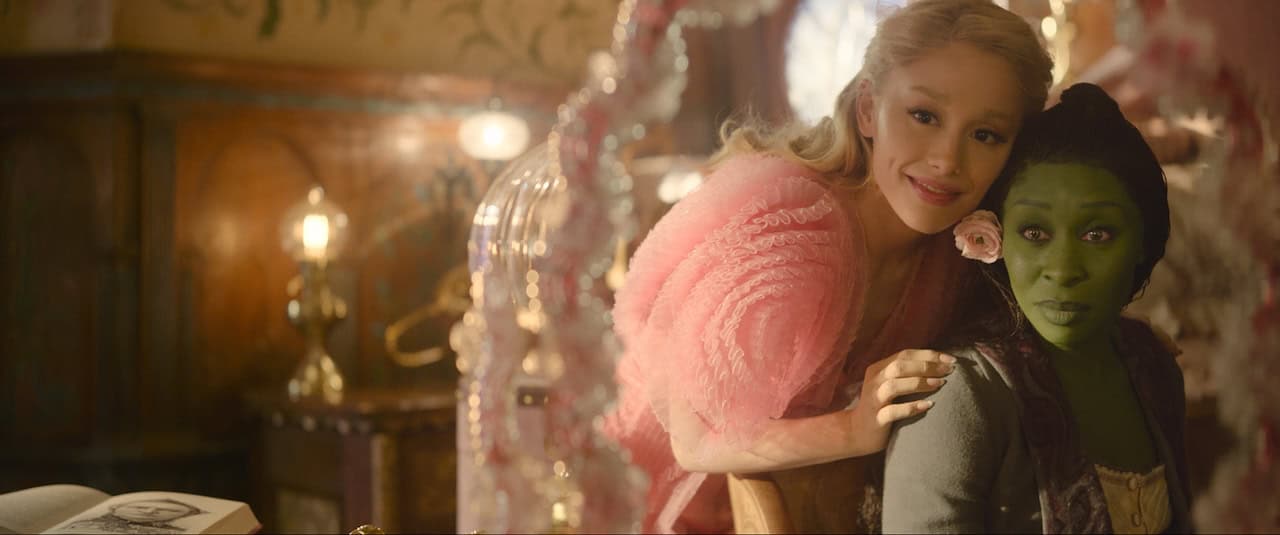
At the epicentre is a spellbinding performance from Cynthia Eviro. From her immaculate singing to her ability to tap into Elphaba’s deepest vulnerabilities and darkest thoughts, Eviro makes the role her own. Charming, expressive, and powerful, Eviro is the heart and soul of the film. Ariana Grande-Butera taps into her comedic chops from her days on Victorious to portray Galinda’s initial shallowness, but manages to strike a balance between humour and drama, particularly in the film’s final act. Michelle Yeoh, Jonathan Bailey, and the voice work of Peter Dinklage make for strong performances, too, but Eviro and Grande-Butera are the glue that keeps everything together.
Wicked Part One is held back precisely because it’s a Part One story. With too much narrative and technological padding for its own good, its sense of awe is periodically obfuscated and even lost. But when it shines, it is enrapturing. At its best, it is a visually intriguing and vocally powerful delight elevated by expressive choreography and Eviro’s magnetic central performance. Perhaps seeing it alongside next year’s Part Two will retroactively improve its immersive powers. But, in its current form, it entertains and occasionally mesmerises. Maybe no one mourns the wicked, but at this rate, we can certainly celebrate them.









Follow Us