
Page 3 – The Cinerama Christmas Movie Collection
EYES WIDE SHUT (1999)


BY Sab Astley
Eyes Wide Shut is far from a reflection of the festive spirit, but if Die Hard is now classed as a Christmas film, then so is Kubrick’s swan song. In many ways, it’s the perfect anti-Christmas film, exploring a family breakdown at the “happiest” time of the year. Disturbed by the sudden sexual revelation of his wife (Nicole Kidman), Dr Bill Harford (Tom Cruise) struggles to move past the recurring mental image of her with another man. Here, his obsessions eat away at his soul as he embarks on a trip into a secret psycho-sexual Manhattan fantasy.
Eyes Wide Shut remains fascinating because everyone seems to be in on the joke of Harford’s meaningless exploration, except for Cruise. Kubrick almost appears to be playing the grandest trick possible by tormenting the character and the actor in unison. However, while Cruise’s serious performance shouldn’t work, it does.
Eyes Wide Shut would push Cruise and Kidman’s relationship to the brink with a mammoth 15-month production; in fact, many have since argued that this was the point at which their marriage became impossible. Was this Kubrick manipulating the boundaries between reality and fiction, using Kidman and Cruise as his pawns? We will never know what Kubrick had in mind during filming, which may be why Eyes Wide Shut remains a fascinating but uncomfortable watch.
Why Kubrick set Eyes Wide Shut during the holidays remains a mystery, with no festive link to the original 1926 novella, Rhapsody: A Dream Novel. Some writers, like Brianna Zigler, have theorised that this is Kubrick’s anti-consumerist critique of what Christmas has become —a solid take. However, you could also read this as a Kubrickian take on a Christmas romp that celebrates Kubrick’s dark sense of humour and disposition for psychological drama. Either way, Eyes Wide Shut remains an enigma wrapped in fairy lights and sex, a darkly delicious finale from a cinematic and artistic genius.
BLAST OF SILENCE (1961)
BY Agi Sajti
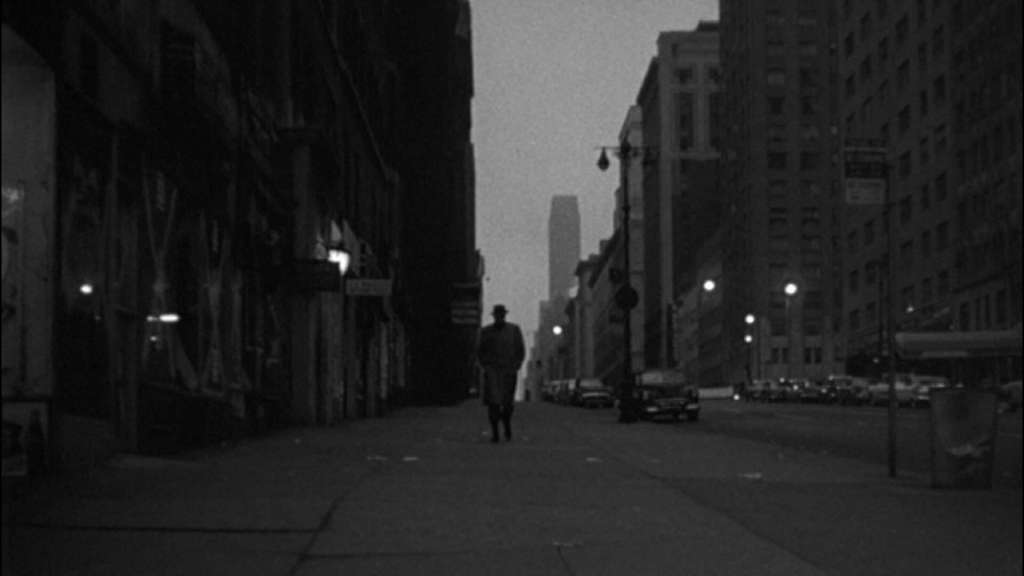
Allen Baron’s superb slice of neo-noir is possibly one of the darkest and bleakest films ever made, making it perfect for this Christmas list. Baron’s film follows several days in the life of a New York hitman, Frankie Bono (Allen Baron), whose latest job is the assassination of a mobster called Troiano over the Christmas holidays. From this description, you may expect an action-packed crime thriller filled with violence and shootouts, but Blast of Silence is an existential drama.
Rather than focusing on the assassination, Baron’s movie portrays the internal world of an antisocial hitman as he aimlessly wanders through the festive glow of New York City, unable to connect with anyone. Here, his wanderings are clear in purpose while secretive in nature, from purchasing a new gun from a dealer to a Christmas party, where he meets an old flame, whom he later attempts to sexually assault.
Ironically, the Christmas backdrop of Blast of Silence — its celebrations, gifts, trees, and Santa — only makes Frankie’s journey even starker and lonelier. The festive cheer alienates him as he passes those celebrating, his aimless hatred and emptiness exposed by Lionel Stander’s brilliant narration —one of the best in noir —as we can almost taste the cigarette ash and alcohol on his breath. Baron’s film is a stunning example of modernist filmmaking, with a refreshingly bold visual style set against authentic New York City location shots. Meanwhile, its narrative approach focuses on the main character’s psyche rather than the events surrounding him, as we enter his closed, isolated world, placing Blast of Silence among the forerunners of French New Wave cinema while inspiring many of the gritty New York thrillers of the 1970s.
Although the story is about as far from the classic festive mood as possible, Baron’s rediscovered classic explores traditional themes of festive isolation. Here, the holidays almost feel like a knife in Frankie’s heart as he silently considers what could have been and what is.
In many ways, the result is reminiscent of Albert Camus’s The Stranger in its worldview. Only recently rediscovered by many after disappearing into the mists of time, Blast of Silence holds a unique place in cinema history through its unforgettable visuals and complex character study. While it may not be a cheery Christmas movie, it is a landmark in modern cinema that deserves your full attention.
A CHRISTMAS STORY (1983)

BY CALUM COOPER
Presented through a series of vignettes, this Bob Clark directorial effort is genius in its plainness. A young child, Ralphie, wants a specific Christmas present and so goes through a series of youthful hijinks to obtain it. The premise is cheerfully amusing, showcased through playful editing, witty writing and an eccentric score that captures just the right tonal balance between silly and heartfelt. It’s often daft, albeit the kind of goofiness played completely straight, but it’s also chock-full of tenderness, with a loving nostalgia for the best, most turbulent parts of childhood. An especially moving scene sees Ralphie’s mother treating him with kindness after he gets into a fight – a small but sweet mother-son moment that still feels rare in movies today. It’s an alluring, funny and unexpectedly compassionate little gem.
THE HOLDOVERS (2023)
BY CALUM COOPER
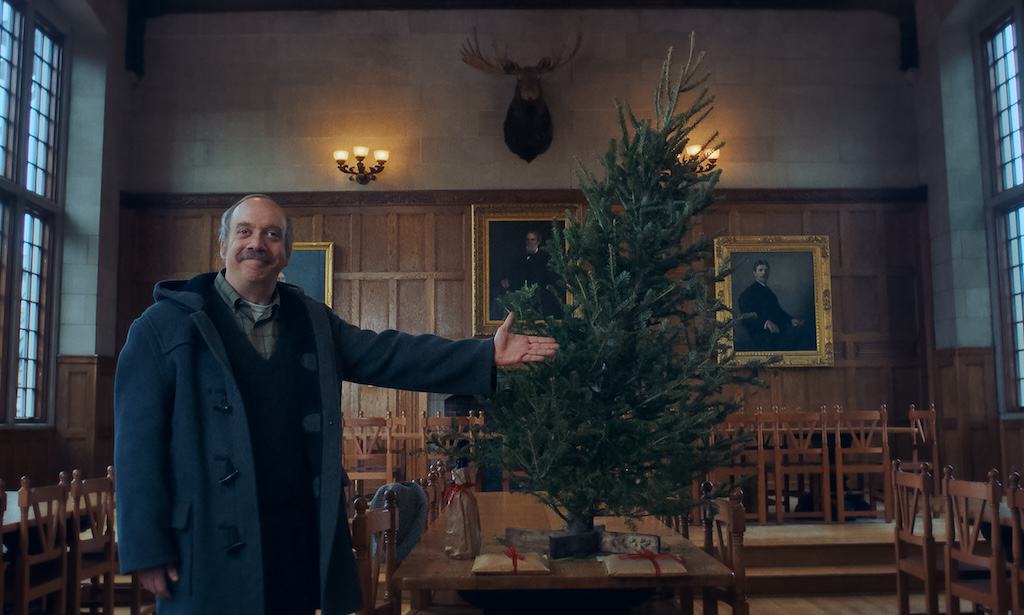
The most contemporary film on this list is also one of the best comedies of the past few years. In detailing the shenanigans that a curmudgeon teacher, an unruly student and a grieving school chef get up to over a Christmas break, this picture finds solace in unlikely connections and the ways people can be positive influences on each other in times of crisis. Despite the clashing personalities and razor-sharp writing (the characters trade some of the best and funniest insults put to film), the film boasts a surprising gentleness, with the snowy landscapes and cinematography emphasising palpable loneliness and the opportunity for change waiting in the wings. As enamoured in the Christmas spirit of togetherness as any other genre classic, this touchingly directed and relentlessly humorous film harbours heavy themes but consistent empathy, as well as career-best performances from Paul Giamatti and Da’Vine Joy Randolph.
The Cinerama Christmas Movie Collection
MEET ME IN ST. LOUIS (1944)
BY AGI SAJTI
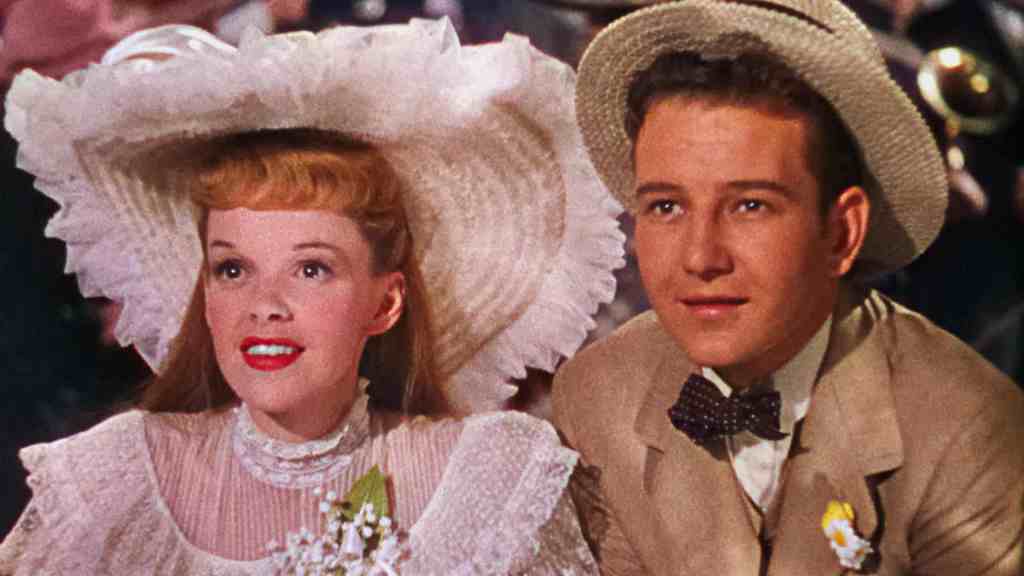
Vincente Minnelli’s classic musical is an odd Christmas film in that, apart from including one of the most famous Christmas songs ever written, the plot does not revolve around Christmas at all. Yet, there is no denying that its overall warmth, atmosphere, and family-oriented themes embody a classic festive vibe.
The film follows a year in the life of the upper-middle-class Smith family, beginning in the summer of 1903 and culminating in the spring of 1904, just before the St. Louis World’s Fair. For a classic Hollywood studio film, Meet Me in St. Louis is somewhat unique in that it does not centre on a specific conflict. The main issue here is a father moving to New York for work, leaving his family behind in their beloved St. Louis. However, this secular plot device is introduced only halfway through the film and resolved with few significant obstacles.
Instead, Meet Me in St. Louis is told through a series of vignettes, one for each season. Each one portrays the successes and hardships of the family members. This includes the disagreements between Mum and Dad (Leon Ames and Mary Astor) and the two oldest children, Rose (Lucille Bremer) and Esther (Judy Garland), who search for love. At the same time, the two youngest, Agnes (Joan Carroll) and Tootie (Margaret O’Brien), search for security and warmth. Here, we find all the core elements of the classic coming-of-age tale long before it was labelled as such, as Minnelli dutifully adapts the short stories by Sally Benson published in The New Yorker.
As the first collaboration between Minelli and Garland, Meet Me in St. Louis is the epitome of a classic Hollywood romantic musical, with everything you would expect from the genre. The majestic settings, authentic costumes, and incredibly vibrant, gorgeous colours make it clear how high the budget must have been. At the same time, the cast is outstanding as an ensemble, with Margaret O’Brien’s 6-year-old Tootie stealing some scenes. However, this is Judy Garland’s film – her voice is incredible as she belts out the timeless classics “Have Yourself a Merry Little Christmas” and “The Trolley Song”.
Meet Me in St. Louis is quite possibly one of the most iconic musicals from the Golden Age of Hollywood. While it might feel a bit too sentimental or cloying at times, its visuals, performances, and festive spirit are worth anyone’s time. It may now be considered a Christmas classic, but the film is primarily a love letter to St. Louis.
C.R.A.Z.Y (2005)

BY NEIL BAKER
Is Jean-Marc Vallée’s outstanding comedy/drama C.R.A.Z.Y. a Christmas movie? Well, yes and no. While C.R.A.Z.Y. may not centre its full runtime around the holidays, Christmas forms a huge part of this coming-of-age gem. Full to the brim with superb performances and killer needle drops, this beautiful, engaging and sweeping tale of a family caught in the headlights of social change, secrets, and sibling rivalry takes us from the mid-1960s to the early 1980s.
Born on December 25, 1960, Zac Beaulieu (Marc-André Grondin) is the fourth son of Gervais and Laurianne, and from birth, he doesn’t quite fit in. As he grows into a young boy, his differences become more pronounced: his mother is convinced he has a God-given ability to heal others, while his father worries about his love of prams and dolls.
Zac has no choice but to fight for his father’s attention and approval in a family of five boys, with Raymond, his older brother, the biggest obstacle to his need for fatherly love. At the same time, Zac is silently questioning his sexual orientation as he immerses himself in the music of Bowie, The Rolling Stones and Pink Floyd, hiding his feelings and emotions from his family while his older brother slowly goes off the rails and his dad ignores the problems brewing.
As Zac’s confidence grows, alongside his feeling of alienation from the family, the ’70s morph into the ’80s, and the family finds itself tested like never before as secrets bubble to the surface and long-simmering sibling conflicts take centre stage.
Jean-Marc Vallée’s film provides us with the honest and open tale of one boy grappling with his sexual orientation in a conservative home environment where his father’s rigid expectations create tension, rivalry and internal conflict. While Zac’s older brother may appear to be a competitor for his father’s love, neither brother will ever please their father; no matter what they do, they will never meet his expectations.
The film’s title is symbolic, representing Zac’s unconventional nature and the chaotic world surrounding him. The acronym C.R.A.Z.Y stands for the first initials of Zac and his four brothers, highlighting the complex dynamics within their family. Each sibling embodies distinct qualities, and their contrasting personalities create a rich tapestry of experiences shaping Zac’s journey.
BATMAN RETURNS (1992)

BY NEIL BAKER
Batman Returns may well be one of the most underrated comic book films of the past 25 years. It would see Tim Burton delve even deeper into the Gothic fairytale horror of his 1989 Gotham City, while embracing a darker universe as he brought together the Bat, the Cat, and the Penguin for a nightmare Christmas. Keaton builds on his debut alongside Pfeiffer‘s psychotic yet sensual Catwoman and DeVito’s damaged and dangerous Penguin in a genuinely spectacular comic book adventure that defies simple genre labels.
Batman Returns seamlessly blends Burton’s love of fairy tales with heart-pounding action and the darkest humour, creating a Christmas comic book outing that has never been matched. Unfortunately, Batman Returns proved too dark for Warner Bros., and as a result, Keaton, Pfeiffer and Burton’s involvement in the franchise ended on the snowy streets of Gotham.
EDWARD SCISSORHANDS (1990)

BY NEIL BAKER
Imagine trying to eat your Christmas turkey with two giant scissors for hands—the frustration alone would surely ruin your Christmas dinner and cause significant discomfort to those around you. Alas, this is just one of young Edward’s problems in Tim Burton’s gloriously dark and emotional fairytale.
Tim Burton’s movie is a beautiful slice of Gothic fantasy that pays homage to several classics, including Mary Shelley’s Frankenstein and Carlo Collodi’s Pinocchio, and takes us on a journey into loneliness, discrimination, and forbidden love. Edward Scissorhands was released during the summer of 1991, but it inhabits a world of Christmas-like wonder, discovery and magic.
The Cinerama Christmas Movie Collection
3 GODFATHERS (1948)
BY AGI SAJTI
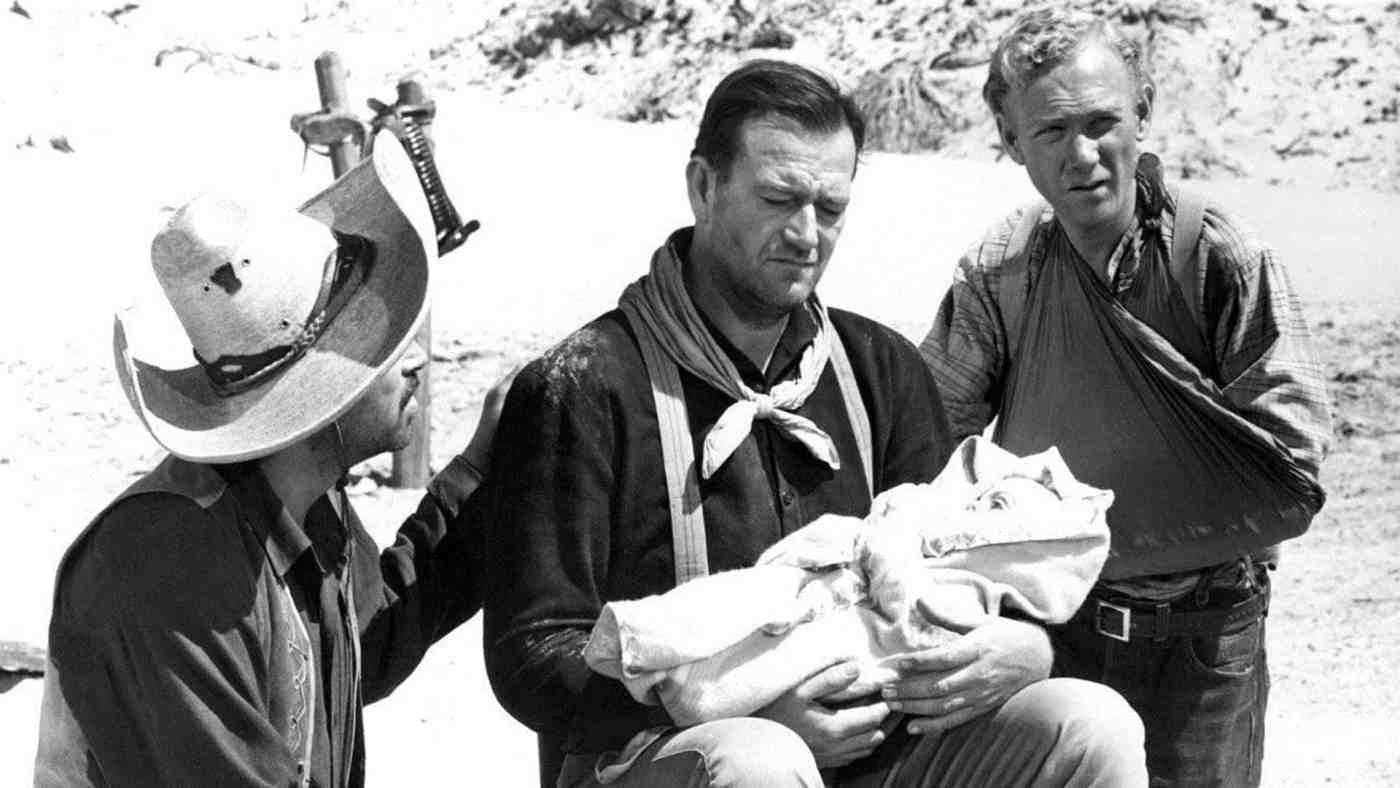
The Western is rarely associated with the Christmas genre, but with 3 Godfathers, John Ford dovetails the classic Christmas tale with the oppressive heat of Arizona.
The story is based on Peter B. Kyne’s 1913 novelette, which features three wise men transplanted to the Wild West. Here, three rustlers, Robert (John Wayne), William (Harry Carey Jr.) and Pedro (Pedro Armendáriz), flee into the desert after robbing a bank, only to find themselves helping a woman in labour. However, when the woman dies, she asks the men to protect her newborn boy and carry him to the safety of New Jerusalem.
The three rugged cowboys have no idea how to care for the newborn in a story that blends Biblical scripture with classic Western comedy.
TANGERINE (2015)
BY NEIL BAKER
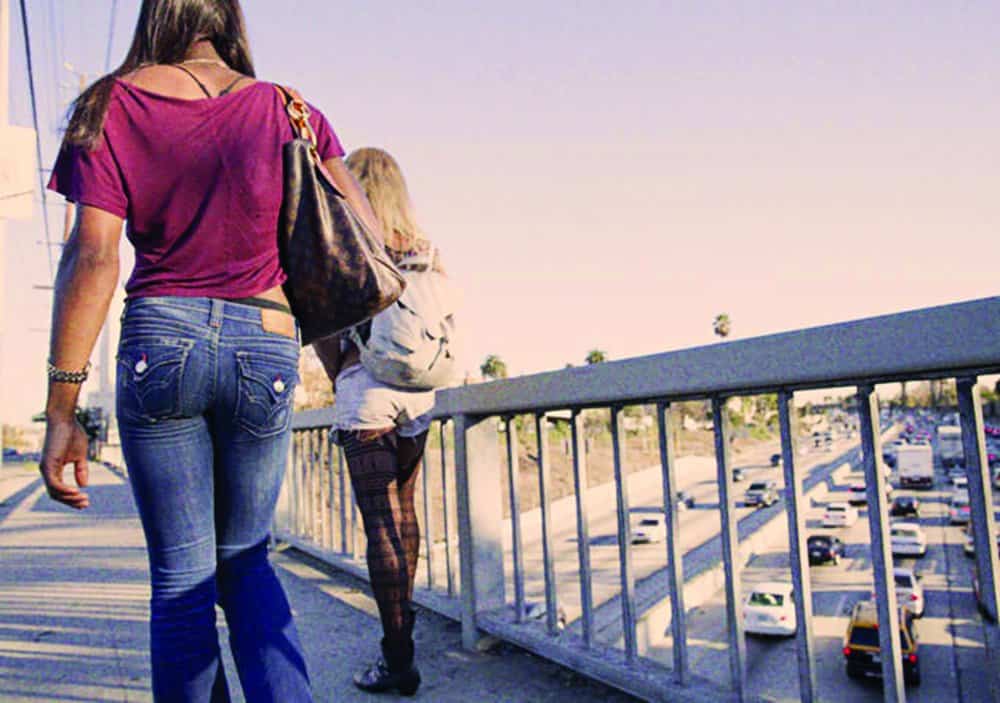
Christmas isn’t always full of tinsel, elves, and snow, and Tangerine is a stunning example of a Christmas movie set amid the urban sprawl and realities of life. Sean Baker’s movie pairs a laugh-out-loud comedy with a moving, tender, and urgent exploration of sex work, as the glimmering lights of L.A. contrast with the daily reality of street work.
Baker brings the same nonjudgmental approach that characterised his Independent Spirit Awards prize-winner Starlet, while an in-your-face soundtrack pumps up the volume to boisterous effect.
Shot entirely on the iPhone 5, Tangerine is bathed in the winter sun and the heat of Los Angeles, offering a heartfelt, emotional, and humorous Christmas on the margins of society. In the proud tradition of spit-and-sawdust American Indies, dialogue is often improvised, even when it was initially scripted, and it maintains a loose narrative structure that feels authentic throughout.
Tangerine wears its heart on its sleeve as two transgender sex workers, Alexandra and Sin-Dee, walk the backstreets of L.A. on Christmas Eve in this must-see, proudly queer indie gem.
The Cinerama Christmas Movie Collection
THE LION, THE WITCH AND THE WARDROBE (2005)

BY NEIL BAKER
C.S. Lewis and J.R.R. Tolkien shared a close but turbulent relationship born in the dreaming spires of Oxford. Tolkien was critical of Lewis’ Chronicles of Narnia and its use of religious iconography and narrative beats, while Lewis offered encouragement and support for Tolkien’s The Lord of the Rings. Both men were intrinsically linked by a shared love of history that would sit at the centre of their fantasy worlds. Tolkien built his fantasy world from the horrors of World War I, while Lewis placed his biblical fantasy into the hands of young evacuees during the Second World War.
The Lion, the Witch and the Wardrobe would lace its story of betrayal and resurrection with elements of classic Greek mythology, pagan belief and fantasy, sculpting a world that celebrated Christian biblical texts while exploring broader mythology.
Andrew Adamson’s beautiful, thoughtful, and stunning adaptation opened to positive reviews on December 9, 2005, bringing the world of C.S. Lewis to life in exquisite detail through puppetry, physical effects, and CGI. Unlike the equally impressive BBC TV series, Adamson had the budget and technical power to add scale, enlarging Narnia into a breathtaking world of darkness and light.
Walden Media always envisioned The Lion, the Witch and the Wardrobe as the opening chapter of a series, and true to their word, Prince Caspian and The Voyage of the Dawn Treader would follow. However, due to legal disputes over rights between Walden Media, 20th Century Fox, and Disney, The Voyage of the Dawn Treader would be the final Narnia outing. Disney’s acquisition of Fox would later solve this legal battle, but, as yet, there are no signs of any return to Narnia.
THE LION IN WINTER (1968)

BY AGI SAJTI
With a fascinating mix of film and theatre, Anthony Harvey’s adaptation of the celebrated stage play The Lion in Winter offers us a lavish portrait of a medieval Christmas. The festive celebrations of 1183 serve as a mere backdrop as Henry II of England brings his family together, with the secret intention of designating one of his three sons as his successor. One outstanding attribute of The Lion in Winter is its brilliant combination of political and personal turmoil. Here, the question of royal succession dovetails with a family’s irreparable dysfunctionality.
Thanks to the masterful screenplay (written by and based on James Goldman’s play of the same name), The Lion in Winter remains a riveting watch. There is an air of Game of Thrones in the political scheming, alongside a dash of Succession. However, a strong screenplay also needs a great cast to reach its full potential, and here, there is no denying the sheer strength of Harvey’s film.
The Lion in Winter boasts one of the greatest ensemble casts of any 1960s movie (and yes, I am aware How the West Was Won was also released in this decade). Peter O’Toole and Katharine Hepburn’s natural chemistry and magnetism are glorious as they bicker relentlessly. And given that O’Toole portrays a middle-aged character while being 36 years old and 25 years Hepburn’s junior, this on-screen relationship is even more remarkable. But add the feature debut of Anthony Hopkins and Timothy Dalton as Richard Lionheart and Philip II of France, and The Lion in Winter becomes a striking example of stage meets screen. Its dramatic power was held aloft by a cast who were and would become cinema legends.
Sometimes, The Lion in Winter feels slightly stagey, with a few too many static shots. However, this was a common problem in many 60s and 70s historical dramas. But trust me, this minor flaw never distracts from the sheer talent on display or the outstanding screenplay. Its royal drama is marked by family disagreements, backbiting, and one-upmanship; in fact, you may question whether anything has changed since the Christmas of 1183. In my opinion, The Lion in Winter is one of the greatest films of the 1960s.
AWAIT FURTHER INSTRUCTIONS (2018)

BY NEIL BAKER
C.S. Lewis and J.R.R. Tolkien shared a close but turbulent relationship born in the dreaming spires of Oxford. Tolkien was critical of Lewis’ Chronicles of Narnia and its use of religious iconography and narrative beats, while Lewis offered encouragement and support for Tolkien’s The Lord of the Rings. Both men were intrinsically linked by a shared love of history that would sit at the centre of their fantasy worlds. Tolkien built his fantasy world from the horrors of World War I, while Lewis placed his biblical fantasy into the hands of young evacuees during the Second World War.
The Lion, the Witch and the Wardrobe would lace its story of betrayal and resurrection with elements of classic Greek mythology, pagan belief and fantasy, sculpting a world that celebrated Christian biblical texts while exploring broader mythology.
Andrew Adamson’s beautiful, thoughtful, and stunning adaptation opened to positive reviews on December 9, 2005, bringing the world of C.S. Lewis to life in exquisite detail through puppetry, physical effects, and CGI. Unlike the equally impressive BBC TV series, Adamson had the budget and technical power to add scale, enlarging Narnia into a breathtaking world of darkness and light.
Walden Media always envisioned The Lion, the Witch and the Wardrobe as the opening chapter of a series, and true to their word, Prince Caspian and The Voyage of the Dawn Treader would follow. However, due to legal disputes over rights between Walden Media, 20th Century Fox, and Disney, The Voyage of the Dawn Treader would be the final Narnia outing. Disney’s acquisition of Fox would later solve this legal battle, but, as yet, there are no signs of any return to Narnia.
ANNA AND THE APOCALYPSE (2018)
BY NEIL BAKER
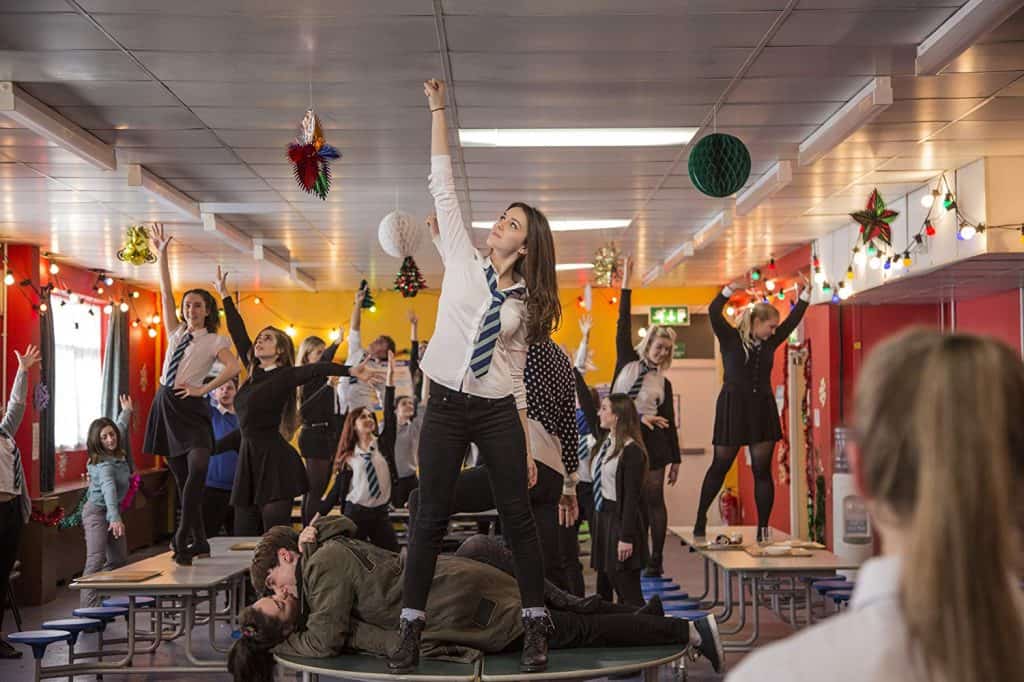
Mixing Shaun of the Dead with High School Musical and a classic coming-of-age template, the outstanding, emotional, and lively zombie musical Anna and the Apocalypse was largely overlooked at its 2018 release. However, John McPhail’s spectacular slice of musical horror comedy has since become a cult Christmas classic. Anna and the Apocalypse is not only one of the best alternative Christmas movies of the past ten years; it’s a damn fine musical that should have already found a way onto the West End stage.
Anna was the brainchild of the late Scottish filmmaker Ryan McHenry, who wrote and directed a short film titled Zombie Musical in 2011. However, its journey to feature-length would take years, and its premiere would come after McHenry’s death from osteosarcoma in 2015. Thankfully, despite this tragic loss, writer Alan McDonald, director John McPhail, producers Naysun Alae-Carew and Nicholas Crum, and singer-songwriters Tommy Reilly and Roddy Hart were determined not to let McHenry’s vision fade. By 2016, the creative ensemble was complete.
Set during the run-up to Christmas in a small Scottish town called Little Haven, Anna (Ella Hunt) isn’t feeling much festive cheer as she clashes with her dad (Mark Benton) concerning her post-school plans. Anna wants to travel across Australia to escape the small town, while her dad wants her to attend university. But plans are about to be pulled into perspective as news of a strange new virus hits every TV and newspaper, and the world as Anna knows it begins to crumble.
At its core, Anna and the Apocalypse is a classic coming-of-age story; Anna’s best friend, John (Malcolm Cumming), holds a secret crush on her, while her friend Steph (Sarah Swire) has been dumped in Little Haven by her globe-trotting parents as Chris (Christopher Leveaux) makes amateur horror movies. Here, the story follows a tried-and-tested template as our young troupe realise they must fend for themselves in a world where the support of their parents and grandparents is no longer available. However, for all its classic coming-of-age tropes, Anna and the Apocalypse defies any labels.
From the outset, Anna and the Apocalypse tells us there is no such thing as a Hollywood ending, and it delivers on that promise. While its humour, music and comic book gore are upbeat, a profoundly emotional core sits at the heart of the story, one that will lead to more than a few tears amongst the tinsel. As a result, Anna and the Apocalypse appeals to fans of classic zombie horror and those who prefer musical theatre; it’s a mash-up of Night of the Living Dead and Glee, and it’s bloody glorious!





Follow Us