
Watching Hoppers reminded me of Pixar’s 2020 feature Onward. Like that film, it starts a touch overwhelming, even awkward. Still, you gradually grow used to its tone and style, only for the film to end with a phenomenal, emotionally exemplary resolution.
Early into Pixar’s Hoppers, the characters make a vocal nod to the fact that the premise is similar to that of James Cameron’s Avatar. To the cynically minded, this is perhaps a form of lampshading. However, even Pixar’s lesser pictures usually have some degree of emotional truth or narrative creativity. Hoppers may not stand toe to toe with Pixar’s greatest – Monsters Inc, The Incredibles, Inside Out, etc. – but it champions earnest, heartfelt sentiments while boasting a plethora of colourful gags and characters to boot.
From a young age, Mabel Tanaka (Piper Curda) of Beaverton loved animals and nature. To calm down, she would sit with her grandmother (Karen Huie) in the local forest glade, just listening to nature. However, Mabel’s love for wildlife has always been zealous to a fault. At 19 years old, she regularly butts heads with Beaverton’s mayor, Jerry (Jon Hamm), a staunch urbanist to Mabel’s conservationist. Now that Jerry wants to destroy the glade to build a new highway, the conflict between them feels deeply personal.
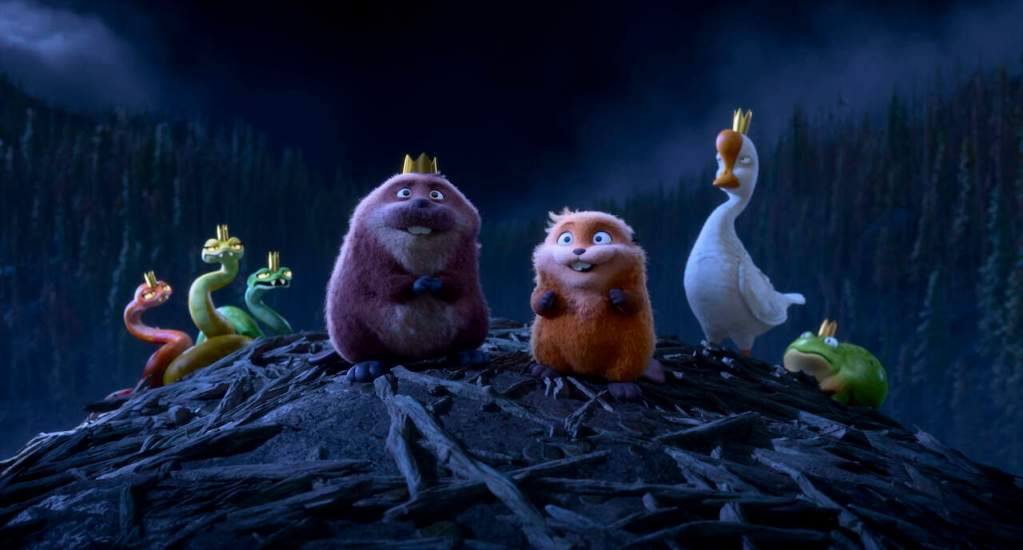
Photo courtesy of Pixar. © 2026 Disney/Pixar. All Rights Reserved.
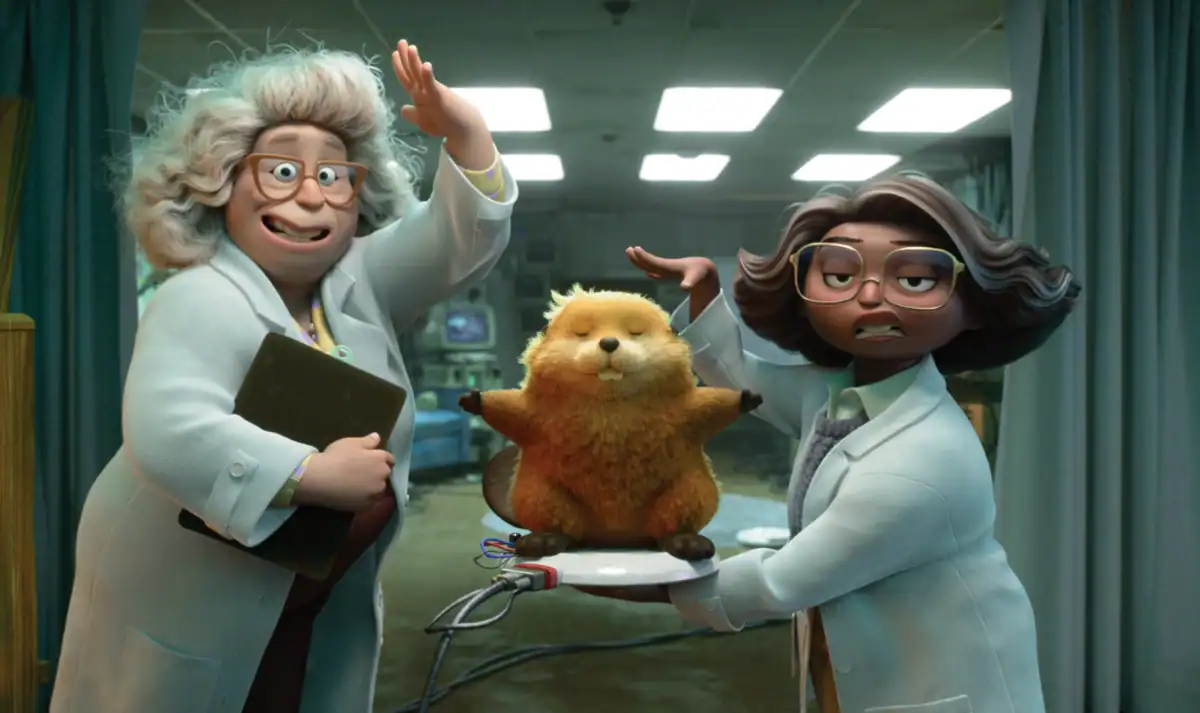
While searching for solutions, Mabel learns that her university professor, Dr Sam (Kathy Najimy), has invented new technology – The Hoppers Programme. She has discovered how to transfer human consciousness into lifelike robotic beavers, using them to communicate with other animals. Sensing a golden opportunity, Mabel hijacks this technology and uploads her mind into a robotic beaver’s body. Thus, she sets off to save the animals and their habitat, led by a beaver named King George (Bobby Moynihan). But in trying to save what she loves, Mabel finds herself instigating further tensions between animals and humans.
Environmentalism is practically a given with a premise like this, and the film basks in the beauty and healing powers of nature. Like the rest of Pixar’s catalogue, the animation glows with colourful fervour and a giddy lack of restraint, the human character designs having come a long way since the early CGI of Toy Story. It is in the depiction of wildlife where the animation is at its most lustrous. Soothing greens and bright blues showcase the organic delights of environmental habitats, in contrast to the hard greys of human cities; those vivacious landscapes turn sinister as the story’s later developments call for harsher colours. The animation is not just expressive and emotive – it’s an ode to the very things its energetic protagonist holds dear. Some of the animal reactions to the plot developments are just heartwrenching in execution.
As a comedy, Hoppers is eccentric to a fault. The first act borders on Looney Tunes, as dialogue overlaps during arguments and Mabel performs miraculous feats of athletic agility that may have flown in other animations but feel a bit frenzied for a story grounded in such timely themes. Even if this weren’t the case, the narrative is rather loaded for its 100-minute runtime.
What starts as a story of an older woman making contact with the animal kingdom soon becomes an expansive, partially rushed tale of multiple animal kingdoms, environmental warfare, and the dangers of technology, all while overarching themes of grief and despair tie everything together. The film is frequently amusing via its wordplay and visual gags, but there are times when you want to sit it down and remind it that it’s okay to stop and breathe.
What keeps the film engaging during its initial, rougher stages is the heroine’s passion. This is a layered, compelling character whose obsessive nature is arguably as much a flaw as it is her defining characteristic. However, the reasons behind her faults are made powerfully clear, both through visual reminders of her grandmother and through confrontational conversations that allow us to look more deeply into Mabel’s broader insecurities. Most riveting among the film’s findings is the ease with which we can fall into apathy or despondency when we feel alone in our beliefs, particularly in a society that doesn’t seem to care. I think we have all felt at least some level of hopelessness at the state of the world over the past few years.
Even at her most intense, Mabel remains a thoroughly likeable character, and her evolving dynamics with King George and, surprisingly, even with Jerry highlight the vitality of communication and the importance of finding common ground in life. Curda brings a lively exuberance to her role, channelling adolescent drive into Mabel’s vocalisations to make for a protagonist who you can’t help but support, even as we recognise that her enthusiasm is being off-putting to otherwise potential allies. Jerry is a delightfully hammy character whose hyperbolic greed proves chucklesome, while King George’s amenable attitude makes him both a charming presence and a welcome foil to Mabel. The film even manages to make a larva intimidating when the eventual antagonist is revealed, another testament to how wonderfully vivid the animation is.
Once the film has its ducks in a row, its themes come into focus with grand emotional gravitas and kinetic action. As much as it empathises with those who feel despair in a broken world, it nonetheless offers solutions to such feelings, that being the often undervalued notion of solidarity. The film champions this sentiment through the arcs of its characters and the evolving dynamics among its key players. The climactic setpiece of the film sees the animation come alive with the most chilling vibrancy, the stakes palpable as Mable and co. use their newfound lessons toward a common goal. Here, the theme of solidarity serves as the message in a riveting final sequence that rivals some of Pixar’s most iconic finales.
Watching Hoppers reminded me of Pixar’s 2020 feature Onward. Like that film, it starts a touch overwhelming, even awkward. Still, you gradually grow used to its tone and style, only for the film to end with a phenomenal, emotionally exemplary resolution. Had the entire film been like its last third, Hoppers might have ranked alongside the best of Pixar’s titles. As it is, though, this is still a fun, exciting and easily commendable picture.
Children will be entertained, amused and invested in its colourful antics and zany approach, and adults may find themselves resonating with the deeper humanist themes on display. In a time when it is easy to fall into pessimism and apathy, pictures like this, which show the value of caring and community, whether with wildlife or other humans, feel especially heartwarming.
Hoppers is playing in cinemas nationwide from March 6.















Follow Us