


What to Watch – The Narrow Road to the Deep North is a savagely beautiful five-part series directed by Justin Kurzel charting the life of Dorrigo Evans (played by Jacob Elordi as a young man, with Ciarán Hinds as the older Dorrigo), through his passionate love affair with Amy Mulvaney (Odessa Young), his time held captive in a prisoner-of-war camp, and his later years spent as a revered surgeon and reluctant war hero. The series is available in full on BBC iPlayer from Sunday, 20 July, and airs on BBC One at 9:15 pm the same day.
Q – What drew you to produce and star in the screen adaptation of Richard Flanagan’s novel, The Narrow Road to the Deep North?
Justin – Richard asked me if I thought it could be made into a series. I hadn’t done any television at that point, but I took another look at the book and found the story, spanning Dorrigo’s lifetime, with the idea of him still being in love with a ghost or a memory, to be really powerful. It was a very personal thing because Richard and I are good mates, so it was about trying to work out whether I could see it as a TV show.
I was intimidated at first, but Richard suggested we approach it from Dorrigo’s point of view, and that freed us up. He also kept saying, ‘It’s a love story, it’s not a war story,’ and that became our mantra. Shaun (writer Shaun Grant) and I always approach things through the minutiae, and here it was through the nuance of Dorrigo’s love story – not only with Amy but also with these other men, how they bond and form relationships to survive in this pretty horrible place.
With the Amy storyline, Dorrigo’s memory of that becomes a kind of sanctuary for him in the darkness of war, a place that he continually revisits. That was such an original idea for a love story – that it could exist in memory, asking, “Do you physically need the presence of a person for a relationship to become stronger and more meaningful?”
Jacob – I got a message from Justin in my inbox, and I immediately thought, “I’ll do whatever this is.” I don’t think we even had scripts at that point; it was just, “Do you want to work on this?” You hear actors say this all the time – and I hate that I’m about to say it myself – but when I read Richard Flanagan’s book, I realised that no one else in the world could play it.
I had to play Dorrigo, because he has a kind of inner dialogue that Richard writes so well, and every time I read something about the inner workings of his life, I thought, “That’s how I feel. That’s that thing that I can never say, that’s that thing that I can never touch on”. I remember taking it around to my family, saying, “If you want to understand me, read this book”, – which was a profound experience to have.
Ciarán – I also got a call to say that Justin was interested in being a part of this story he was going to make. I had seen Nitram, which I adored; I thought it was fantastic. They sent me a couple of scripts, I read them, and they intrigued me. I thought this had obviously come from a source material, so I got hold of the book by Richard Flanagan. It’s more than 12 years old now, and it was a formidable read. It was extraordinary. It was harrowing, heartbreaking, a kind of epic storytelling.
I loved the way it moved so fluidly between the timeframes, seamlessly transitioning between the 1940s and the 1980s, both backwards and forward. The writing was brilliant, and then Shaun Grant, who has adapted it for the screen, did a fantastic job of keeping that base material moving between timeframes. I wasn’t quite sure why they were interested in me for the older Dorrigo, I must say. But I was delighted to speak with Justin on the phone, and within 15 minutes, I was on board.
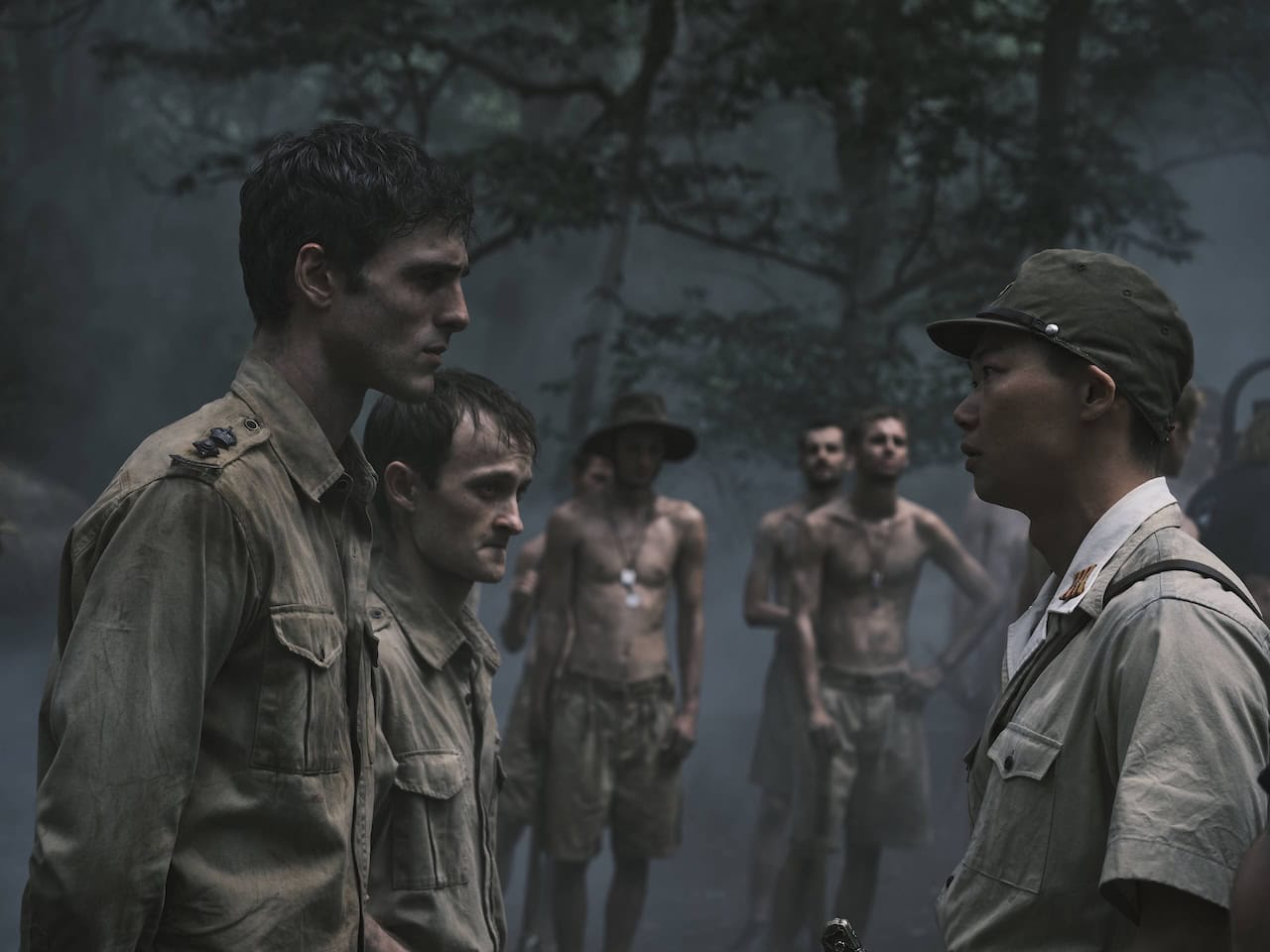
The Narrow Road to the Deep North ©BBC/Curio Pictures/Sony Pictures Television
Justin – Sometimes, you need a bit of luck when someone comes along who really responds to the material and is also enjoying a great rise in their career, looking for ambitious work as a serious artist. We found all that with Jacob. He loved the book, loved Richard’s writing, and he responded a lot to some of the films that Shaun and I had done in the past, like Snowtown and Nitram. We met and he recognised the depth of the character and the world that he would need to inhabit.
He was really excited and interested in what the relationships with the other boys could be, as well as the challenge of losing quite a bit of weight for it, so he could do Dorrigo justice. Then Ciarán came on board, and he’s one of my favourite actors and a wonderful partner to Jacob in playing the whole stretch of Dorrigo’s life. There was something very engaging about the two of them playing this one character.
Q – Jacob and Ciarán, can you tell us about your character, Dorrigo Evans? Who is he? And how does he change as we follow him through time?
Jacob – Dorrigo is a Lieutenant Colonel and a medical officer in the Australian Army. He takes us on this dreamlike journey from the camps on the Burma Railway back to Melbourne, moving through time from the past to the present. He’s quiet and stoic, and someone who is entirely driven by love, especially the purity of absolute love, which he has a strained version of with his wife, Ella, and feels deeply in his affair with Amy.
When I started filming, I wrote “He never gives a smile for free” on the front of my script. Throughout filming, I was furrowing my brow the whole time, and Justin kept trying to get me to smile. I violently disagreed with him because I thought Dorrigo would never smile in a death camp while these Japanese men are standing over him with samurai swords. It was a steep learning curve, though, because when I watched the first episode, I saw him smile, and I realised how necessary it was to make him a well-rounded human being.
Ciarán – By the 1980s, it’s almost as if he’s a shell of a man. He’s very strong because he has had to be a leader of men at times in his life, especially in the 1940s. He had to be strong when he was the main doctor, surgeon and probably colonel in the death camps, when they were building the railway. He saw it as his mission to keep the men alive for as long as he could in these terrible, terrible conditions, no matter what. He had to take certain risks and be inventive with almost negligible medical material.
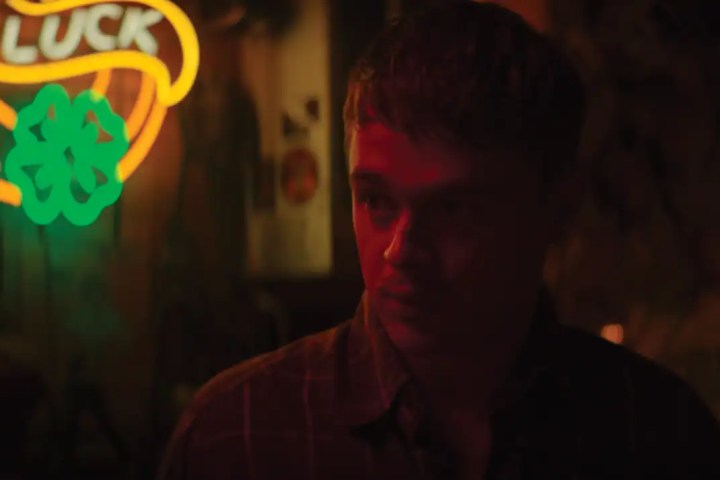
By the time he reaches his 70s, there’s nothing much that stirs him. He drinks a bit. He has affairs. The affairs don’t mean anything to him. The only thing he holds onto is his work, the art of surgery, of saving lives. In the storyline, a pivotal moment is when he’s hauled before the Medical Council because someone has made a complaint about a procedure he did. He removed a cancer that he discovered mid-operation.
Dorrigo has been down a road much deeper, darker and more dangerous than many of these people who live by the book. This is something that he believes he can resolve, and so he does. But if he were to lose the case and be struck off, the only focus he had left in life would be gone. That risk was a pivotal moment in his story.
Q: Justin, how did you approach showing the impact the war has on Dorrigo, particularly as an older man?
That fascinated me because with my grandfather, there were certain things that he wouldn’t talk about, and there were things that he kept to himself. It was very hard for him to openly recount his experiences. There was a certain kind of DNA in the older Dorrigo that reminded me a lot of the inability a lot of these guys have to deal with their experiences, especially such horrific experiences of being a prisoner of war. But there was a sort of hope and a salvation in this story, in the way that Dorrigo is able to get through his pain and trauma by focusing on those memories of his six weeks with Amy. Even though there are many things that we’ve shifted, changed and amalgamated, at the heart of it is still the essence of what Richard was writing about.
Q – Dorrigo’s relationship with Amy Mulvaney (played by Odessa Young) is central to his early story in The Narrow Road to the Deep North. How does that passionate love affair impact the rest of his life?
Jacob – It seems like that storybook idea of love at first sight, which I also think is a very real thing. Richard said something to me that just clicked – that the moment they look at each other, stars explode. And when you work with Odessa Young, that’s not a hard thing to convey. In Australia, the class system is really evident, and I think there’s an alien element to being in love outside of your class, so when he meets Amy, who is somebody from the same world as him, they have an automatic language. That’s something he has to force when he’s with Ella.
Ciarán – Living on the edge for that time formed who he was, and at the same time, that experience is balanced with an extraordinary love affair he had with Amy. It’s almost fantastical. It’s that thing… You can’t really define it, but it’s a spark. It’s kind of magical. And of course, it wouldn’t last if they had lived together. Whatever that was for those weeks, at those moments in his life, when he was in his mid-20s, everything that life could offer was there, the absolute horror and the absolute beauty of all things. He had them both. And since then, everything in his life has failed to ignite him again. He loses that impetus to go on.

The Narrow Road to the Deep North ©BBC/Curio Pictures/Sony Pictures Television
Q – Justin, can you tell us about the visual choices you made in bringing The Narrow Road to the Deep North to the screen?
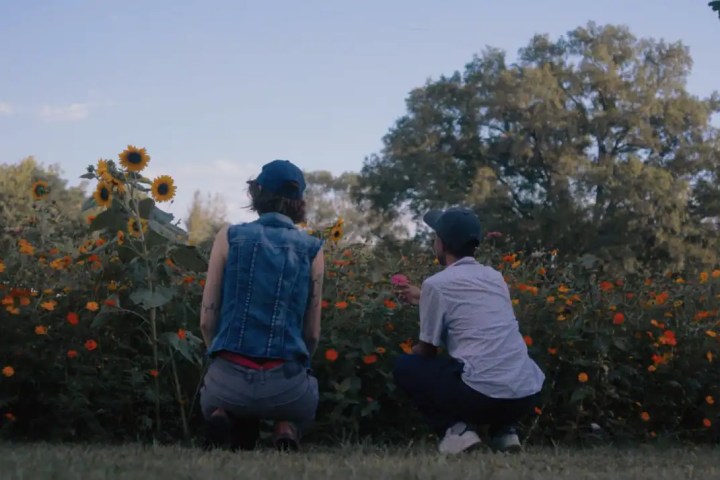
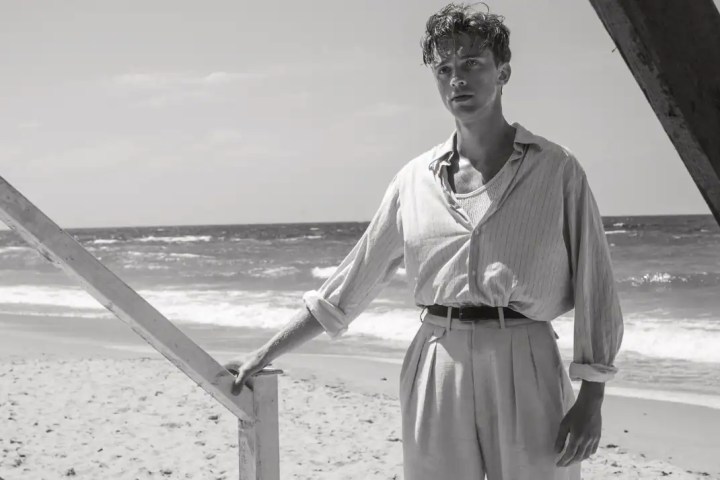
It was a real team effort between cinematographer Sam Chiplin, costume and production designer Alice Babidge, and me in coming up with a coherent look for the series, while also trying to delineate the different time periods. You’ve got Dorrigo in his early 20s meeting Amy on the beaches of Adelaide, and there’s a certain taste, smell, look and light to that.
With the prisoner of war camp, even though it was horrific, there was an energy to those scenes, too. We approached these opposing time periods in a similar manner, utilising numerous handheld shots. Then we had this other world, which is of Dorrigo later in life, sitting in very large open spaces that sort of feel like mausoleums, where the camera is very still. That part is quite classic, controlled and mannered, with a dignity to it, whereas those other time periods feel much more unruly, wild, spontaneous and visceral.
Q- The prisoner-of-war scenes are intense and deeply emotional. How challenging were they to film?
Justin – The most amazing thing about being a director is when you come across a group of actors at that point in their lives where they’re wanting to do something challenging and are really engaged. I knew that a huge part of the enjoyment of doing this would be getting to work with a bunch of young men who were going to be up for enduring a pretty hard time to get themselves into the right condition, yet who were also going to create genuine relationships with each other that you could feel on screen. They did a lot of prep and spent a lot of time together, building that camaraderie.

The Narrow Road to the Deep North ©BBC/Curio Pictures/Sony Pictures Television
Jacob – For me, that was the most significant part of the entire experience. It was like being in a massive theatre production that was constantly playing, and I’ll forever be indebted to those boys in the jungle who made it feel so real. There was no CGI or adding of bodies or anything like that. We had a limited crew, with very little hair and make-up touches. We carried a real tree up the side of a cliff for I don’t know how many hours.
All the labour was intense. I know it was nowhere even remotely close to the real thing, but when I see it, I still get chills. I can’t even fathom, from the research that I’ve done, the things that those boys went through in the camps. Some of them were 15, 16 or 17 years old, and I can’t imagine what they endured.
The Narrow Road to the Deep North is available in full on BBC iPlayer from Sunday, 20 July, and airs on BBC One at 9:15 pm the same day.
Interview courtesy of the BBC












Follow Us