
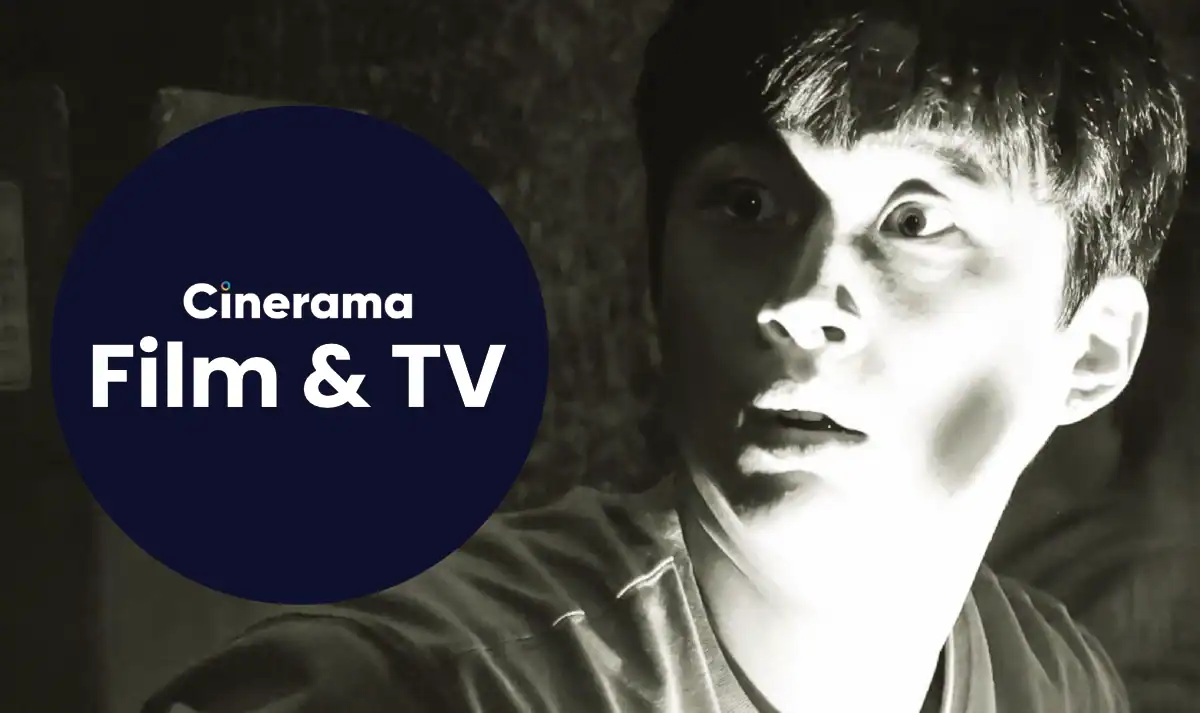
The Tenants is a confident debut feature, presenting a dystopian cityscape, a workplace from hell where people are mere cogs in the ever-churning wheel of capitalism, and a cramped apartment that descends into a nightmare with no escape. The Tenants screened at Fantasia International Film Festival and is awaiting a United Kingdom release date.
Imagine a city where the air quality is so bad that walking down a street without a mask can cause a coughing fit, a place where you live to work rather than work to live, where accommodation is scarce and cramped conditions and high rents mean you have no choice but to sublet and share with multiple people. Many of you reading this do not need to imagine this dystopian world, for it is already here. Those living in London, New York, Vancouver, Paris or Seoul, to name a few, will already know what it is like to fight for small, cramped living spaces while paying astronomical rents for the privilege. They will already understand the pressures of paying bills with low salaries that don’t match the cost of city living, and they will no doubt have experienced those hot or wet days when the reality of a changing climate suddenly impacts city life and health.
In Seoul, like many cities, the bright lights and vibrant atmosphere conceal a dark underbelly of inequality and hardship, where people in low- and medium-paid jobs struggle to find suitable accommodation. The Jeonse rental system requires prospective tenants to pay deposits of up to 70% of the property’s value. Films have long reflected the inequalities at the heart of South Korean society, from Bong Joon Ho’s Parasite to Um Tae-hwa’s Concrete Utopia. But Yoon Eun-Kyung’s debut, The Tenants, takes a far more obscure yet fascinating approach to South Korea’s inequalities and dark underbelly, one that feels akin to a classic episode of The Twilight Zone in structure and tone.
Shin-dong (Kim Dae-geon) lives to work, and his daily trudge to and from the office starts early in the morning and ends late in the evening. At home, Shin-dong has no time for leisure; instead, he makes do with a few holographic phone conversations with his only friend, whom he never sees. Shin-dong dreams of promotion at the artificial meat business he gives his life to, a company that treats its staff like the pieces of meat it sells.
The promotion could result in a move to a new, environmentally friendly city, a utopia where everyone is happy. However, there is a problem: his landlord plans to evict him from his small apartment with only a few weeks’ notice, not allowing him the time to build on his promotion potential at work. However, there is an answer: an old law that could protect him from his landlord’s plans and secure his tenancy, the subletting of part of his apartment to somebody else. Just hours after placing an ad, a prospective tenant appears at his door —a strange, tall man who wears a top hat adorned with feathers (Heo Dong-won). However, he is not alone, as walking by his side is his odd, ever-smiling, childlike wife (Park So-hyun).
Shin-dong is less than convinced by his new prospective tenants and finds their desire to live in the bathroom odd. However, he is desperate and quickly signs the sub-letting agreement, securing his home. But Shin-dong’s concerns about his mysterious new flatmates only increase as they take long, late-night walks and appear from nowhere, and a growing feeling that someone is watching his every move invades his sleep. But that is just the start of Shin-dong’s domestic nightmare.
Shot in black and white, Yoon Eun-Kyung’s noir-inspired mystery sees Shin-dong’s world descend into secretive meetings on park benches, scopophobia, odd nighttime encounters, and an increasingly hallucinogenic work life. As we follow young Shin-dong, the weight drops off his already thin frame as his mental health deteriorates, leaving us unsure of what is reality and what is a fever dream of no escape. In fact, a fever dream may be the best way to describe this confident debut feature, which presents a dystopian cityscape, a workplace from hell where people are mere cogs in the ever-churning wheel of capitalism, and a cramped apartment that descends into a nightmare with no escape.
It’s a nightmare that may at first glance appear to be a warning of a future many of our cities face, yet, in reality, Yoon Eun-Kyung’s dystopian vision is already here, as millions of people live to work rather than work to live while lining the pockets of uber-rich landlords and corporations.












Follow Us