


Hidden Master: The Legacy of George Platt Lynes finally brings Platt Lynes’ work out of the shadows, cementing his critical place in our often-hidden LGBTQ+ history, which it is now our duty to reclaim.
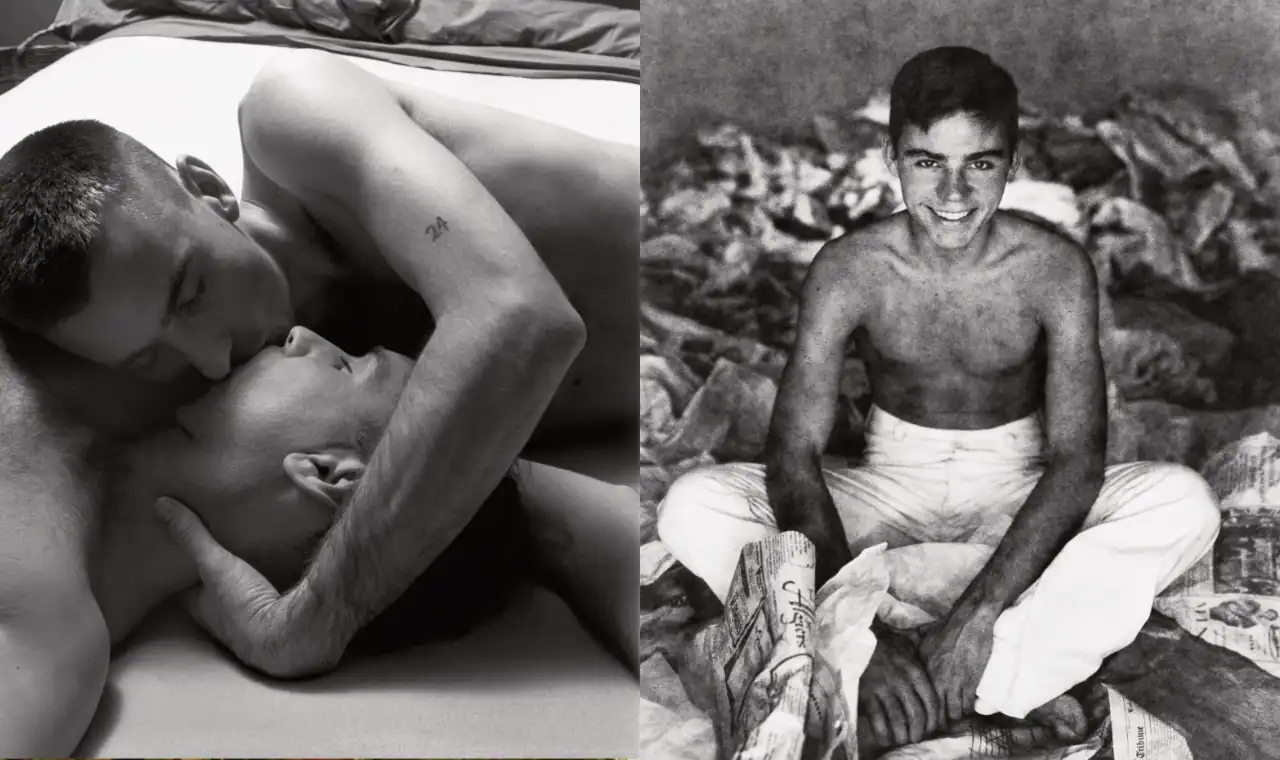
I don’t usually open an article by asking you to focus on two stunning and intricate photos, but on this occasion, my request highlights an important point when exploring the life, love and legacy of the American photographer George Platt Lynes. So, I simply ask that you take a moment to gaze upon these two exquisite portraits.
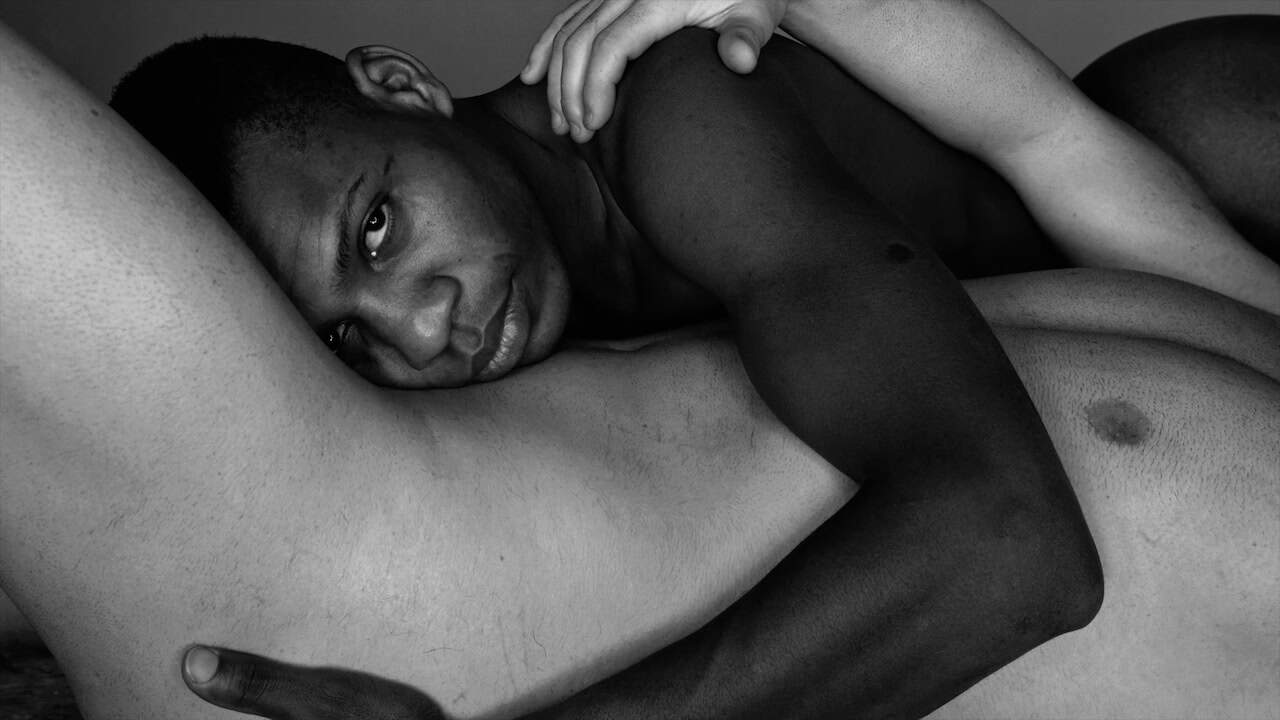

If I were to ask you to date these photographic portraits, what would your response be? ’80s? ’90s? possibly even ’00s? None of those would be right; the first is from 1952, and the second is from 1941. Both are homoerotic at a time when homosexuals were persecuted, and the first features an interracial male couple during a time of segregation, overt racism and oppression. These photos were brave, bold, fearless, and so far ahead of their time that it’s almost impossible to believe they’re as old as they are. Both are the work of George Platt Lynes, a gay photographer and artist with whom you may not be familiar. Sam Shahid’s documentary, Hidden Master: The Legacy of George Platt Lynes, aims to rectify this by delving into the life, love, relationships, and artistry of a photographer born in 1907 whose groundbreaking work has rarely been seen in public.
Self-taught on the pre-World War II streets of Paris and New York, with Gertrude Stein and Christopher Isherwood as mentors and the polyamorous couple Glenway Wescott and Monroe Wheeler as lovers, Platt Lynes was surrounded by a new, exciting and fearless group of queer artists and writers from his late teens onward as he found his voice in the emerging world of photography. As his network of connections grew, he specialised in portraits of writers, artists, and actors, including Aldous Huxley, Cecil Beaton, and Gloria Swanson. However, while celebrity portraits brought him fame, it was his passion for photography and for exploring the male body that offered him the artistic freedom that made him feel alive.
Many of George Platt Lynes’ nude male models were unknown, from street hustlers to aspiring models, sailors and men he met at gay cocktail parties, and all had one thing in common: beauty and youth. George even photographed himself naked in his early days of experimentation while also documenting his sexual relationship with Wheeler in a series of private photographs. Then, in 1935, he was commissioned to photograph the principal dancers of the newly founded American Ballet Company, and with that came the opportunity to meet male dancers who were happy to pose for nude photos, especially since none of their portraits were likely to appear in public.
By 1946, George had moved to Los Angeles to head Vogue magazine’s Hollywood office, a move that neither suited George nor his need for artistic freedom. Living outside his means and suffering under the restrictive atmosphere of Hollywood, by 1951, the government was after him for unpaid taxes, and his studio and cameras were all he had to pay down his debt. His entire catalogue of work was at risk by this point, with a portion saved due to his friendship with Dr. Alfred C. Kinsey, who stored his prints in the Kinsey Archive.
It wasn’t long after this that George was diagnosed with lung cancer that had already spread throughout his body, and he began destroying negatives, including much of his fashion photography. His remaining work, including hundreds of prints, nudes, and private photographs, was then transferred to his longtime friend, the artist Bernard Perlin, before George died at 48 in 1955.
Since then, George Platt Lynes’ work has rarely seen the light of day despite his clear place as a forerunner of artists like Baldiga, Mapplethorpe and Warhol. So, why has George’s significant place in queer art history been overlooked for so long?
Director Sam Shahid said, “George Platt Lynes was an artist endowed with an almost endless well of creative gifts. However, because of the restrictions – social, moral, artistic, and legal – imposed upon him by the era in which he lived and created, he was unable to share his true talent with the public and, of equal import, future generations of artists who may have built upon and furthered his contributions to his genre and what should have been the accepted norms that oppressed so many of his generation. He was an artist who was never able to share what he considered to be his very best work and, more importantly, what he considered his true craft.
Though the LGBTQ+ community has made enormous strides since the early-mid twentieth century, those forces of oppression and shame still operate in the United States and, in fact, are gaining renewed traction within state and local legislatures. I want Hidden Master to serve as a platform to further Platt Lynes’ true legacy – the sharing of his stunning nude photographs with audiences and artists worldwide. This work, which countless artists and photographers who followed him have referenced and, in turn, been influenced by, has yet to be accepted into the greater art community and placed in its proper context in the genre. The work deserves to be featured in a major museum exhibition and examined with proper analysis and reverence.”

Sam Shahid clearly feels that the reason for his contribution and place vanishing lies within the social and moral restrictions George faced, and indeed, the documentary explores this. George led what we would now call an ‘out’ gay life long before the first brick was thrown at Stonewall, and his life, like Oscar Wilde’s or Federico García Lorca’s, challenges the falsehood that every gay person before Stonewall cowered in fear or hid in the shadows.
However, it is also true that George’s ‘out’ lifestyle came from a place of privilege, with his freedoms defined by a community of artists where queer was the norm, a community sheltered from some of the harsher realities faced by working-class gay people at the time. It’s also true that while George led an openly gay lifestyle, the nudity found in his art was considered deviant. Therefore, his collection remained private within his inner artistic circle, unseen by the wider public. Personally, George may have had limited freedoms due to his friendship circle and closed community, but his nude photography remained imprisoned.
There is, however, another possible reason for George vanishing from public consciousness: he was a part of the generation that saw not only the horrors of the Second World War but also the arrival of the Iron Curtain and the rise of McCarthyism in the United States – from the 1930s to the mid-1950s, a period of fear, social upheaval, uncertainty, and change gripped the world.
During this time, many artists found themselves and their work consigned to history for decades, including Eric Ravilious and Jean Metzinger. In turn, much of the social and community history of the 1930s, particularly the history of minority communities, was obscured by the shadow of World War II. In fact, it’s only in recent decades that we have begun to rediscover the sexual liberation of the 1920s and 1930s prior to the War and the following repression of the 1950s. George Platt Lynes’ work was not only held within a closed artistic community but also shrouded by War and the American social paranoia that followed, which also halted the potential progress of his work.
Had George lived longer, I firmly believe his work would have re-emerged in the ’60s and ’70s; however, by then, it was already stored in boxes that rarely saw the light of day. Sam Shahid’s Hidden Master: The Legacy of George Platt Lynes is both fascinating and engaging in these discussions; at its heart, however, it is a celebration of his genius.
George Platt Lynes was a proudly gay, creative, confident, occasionally manipulative pioneer and maverick who has been hidden in the shadows of history for far too long and rightly deserves his time in the light. His work is timeless, exquisite in detail and clarity and brimming with sexual energy. It’s criminal that much of that work remains locked away from public view, with only a few galleries ever displaying his genius. Hidden Master: The Legacy of George Platt Lynes finally brings his work out of the shadows, cementing his critical place in our often-hidden LGBTQ+ history, which it is now our duty to reclaim.
Sam Shahid’s Hidden Master: The Legacy of George Platt Lynes is showing in select cinemas starting July 11 and will be available on digital platforms this August.







Follow Us