
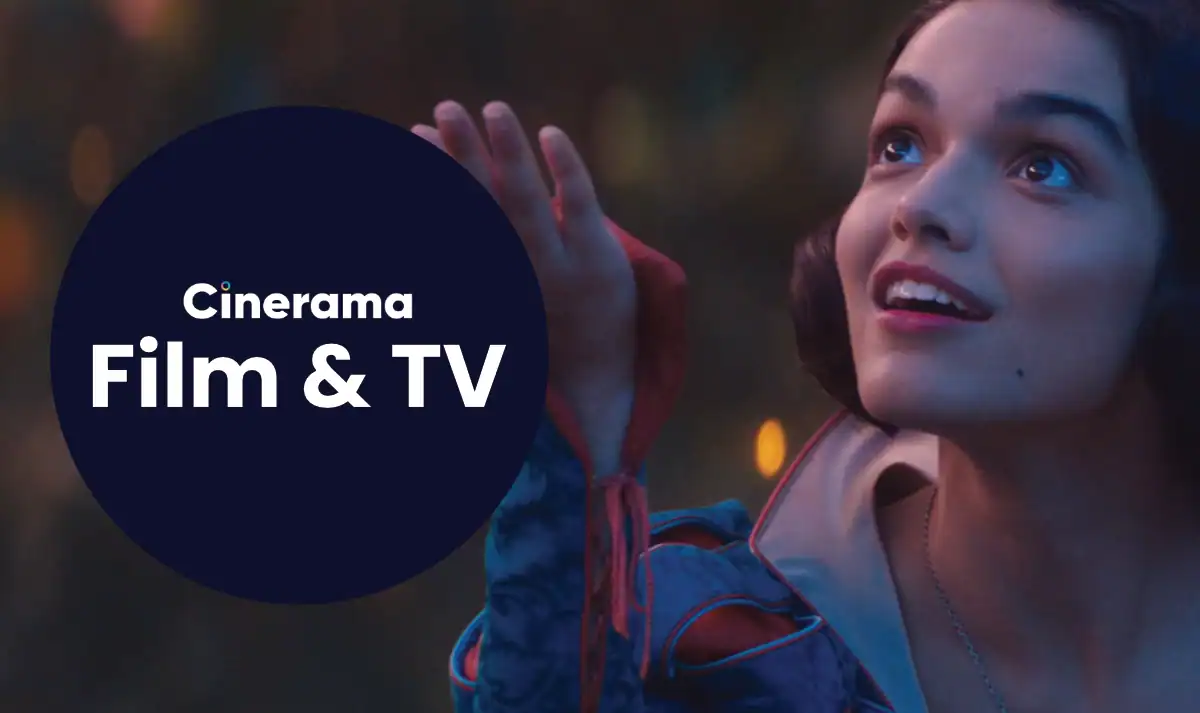
Disney’s Snow White, starring Rachel Zegler, Andrew Burnap and Gal Gadot, is now playing in cinemas nationwide.
This live-action adaptation of Snow White has proven controversial even before its cinema release. While its status as another remake of classic animation is disheartening, much of the pushback, like with 2023’s The Little Mermaid, centres on a person of colour – in this case, Rachel Zegler – being cast in the lead role. This behaviour is disgusting and pathetic, and the fact that many of the instigators here are terminally online men is just tragic. What’s particularly unfair about Zegler bearing the brunt of these troglodytes’ faux outrage is that she’s one of the few redeeming qualities of this otherwise soulless reimagining.
Based on the original 1937 film, incidentally, Disney’s first animated feature, 2025’s Snow White, has familiar groundwork. Snow White (Zegler) was born a princess but has since been reduced to a lowly castlemaid by her stepmother, her kingdom’s new Evil Queen (Gal Gadot). The Queen arranges for Snow White to be assassinated when her magic mirror declares Snow White to be the “fairest of them all.” Snow White escapes and finds solitude in a house in the woods, where the Seven Dwarves reside, portrayed in this film by a mix of voice actors and uncanny CGI monstrosities.
This is a remake that’s caught between invoking nostalgia and distancing itself from the source material. So spliced around reworkings of iconic sequences such as the poisoned apple or the “Whistle While You Work” musical number, is a story of revolution as Snow White’s people desire liberation from the Evil Queen. Rather than a bland Prince Charming, Snow White’s true love is now a bland Flynn Rider knockoff, Jonathan (Andrew Burnap), a bandit loyal to the previous king, Snow White’s father. Thus, this story is more about Snow White freeing her people than the importance of love and kindness, which serve as more of an afterthought here.
A feeling of uncertainty plagues this picture from the start. Previous live-action remakes of Disney animations have fallen victim to replication without the emotional gravitas – see 2019’s appalling remake of The Lion King. Director Marc Webb and writer Erin Cressida Wilson try to avoid this pitfall by incorporating proletariat rebellion into the story. Yet the film still relies on nostalgic gluttony to appease those who just want to see the same film again with modern sensibilities. The film rushes through these callback moments, leaving emotional investment behind. Where Snow White took time to get to know the Dwarves before, here they speed through their introductions to make a laboured joke on names, their connections rendered hollow. When she looks down the well, it’s to invoke feelings of remembrance in the audience rather than suggest yearning within the character. It’s a cinematic highlights reel sandwiched between a rote, underdeveloped storyline.
This would’ve been more tolerable if the presentation wasn’t so lifeless. I appreciate that the 1937 animation isn’t that deep storywise, but it’s important to acknowledge just how revolutionary it was to the canon of cinema. Not only did it prove that animation could sustain feature-length stories – the animation was mostly comedic shorts back then – but the way it used hand drawings to visualise humour, horror and beauty has influenced generations of animators and cinephiles. Take the scene where Snow White flees the huntsman and runs into the woods. The darkness and tree shapes are frightening because of how the filmmakers use colour and exaggerate the dimensions of the scenery, bringing fears of the unknown to life.
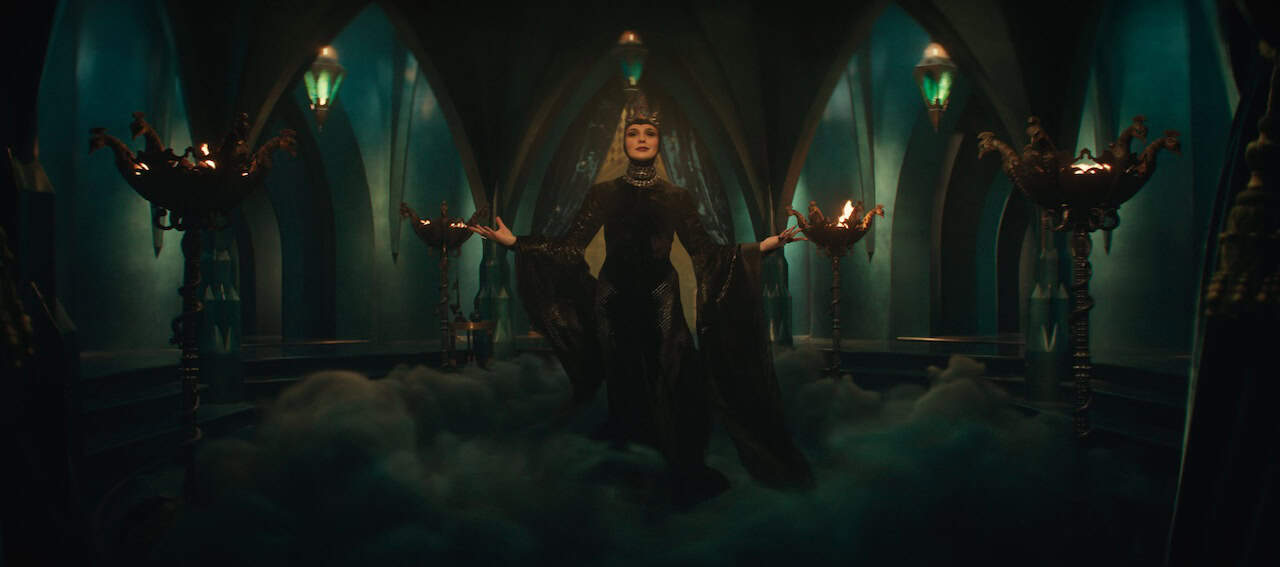
Gal Gadot as Evil Queen in DISNEY’s live-action SNOW WHITE. Photo courtesy of Disney. © 2024 Disney Enterprises, Inc. All Rights Reserved.
By contrast, the same sequence in this live-action version elicits no emotional response. The overabundance of CGI meshes poorly with the live-action performances, creating a sense of artificiality in the visuals, the tree shapes looking more silly than scary. Beyond this scene, the production design has a glossy, sugary look akin to a theme park attraction over crafted fantasy, best seen with the Dwarves’ cottage, which, minus a treasure trove of props, looks as empty and defunct as the Dwarves themselves. There’s some interesting use of colour, namely in the costume design, as the kingdom civilians all wear variations of grey to Snow White’s vivacious wardrobe. However, the impression one gets is that several clashing mediums are forced to co-exist rather than creating one refined whole. There’s no sense of wonder to be found as the actors navigate this awkward meshing without properly engaging with their surroundings. It oozes with inauthenticity, even cheapness, despite the bloated production budget.
The new additions to the story are just as vacuous. The revolutionary plotline comprises redundant Robin Hood-esque tropes and hamfisted dialogue, namely the numerous moments where Snow White reflects on her childhood. There’s a lack of individuality to the storytelling that makes it feel utterly manufactured in construction. Pasek and Paul compose several new songs, most of which are laboured in presentation, hampered by bizarre choreography and lyrics that spell out the obvious regarding the characters singing them, e.g. the Queen being greedy or Snow White’s longing. Rather than upgrading the classic fairytale, it feels like a routine, insincere fictionalisation. That it all culminates in a cloying climax more likely to induce snorts of disbelief than heartfelt emotion only adds to the tackiness.
Rachel Zegler is thankfully innocent in all of this. While she and Andrew Burnup’s chemistry is non-existent, Zegler successfully captures the conflict inside this character’s heart as she struggles to choose between herself and the wider collective of her people. Her gifted singing brightens the forgettable lyrics while adding playfulness to the renditions of timeless classics. The same cannot be said of Gal Gadot however, who spends the film portraying variations of stoicness. Her singing is tone-deaf, her outbursts make pantomimes look subtle, and her moments of menace are undermined by her lack of facial expression. It’s a dreadful performance opposite Zegler’s respectable one.
Where the 1937 film reinvented what animation could achieve, this remake’s haphazard blending of live-action, mechanical storytelling, and revolting CGI generates weary discomfort over genuine enchantment. It may not be as visually repulsive as last week’s In The Lost Lands or The Electric State, but a quintessential absence of humanity in its craft makes this film an absolute chore to sit through. It’s boring, saccharine, and utterly lacking in earnestness. Greta Gerwig made a smart choice by going uncredited for her script revisions. Not even her talents could save this shallow, empty vessel of a picture.








Follow Us