

Join us as we take a look at what’s new on BBC iPlayer – The Listeners, Boybands Forever, Only Child and more.
The Listeners

The Listeners. Kyle (OLLIE WEST), Claire (REBECCA HALL), Element Pictures, Des Willie ©BBC Pictures
Produced by Element Pictures (The Favourite, Poor Things), a Fremantle company, and directed by Janicza Bravo (Zola) for BBC One and BBC iPlayer, The Listeners centres around Claire (Rebecca Hall), a popular English teacher who begins to hear a low humming sound that no one else around her can hear.
This seemingly innocuous noise gradually upsets the balance of her life, increasing tension between herself and her husband, Paul (Prasanna Puwanarajah), and daughter, Ashley (Mia Tharia). However, despite having multiple doctors, no obvious source or medical cause can be found. When she discovers that a student of hers, Kyle (Ollie West), can also hear the sound, the two strike up an unlikely and intimate friendship. Finding themselves increasingly isolated from their families, friends and colleagues, they fall in with a disparate group of neighbours, led by a charismatic couple, Jo (Gayle Rankin) and Omar (Amr Waked), who also claim they can hear what they call “The Hum” – but rather than track down the source to stop it, believe it is a gift, heard only by a “chosen few.”
Enigmatic, provocative, and haunting, The Listeners explores the seduction of the wild and unknowable, the human search for the transcendent, the rise of conspiracy culture in the West, and the desire for community and connection in our increasingly polarised times.
Rebecca Hall said, “Before even reading the scripts, I was keen to join The Listeners. It was such an unusual premise, with numerous possibilities, which was a draw for me. I’m also a very big fan of director Janicza’s work, and I knew her a little bit. So, the combination of those two things was an immediate no-brainer for me before reading the scripts.”
Watch The Listeners on BBC iPlayer from Tuesday, 19 November
Only Child

Only Child. Ken Pritchard (GREGOR FISHER), Richard Pritchard (GREG McHUGH), Happy Tramp North, Jamie Simpson ©BBC Pictures
Gregor Fisher and Greg McHugh star as father and son, Ken and Richard Pritchard, in the new six-part comedy series Only Child. Bit-part actor Richard’s long overdue visit to recently widowed Ken makes him realise his dad may need a bit more full-time help. Not that Ken would agree, of course, but that statement is pretty much true about anything. An eccentric, strong-willed technophobe, Ken is set in his ways, leaving Richard worrying about his dad growing old.
Written by Bryce Hart, Only Child explores domestic and intergenerational differences, as well as neighbourly squabbles, all told through the lens of Richard and Ken’s comedic relationship.
As well as Fisher and McHugh, Only Child showcases a wealth of Scottish and Irish talent, including Amy Lennox (Shetland), Stuart Bowman (Rebus), Forbes Masson (EastEnders), Clare Barrett (Sisters), Robin Laing (Guilt) and Paul Rattray (Game of Thrones).
Watch all episodes of Only Child on BBC iPlayer on Thursday, 21 November.
What’s new on BBC iPlayer – Nov 17, 2024
Logan Paul: Bad Influence
Logan Paul is one of the world’s biggest influencers, but he has faced criticism for his involvement in promoting various cryptocurrency projects. Matt Shea investigates the allegations against him and the power of his influence. Shea delves into the world of influencer-led cryptocurrency projects and uncovers allegations that Logan Paul may have misled his fans in an attempt to profit. Logan Paul rejects these criticisms, insisting that he can be trusted.
Watch Logan Paul: Bad Influence on BBC iPlayer from Wednesday, 20 November.
Hunting Mr Nice: The Cannabis Kingpin
Howard Marks, aka Mr Nice, was one of the world’s most prolific cannabis smugglers. At the height of his illegal operations, he was trafficking tens of millions of dollars worth across the globe. For the first time, this series brings together Marks’ criminal inner circle and the law enforcers who spent years tracking him down to tell the ultimate cat-and-mouse tale.
Watch Hunting Mr Nice: The Cannabis Kingpin on BBC iPlayer from Thursday, 21 November.
Boybands Forever


Produced by award-winning Mindhouse Productions and from BAFTA-winning producers Louis Theroux and Nancy Strang, Boybands Forever tells the inside story behind the success of some of the UK and Ireland’s most celebrated pop stars during the 90s and early 00s. Featuring searingly honest interviews with the artists themselves, as well as the music label bosses and managers behind their rise to fame, the series offers a thoughtful examination of the boyband phenomenon of that time and the cultural landscape it emerged from.
Watch Boybands Forever now on BBC iPlayer.
What’s new on BBC iPlayer – Nov 17, 2024
Britain’s Nuclear Bomb Scandal: Our Story
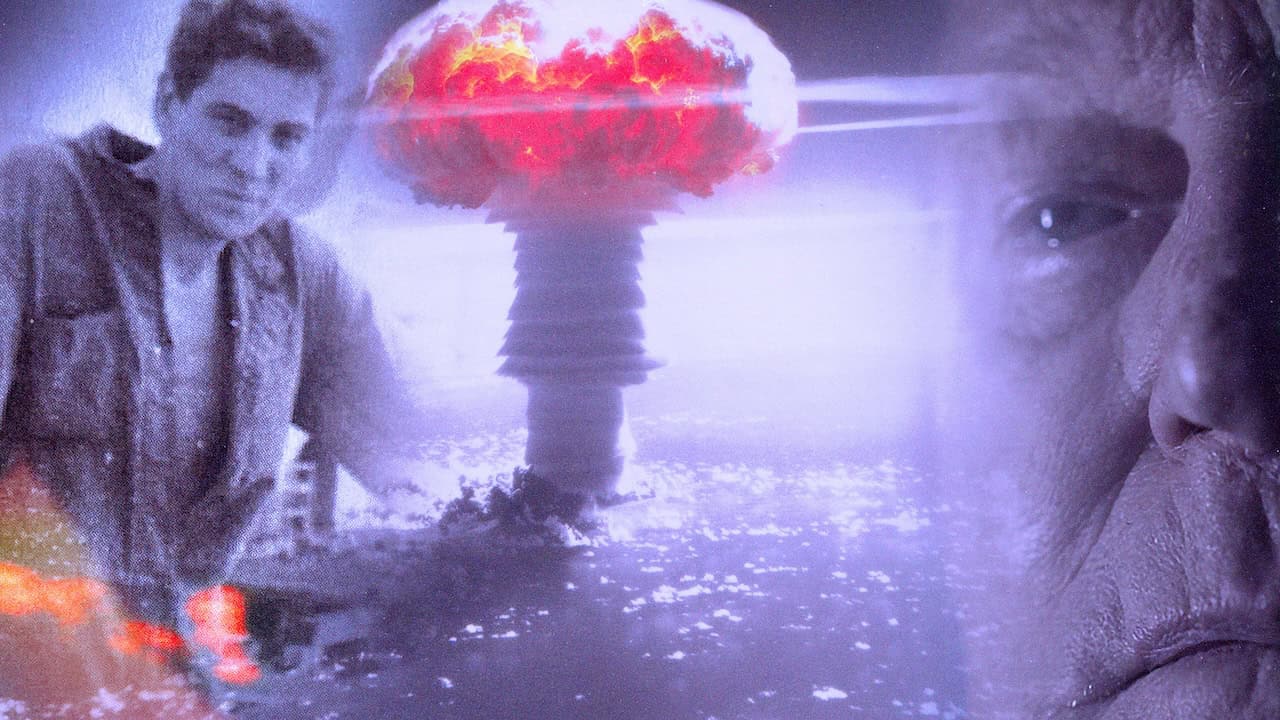
Britain’s post-war nuclear weapons programme put some 39,000 servicemen, scientists and local people in close proximity to 45 nuclear bombs and hundreds of radioactive experiments.
This BBC Two film pieces together extraordinary testimony and pioneering journalism – weaving chilling allegations of decades of cover-up at the heart of government with the shattering human cost of Britain’s race to become a global nuclear power.
Britain’s Nuclear Bomb Scandal: Our Story is the extraordinary story of Britain’s post-war bomb tests and their devastating legacy for the thousands of service personnel who took part, and the impact on their families and indigenous communities.
The film reveals the full extent of the British government’s nuclear tests in Australia and Christmas Island (Kiritimati) in the Pacific in the 1950s and 1960s. It exposes the debilitating health conditions that have blighted the lives of some of the veterans, descendants and indigenous Aboriginal and Gilbertese populations ever since.
Between 1952 and 1967, some 39,000 British and Commonwealth servicemen and scientists witnessed 45 atomic and hydrogen bombs and hundreds of radioactive experiments. The tests turned parts of the pristine Australian Outback and Pacific coral atolls into some of the most contaminated places on Earth.
Five veterans are interviewed for the programme, and in powerful testimony, two describe how the MoD ordered them to sail or fly through atomic mushroom clouds without being protected or warned of the risks. Others talk about how they witnessed the blasts at only a nine-mile distance without any protective clothing, using their bare hands to shield their eyes, and later had to enter Ground Zero without protection.
Cancers of the liver, blood, bone, bowel, skin and brain, heart disease, leukaemia, stillbirths and generational birth defects are among the catalogue of medical disorders suffered by many of the survivors and their children. They’ve campaigned for decades to get their voices heard.
The film raises questions about the shattering consequences of Britain’s race to become a global nuclear power and allegations of decades of cover-up at the heart of government.
Investigative journalist Susie Boniface, who was interviewed for the documentary, has been reporting on veterans for nearly 20 years. Since 2022, Susie has made a series of Freedom of Information requests to the Atomic Weapons Establishment (AWE). She forced the disclosure of 4,000 pages of top-secret documents about orders to conduct medical examinations on thousands of troops and civilians over more than a decade, and the results had been hidden ever since. She also unearthed some of the raw blood test data and evidence of MoD officials misleading government ministers by denying that the testing ever took place. In a significant new development, Susie has also obtained documents to show that in the 1990s case at the European Court of Human Rights, the AWE denied that blood testing was carried out during the weapons trials. The truth was hidden behind claims of national security, while the AWE and MoD told Parliament and the public it did not exist.
The programme includes the story of the ‘Woomera babies’. For the first time on British television, it is revealed how the tests are believed to have impacted the small town of Woomera in South Australia, which was a military base situated around 600 kilometres from nuclear detonations. A local journalist interviewed for the programme said Woomera may have experienced one of the highest concentrations of fallout in the country. During the 1950s and 1960s, the town saw an unexplained, high number of infant deaths and stillbirths. The town bears the scars of the tragedy, as row upon row of tiny graves are still in evidence at the local cemetery.
The film includes a series of contributors, many of whom are speaking for the first time about their harrowing experiences.
Britain’s Nuclear Bomb Scandal: Our Story airs on Wednesday, 20 November at 9 pm on BBC Two and iPlayer
Movies now streaming on iPlayer
What’s Love Got to Do with It (2022)

Words Calum Cooper
Zoe (Lily James) is a documentary filmmaker and workaholic who is tired of the superficial nature of the contemporary dating scene. As such, she is surprised when her childhood friend and neighbour Kaz (Shazad Latif) announces that he is following his family’s Pakistani roots by having an arranged marriage. Seeing an opportunity to explore themes of modern-day dating, Zoe gets the permission of Kaz and his family to document the events leading up to Kaz’s wedding. However, Zoe is less prepared for the feelings it stirs along the way, as she questions what she wants out of life.
The premise of What’s Love Got to Do with It takes loose inspiration from the rom-com legend, When Harry Met Sally, and even references the film. But rather than posing the question of whether men and women can ever be friends, director Shekhar Kapur and writer Jemima Khan are more interested in the grey areas where modernity, tradition, and Eastern and Western values intersect. Movies such as Lulu Wang’s The Farewell do this skillfully, and What’s Love Got to Do with It follows suit by exploring how the pressures of finding love and belonging are not isolated to one community.
Women Talking (2022)

Words Emma Duffy
Women Talking poses a question I have been asking myself for a while now: “How do we get out of this room?” What should we, as women, do about the endemic culture of rape, sexual abuse and sexual harassment that surrounds and envelops us from birth to death?
The premise of Women Talking brings this question into focus. Based on the novel by Miriam Toews, who drew inspiration for her book from real-life events, a group of women in an ultraconservative Mennonite colony convene a meeting. The women have recently learned that the men in the community have been committing acts of rape on both young and old. The men have incapacitated their female victims with an animal tranquiliser, attributing the physical and psychological wreckage left behind to demonic possession or “a wild female imagination.”
With the men having temporarily departed, the women decide to rapidly nominate eight representatives who will agree on a course of action: “Do Nothing”, “Stay and Fight”, or “Leave.” They soon agree that “Do Nothing” is not viable, leaving us with the question of whether they try to reform their society from the inside or break away entirely.
Director Sarah Polley crafts and sustains a unique and intense atmosphere akin to an intimate on-stage production. I’m usually the first to lament the desaturation of film and television after the 2000s. Still, in this case, the harsh light and washed-out colour palette complement the story’s underlying themes—the ideological bones of the community blanched by the cold light of day.
What’s new on BBC iPlayer – Nov 17, 2024
Crossfire (1947)
Words Agi Sajti
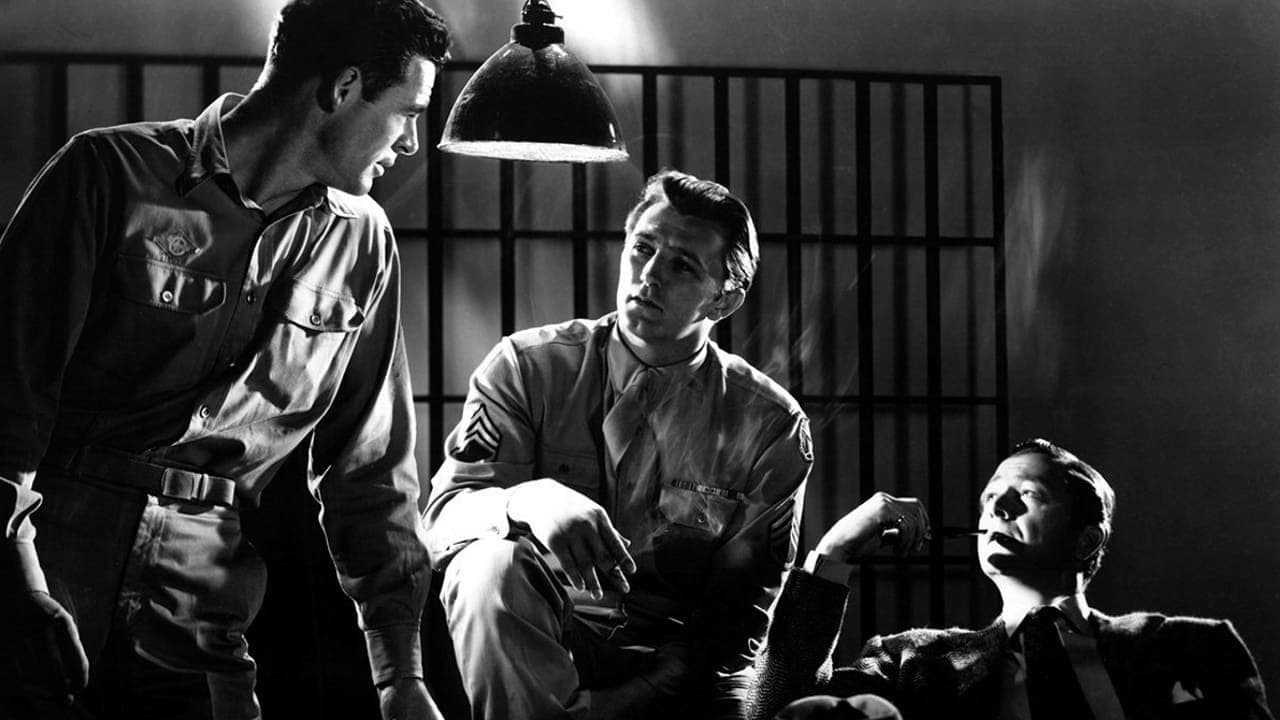
Crossfire is well-known among cinephiles for two reasons. First, it was the first B-movie in history to receive a Best Picture Academy Award nomination. Second, it was the first Hollywood film to deal with antisemitism. Based on the 1945 novel The Brick Foxhole, the book’s original exploration of homophobia was swapped for race, a sign of the sexuality-based discrimination inherent in American filmmaking at the time.
The plot revolves around the murder of a Jewish man, Joseph Samuels (Sam Levene), and the subsequent police investigation. The culprit is likely one of two American soldiers (George Cooper and Robert Ryan) who were drinking with Samuels the night before his death. However, interestingly, the film eschews this murder mystery plot for much of its runtime. Instead, it observes its characters as they drift through life in an existential malaise free from motivation or goals, foreshadowing the cinéma verité style of filmmakers like John Cassavetes.
Crossfire remains a milestone in American film history, featuring noir veterans Robert Mitchum and Gloria Grahame and a screenplay that bravely and boldly depicted the antisemitism of a post-World War II America. However, the investigating detective’s concluding monologue on hate crime and racism, while urgent then, is hypocritical today, especially in its avoidance of discussions on racial hate against black Americans. At the same time, the homophobic themes of the book were erased by a Hollywood system where gay men remained hidden from view, and homophobia ran wild across the American states.
Also streaming: The African Queen








Follow Us