
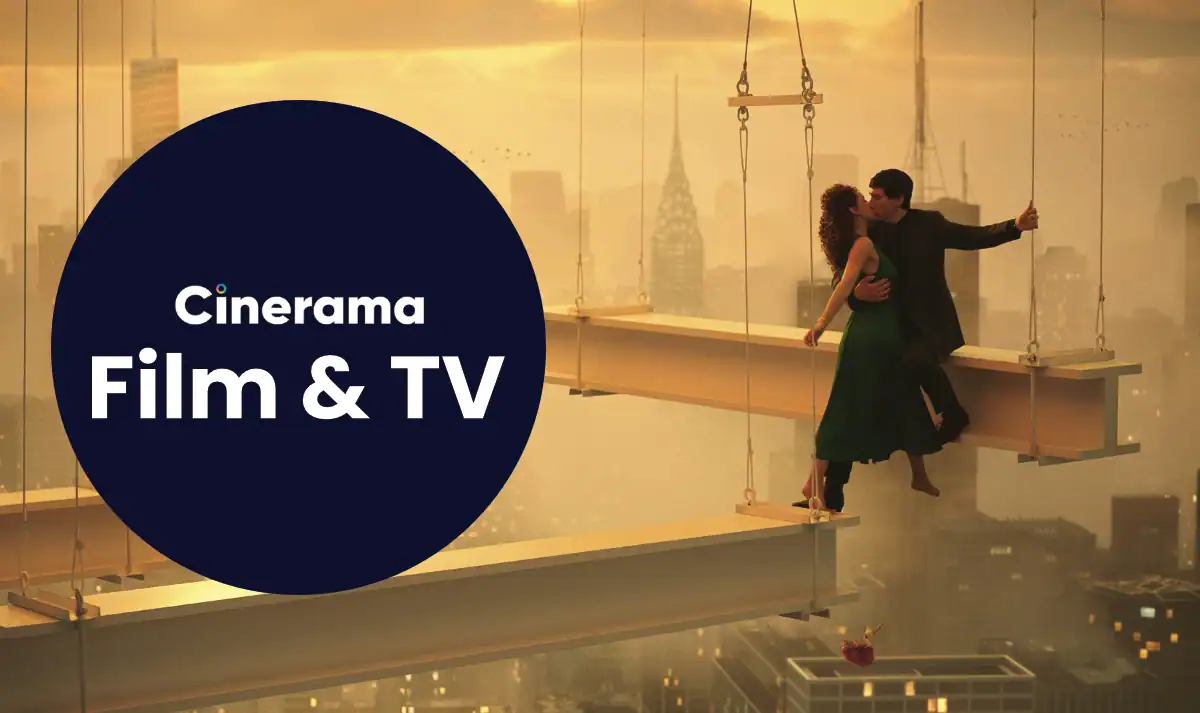
Megalopolis isn’t 2024’s worst film – ‘Borderlands’ and ‘Duchess’ both exist, after all – but it might be the year’s most fascinating disaster. Coppola is undeniably one of the greats – his filmography includes ‘Apocalypse Now’, ‘The Conversation’, and ‘The Godfather’ – but his newest film is so high on delusions of grandeur that it becomes excruciating to watch. Megalopolis is now showing in selected cinemas nationwide.
Writer-director Francis Ford Coppola has been striving to make Megalopolis for decades, with the initial concept dating back to 1977. Coppola even sold part of his winery to self-finance the $120 million needed to make the film. The taste of sour grapes must be stupendous, for Megalopolis is bloated, pretentious rubbish, a dumpster fire of histrionic vaunting, broken up by the occasional, albeit heavily green-screened, moment of visual intrigue.
The film is set in New Rome, an alternative universe version of New York City and the first of several on-the-nose references to the Fall of Rome. An architect, Cesar Catilina (Adam Driver), desires to create a utopian metropolis built primarily with a substance he invented named Megalon. Megalon is a bio-adaptive material that can be used for anything from buildings to facial reconstruction. When disaster ravages New Rome, Cesar sees a golden opportunity to realise his dream. He also has the power to stop time, a trick that appears frustratingly fleetingly throughout the film.
But the status quo rarely takes kindly to bold visionaries, and so Cesar faces opposition. The city mayor, Franklyn Cicero (Giancarlo Esposito), launches a smear campaign against Cesar, a campaign complicated by a budding but painfully unconvincing romance between Cesar and Cicero’s daughter, Julia (Nathalie Emmanuel). As these two men clash, other forces (portrayed by an ensemble cast of Aubrey Plaza, Shia LaBeouf and Jon Voight, among others) seek to take advantage of the conflict.
Megalopolis wears its influences freely, so freely that the film – notably its dialogue – is in a constant state of finger-pointing to said influences. Fritz Lang’s Metropolis is alluded to often, with Coppola reconfiguring Lang’s iconic story of class division into a battle for the future. While the juggling of characters, story and visuals is dizzying to the point of incoherence, there is a clear thematic throughline. The film is ultimately about innovation versus conservatism, with Cesar and Cicero standing in for either side. Their being named after prominent figures during the Fall of Rome is no coincidence, especially as the flaws of their historical counterparts inform their personalities too – with Cesar being a dreamer and Cicero, a traditionalist.
Unfortunately, Coppola is consistently condescending in his approach, muddying his own vision through pompous theatricality. The dialogue is a conveyor belt of pontificating monologues, with every character speaking as though rehearsing speeches for their side of the thematic argument. They spew pseudo-philosophical drivel, strutting around with faux grandeur. It is as dull as it is repetitive. Most indicative of this is an early sequence where Cesar, while unveiling his plans, quotes Hamlet in laboured tones. The only quality of this twaddle resembling Hamlet is its tragedy: Coppola spent millions of his own money and all of his social equity to create this catastrophe.
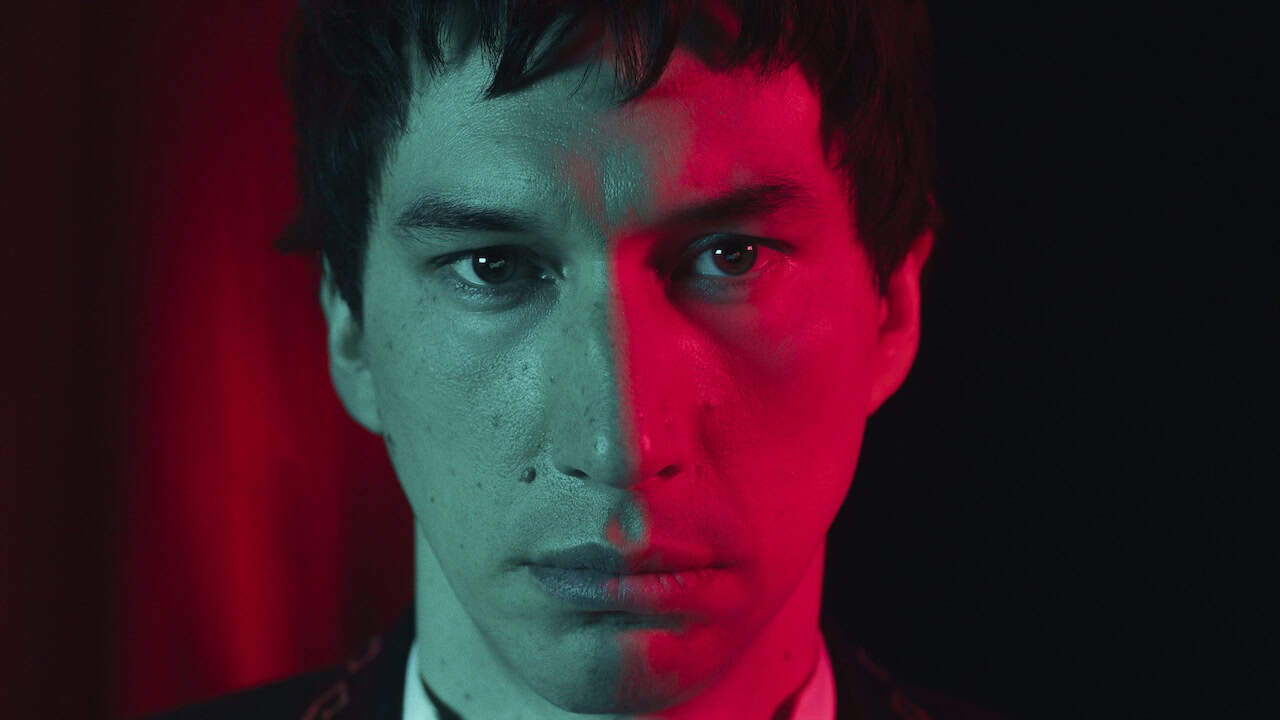
Populating the screen are not characters but ostentatious mouthpieces. They have no complexities beyond the surface level, all performed with the restraint of pantomime dames. Driver is a formidable actor, but this is comfortably his worst performance. He seems stuck between melodramatic scene-chewing and grounded seriousness, settling for an awkward mix of both. It amounts to a tonally inconsistent performance for a bland nothingburger of a protagonist. While LaBeouf insufferably prances around like a child on a sugar rush, many of the other actors seem bored, whether it’s Emmanuel’s stagnant delivery as Julia or Laurence Fishburne’s monotonous drawl. He plays a thankless dual role as Cesar’s driver and the film’s narrator, with most of his dialogue highlighting the parallels between the film and the Fall of Rome, just in case we weren’t getting the memo.
Juxtaposing this shocking lack of faith in audiences is the erratic, self-indulgent nature of the imagery. Despite the high budget, the film’s effects look cheap, with one scene of a building demolition using green-screen so blatantly that they may as well not have layered an effect over it. The images created are certainly colourful, but there’s no rhyme or reason to their utilisation as jumbled editing of constant cutaways generates confusion rather than awe. It’s annoyingly self-absorbed – like Coppola is trying to show off rather than enhance the themes or experience. Turning to the practical effects is no better given the overcrowded setpieces full of extras, many of whom are scantily clothed women. Between this regressive display and Julia’s role as purely Cesar’s arm candy, let’s just say Coppola isn’t beating the on-set allegations.
Rather than engaging us with its ambition or reckless abandon, the film puts us to sleep with its irritating delivery, emotionally vacuous core, and unbearable runtime. Coppola allegedly encouraged improvisation from his actors, but this freedom seems to have made the film all the more nonsensical. That it’s a story of crime, corruption, and cynicism ends with a neat bow – complete with the image of a baby named Sunny Hope – shows that, even after years of rewrites, Coppola still wasn’t sure how to express his ideas. He seems to want to champion solidarity between the proletariat, but undercuts his own argument by holding his protagonist up on the absurd pedestal of singular genius and lone heroism – Cesar’s total lack of change highlights this. It’s a film that wants to appear important without actually doing any of the work.
Megalopolis isn’t 2024’s worst film – Borderlands and Duchess both exist, after all – but it might be the year’s most fascinating disaster. Coppola is undeniably one of the greats – his filmography includes Apocalypse Now, The Conversation, and The Godfather – but his newest film is so high on delusions of grandeur that it becomes excruciating to watch. Patronising writing, shoddy performances and incomprehensible visuals only make this trainwreck more puzzling. Maybe it was uncertainty after years of fine-tuning, or perhaps it was hubris after years of taking critical lauding for granted. Either way, movies like Megalopolis prove that we put too much stake in auteurism. Hedonistic, ridiculous and tedious, Megalopolis is hot garbage.













Follow Us