

There’s undoubtedly a lot of skill and passion behind The Color Purple. Bazawule proves himself a visionary director to watch out for, and the performances help enrich the grand sequences and thematic prowess that the original novel championed so well. The Color Purple is showing in cinemas nationwide from Friday, 26th of January.
The Color Purple explores the hidden strength that can emerge against oppression’s various forms. Set in the decades of the early 20th century, Celie (Fantasia Barrino) is an African-American woman who has known hardship all her life, first from an abusive father who sells off her children and then to an equally abusive husband known only as Mister (Colman Domingo). Then, her husband denies all contact between Celie and her sister Nettie (Halle Berry), the one person Celie believes truly loves her. The film chronicles Celie’s life as she interacts with the black community around her while pursuing the ever-elusive concept of love.
Based on the iconic novel by Alice Walker, The Color Purple has a rich history. On top of its literary success, it was adapted into an equally successful Steven Spielberg film in 1985, a hidden gem that’s often overlooked due to the titanic success of Spielberg’s other Oscar darlings like Schindler’s List and Saving Private Ryan. This new version distinguishes itself by adapting the 2004 stage musical, transferring the dazzling spectacle and vocal range of the musical into the audiovisual format. The result is a film that contains a plethora of style and visual appeal but is still held back by narrative constraints, some of which come with the territory and others that are of the film’s own making.
Where some stage musicals fumble in their transition to the silver screen – think the 2019 nightmare that was Cats – The Color Purple finds itself flexing its choreographic muscles. The film is directed by Ghanaian filmmaker Blitz Bazawule, who has a vibrant musical background, including numerous collaborations with Beyoncé.
His skill in this field informs the directing and seeps into the film’s visuals. The scale of the project is ambitiously grand, utilising wide and aerial shots to capture the vivacious spectacle of the musical numbers; choices that recall the spectacularisation seen in 2021’s In The Heights. The vocal ranges of the actors and performers are equally extravagant, capturing the raw emotion of each character’s plight or triumph, all while hitting the key plot beats of the original text at a brisk pace. Some of the best sequences, namely during a trip to the cinema by Celie and Shug Avery (Taraji P. Henson) at the midpoint, utilise the visuals to hint towards the deeper emotional desires underneath the lyrics. If the stage show had been even half as opulent as this, then it would’ve looked impeccable.
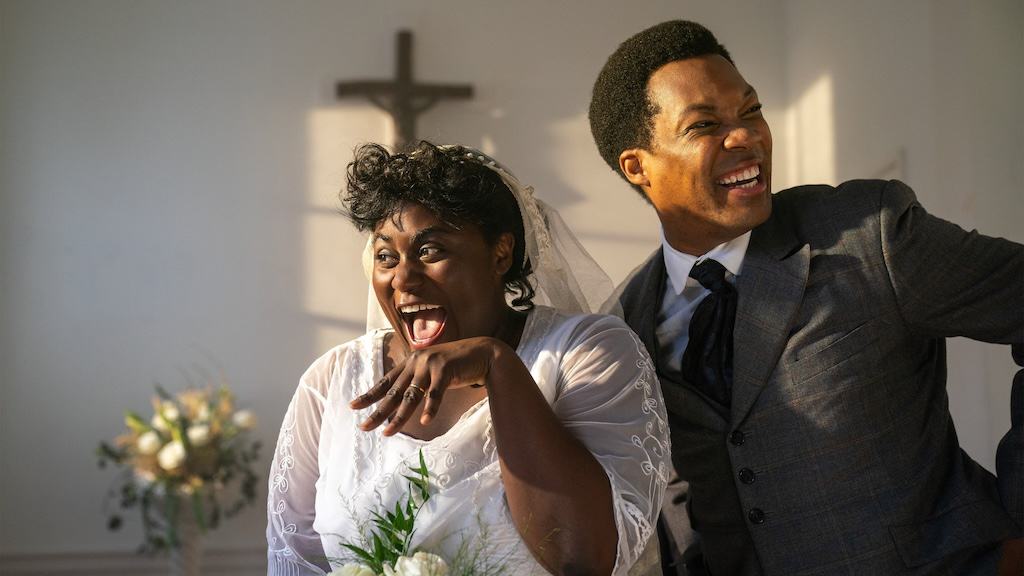
Its performances are perhaps the most significant selling point beyond its musical framework. These are characters with enormous baggage living in an unjust time. Yet, they persevere and try to find ways to make life worth living, be it building a home and bar in the middle of a swamp or clinging to hope that their family is still out there somewhere. The ensemble cast terrifically embodies the trials and tribulations of this, sharing electric dynamics. Danielle Brooks, as Celie’s friend Sofia, is the easy standout, with her bubbly, no-nonsense persona serving as a breath of fresh air amongst all the injustice, even if Sofia also experiences this, notably at the hands of a white mayor’s wife.
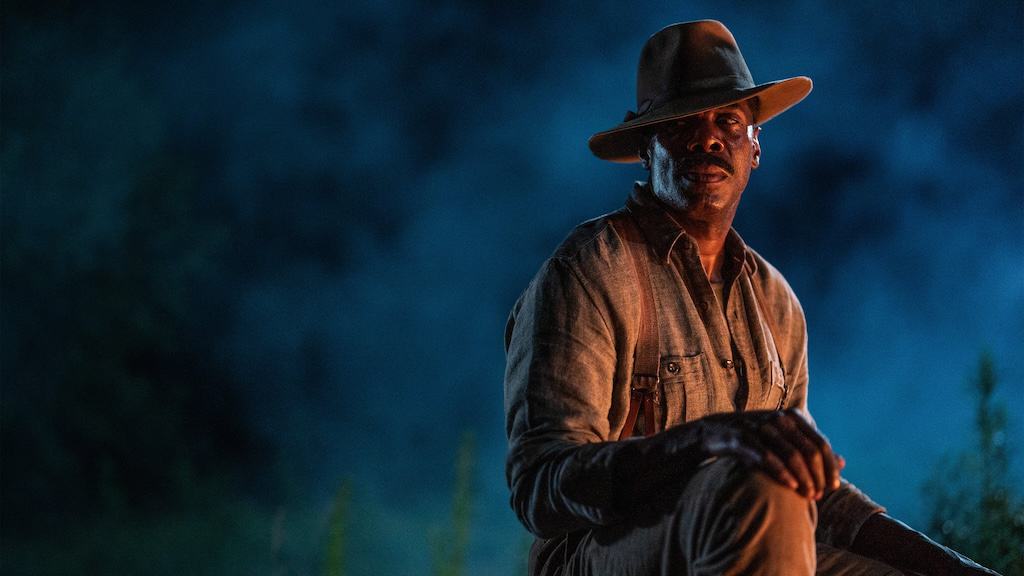
Colman Domingo is another standout as the duplicitous Mister, a violent abuser who, as the story gradually reveals, is a deeply insecure man-child underneath all his talk of respect. His arc was arguably the book’s most fascinating, and Domingo tackles every angle of this arc superbly.
Walker’s story was told from a first-person perspective in the form of Celie writing letters to God and then eventually to Nettie. This was a clever literary device that allowed for a deep exploration of the psyche of the lead heroine as she wrestled with her inner conflict of independence versus security, even if said security was in the form of patriarchal abuse in an inherently racist society. It made for intimate examinations of themes of oppression, be it racial or patriarchal, as well as solidarity, all filtered through the story of one woman whose survival in such awful conditions is a testament to the strength of character she feels she does not possess.
Sadly, the book’s choice of viewpoint is difficult to adapt for audiovisual mediums, which thrive on making the internal external. For all its musical accomplishments, The Color Purple does not quite succeed at this. Instead, a lot of the narrative events happen around Celie as opposed to being driven by her.
Sofia, Shug Avery and even Mister act as bigger driving forces for the story; outside of the odd sequence, most notably the dinner scene with Mister, two-thirds into the story. While it tells a heartfelt tale of someone who believes themselves unworthy of love, realising how loved they are, Celie is far too passive a protagonist in this adaptation, severely limiting the emotional impact despite its extraordinary visuals. One could even argue that the lustrous colours of these musical numbers are a tonal juxtaposition to the heavy themes of the narrative, but maybe that’s a debate best left to the musical experts.
There’s undoubtedly a lot of skill and passion behind The Color Purple. Bazawule proves himself a visionary director to watch out for, and the performances help enrich the grand sequences and thematic prowess that the original novel championed so well. It looks and feels epic. This all makes The Color Purple a good film worth the price of admission. But those wanting a more tonally accurate depiction of Walker’s classic novel may find Spielberg’s 1985 version more agreeable.










Follow Us