

In Kubrick’s The Shining, The Overlook Hotel is the end of the road for a family who can no longer run from the truth. It is a place where the so-called American dream is shown for what it is: a colonial fantasy built on falsehoods, blood and flights of fantasy that hide much darker truths. The Shining is available to rent, buy or stream.
The Shining was my introduction to Stanley Kubrick’s genius, and my first real experience of the power horror films could wield. While it is now hailed as a masterpiece of modern cinema, The Shining did not find universal favour on its initial cinema release, receiving several mediocre reviews, award ceremony snubs and even a Razzie nomination for ‘Worst Director’. Even Stephen King, the author, rejected Kubrick’s adaptation.
Kubrick made several significant changes to King’s book, altering the narrative path Jack, Wendy, and their son Danny would take, and adding multiple layers to the story, from the horrors of colonialism to a fractured American dream.
Over the years since its release, Kubrick’s ability to weave mystery, unspoken words, and complex social issues into his movies has led to countless theories, some sound and some slightly far-fetched, as viewers, critics, and documentarians have attempted to decipher Kubrick’s maze of messages and ideas. For me, the true genius of The Shining sits not in the supernatural but in the human horror of a fragmented America built on colonialism.
From the outset, Kubrick highlights the capacity of humans to unleash unimaginable horror in their pursuit of the so-called American dream, exemplified by the story of the Donner Party, a group of American pioneers who resorted to cannibalism during a winter in the Sierra Nevada mountains. Like the Donner Party, Jack’s family is travelling to a new life in the mountains, and like those settlers, they are about to face tragedy. The Shining is a story of a family that can no longer escape a fractured American dream that never truly existed. It is a story of domestic abuse, addiction, colonialism and the real horrors that sit behind many a front door in the American suburbs.
From the opening scenes, Wendy is a woman desperately trying to hold her family together. While never explicitly stated, it’s clear that she fears her husband’s volatile nature, but chooses to believe that things can and will improve.
Wendy places the welfare of her son, Danny, first at all times, desperately trying to ensure his protection. But it’s clear she also worries about the little man who lives in Danny’s mouth, ‘Tony’, an invisible friend who tells Danny things that are often uncomfortable and shows him future events. Taking out the supernatural dimension, Tony is Danny’s way of finding a channel for his inner fears, something not uncommon in children attempting to deal with violence, addiction and abuse in the home. Wendy knows this, but hides from the painful truth, even though Jack has hurt Danny on at least one occasion before the move.
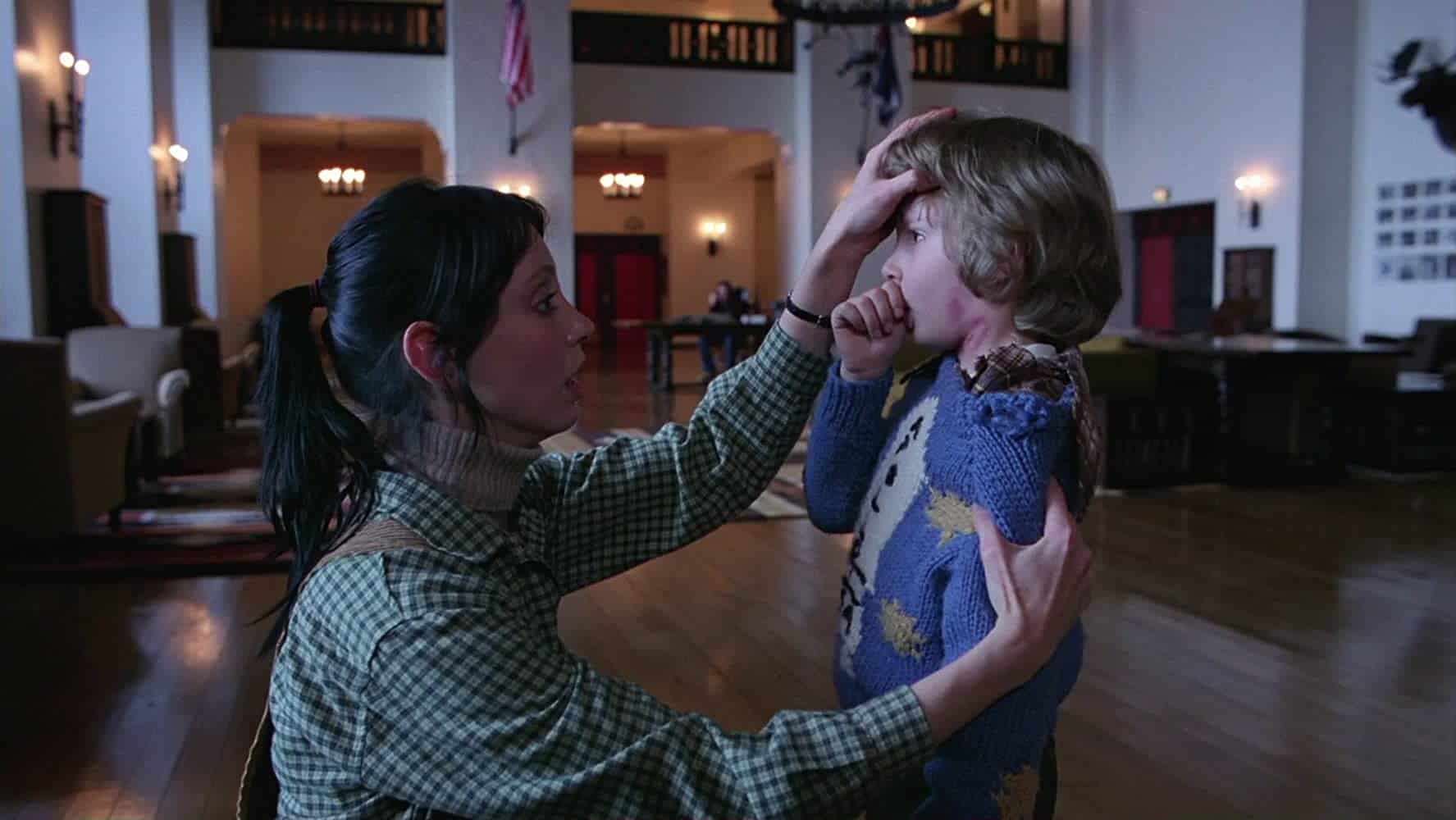
Wendy’s predicament reflects the situation many women who are trapped in cycles of domestic abuse face as they attempt to protect their children in volatile environments. For Wendy, life at The Overlook Hotel opens her eyes to the domestic abuse she has long endured and the fact that she cannot change the man responsible for her pain and must escape. The hotel marks the moment Wendy’s dream shatters into a million pieces as she realises her life with Jack was never an American dream but a nightmare she should have walked away from sooner.
Meanwhile, Jack is a man who has come to view his family as a barrier to the life he thought he would lead; his career as a teacher is in tatters due to his alcoholism and anger, and his writing career is a mere fantasy. On the surface, the caretaking job offers Jack everything he thinks he needs: an escape from the bottle, home, his past failures and his internal doubts, but the silence of the hotel only highlights these inner demons as Jack has the time and space to run through his fall from grace again and again.
As his internal voice becomes more and more dominant, and his mind begins to unpick everything that led to his fateful decision to take the job, his need for escape butts up against his need to regain a sense of control over his family; his mind convinces him that they are the reason he has failed, they need ‘correcting’, not him. Jack accepts his inner demons and allows them to run free. Here, his final hunt for Danny in the giant snow-covered maze is a reflection of his inability to escape a self-created labyrinth of addiction and failure.
Like the Donner Party, the Torrence family seek escape and a new beginning, only for the shattered American dream that follows them to eat them alive in the confines of The Overlook Hotel. The Shining shines a light on a fractured America that most Americans would rather ignore, one where addiction, violence, hyper-masculinity, and fear sit behind the door of many typical American homes in a country built on conflict, addiction, colonialism, racism, and division.
In Kubrick’s The Shining, The Overlook Hotel is the end of the road for a family who can no longer run from the truth. It is a place where the so-called American dream is shown for what it is: a colonial fantasy built on falsehoods, blood and flights of fantasy that hide much darker truths.
Discover more from Cinerama Film
Subscribe to get the latest posts sent to your email.
























Follow Us