


From a hookup in Berlin, where honesty becomes inconvenient in the midst of pleasure, to the streets of Kabul, where a fifteen-year-old hides a secret that will forever change their destiny, and a lonely lumberjack on a quest to find a connection in rural Queensland, The Male Gaze: Naughty Boys is an unmissable selection box of globetrotting cinematic treats.
We all take risks at some point in our lives, even the most conservative of us. Equally, we all lie or deceive, even the most straight-laced of us. Some would label this behaviour as naughty, bad or mischievous, behaviours that can, of course, be used to cheat, hurt, and manipulate others. Still, sometimes they are born of the situations and surroundings we find ourselves in, and it’s here that The Male Gaze: Naughty Boys finds a unique, powerful, and urgent voice through six world-class short films.
From a hookup in Berlin, where honesty becomes inconvenient in the midst of pleasure, to the streets of Kabul, where a fifteen-year-old hides a secret that will forever change their destiny, and a lonely lumberjack on a quest to find a connection in rural Queensland, The Male Gaze: Naughty Boys is an unmissable selection box of globetrotting cinematic treats.
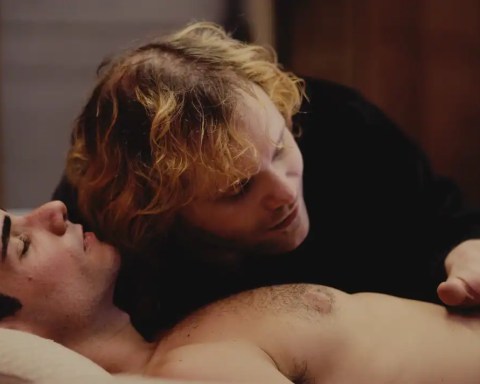
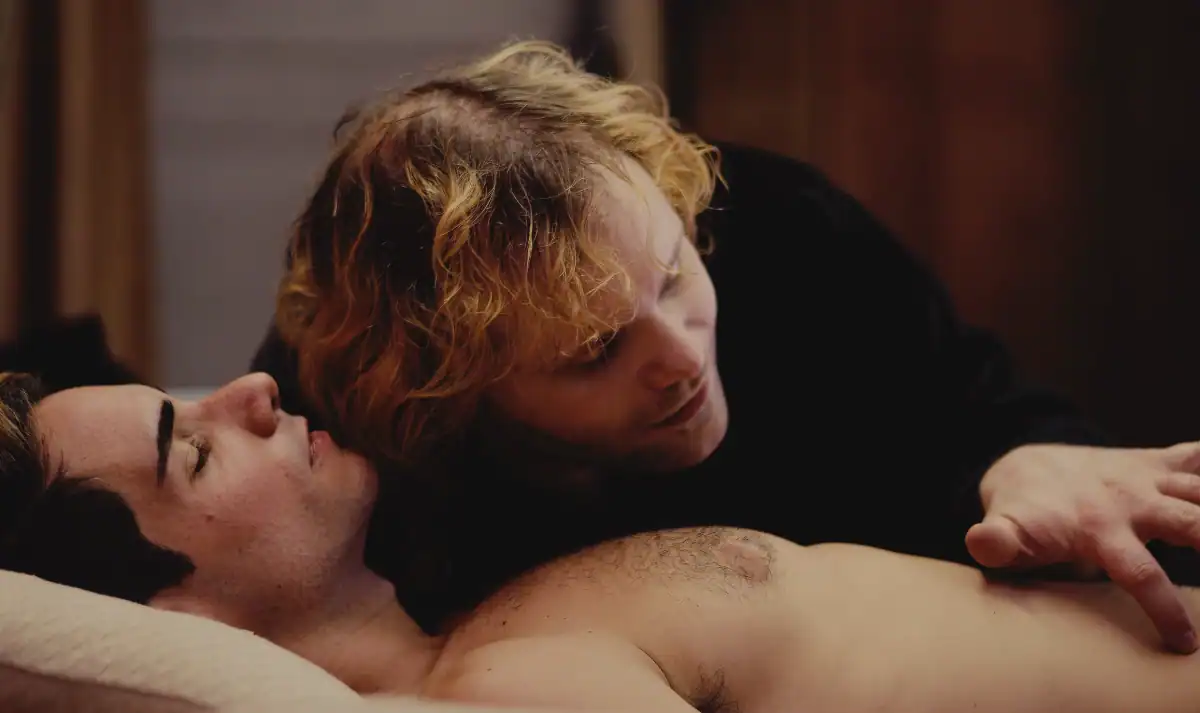
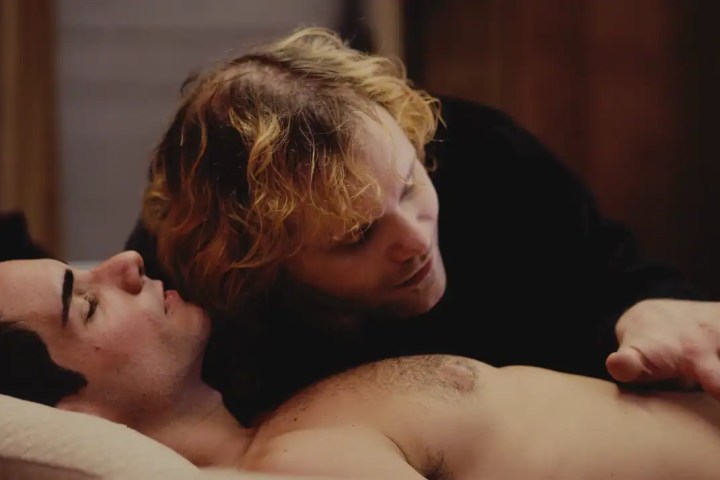
First in The Male Gaze: Naughty Boys collection is STATUS, directed by Felix Hertneck, a gritty, no-nonsense exploration of honesty, consent and conflict during a casual hookup. We all know hookups can be fun, wild and even lead to new connections, friends and more. Still, they are also dependent on honesty and openness, especially when it comes to sexually transmitted infections or lifelong conditions such as HIV. Equally, these encounters are built on consent, not just to have sex, but on what happens during the act. But in the heat of the moment, honesty, consent and communication can become opaque, and lead to conflict.
Hertneck’s powerful short explores honesty and consent during casual sex from the perspective of both men involved, as sex turns to conflict, discomfort and then separation. But he also explores a broader truth of the hookup app: For some, sex via apps isn’t about human connection, it’s about simply ticking names off in a sexual game of risk.

A Fuckboi Story (Despide a tu fuckboi)
Exploring the hookup from a different angle is A FUCKBOI STORY (Despide a tu fuckboi), directed by Carlos Jiménez Lucas. Sometimes, a casual meeting with a guy can spark feelings we weren’t expecting. We may want to meet that person again, go out on a proper date, and even let our imaginations create a possible relationship that doesn’t yet exist. Much of this depends on how we initially view the app we are using to arrange a meeting. So here is a question for all you using gay hookup apps: Does the app you carry around and check regularly hold within it your hopes of meeting someone who could be something more than a quick fuck? Or is it merely an app you go to for casual sex and nothing else?
For young florist Ulises, a hookup with David months before felt like it could be more. But for David, Ulises was just one of many, in a game of no-strings sexual conquest and fun. Now, a chance encounter outside a bar in Madrid is about to reopen discussions of what could have been for Ulises, while David looks to score another notch on his bedpost. Carlos Jiménez Lucas’s brutally honest short is about the expectations we carry, and the often uncomfortable realisation that those expectations are not shared by the person we feel attracted to. It’s about the moment we either decide to walk away or are pulled further into a toxic connection we know, deep down, will only cause hurt.
Exploring the toxicity of parental and community control built on gender inequality and religious dogma, THE INVISIBLE (Na Marei), directed by Léa-Jade Horlier, is the standout short of this collection. In Afghanistan, the practice of bacha posh sees girls dressed and presented as boys until they reach puberty. A direct result of extreme gender inequality and oppression, bacha posh sees mothers expect their daughters’ conformity and acceptance in pretending to be male until they are old enough to marry a male (not of their choosing).
Tackling this subject head-on, we meet 15-year-old Zaid, who lives in Kabul with his mother and younger sister. Zaid loves school, although his views are often classed as problematic in a city of strict religious control where men armed with rifles walk the streets. But Zaid is determined to pass his final exams and gain entrance to Kabul University.
However, there is a problem. Zaid (Zaira) is not a biological boy. His life and his gender identity have been controlled from a young age by a mother attempting to navigate the social stigma of only having girls, and now, as his exams approach, his mother has decided his days of being a boy are over as she announces his arranged marriage to an older man. His younger sister will replace him as the boy of the house, opening up a world of risk as Zaid (Zaira) attempts to complete his exams at any cost.

The Invisible (Na Marei)
Léa-Jade Horlier’s haunting short film not only explores the problematic tradition of bacha posh and the reasons for its continued support in a country where men reign and women sit in subjugation, but also the ramifications of an individual’s sense of gender identity due to forced transformation. Zaid (Zaira) doesn’t want to return to being female, but in a society where an individual’s wants, dreams and aspirations are controlled through violence and fear, does he really have any choice? Compelling, powerful and brave, The Invisible is a short film you won’t forget in a hurry.
Every gay man has hidden who they are at some point in time in fear of their sexuality being used against them. Seventeen-year-old Adrien is doing just that, as he goes through the final exams and practical tasks needed to join the French Fire Service in THE SQUIRREL (L’Écureuil), directed by Thomas Buisson. For Adrien, a job in the fire service is all he has dreamed of, and nothing is going to get in the way of him making it a reality. But as all gay men know, hiding your sexuality doesn’t come easily, especially when you are young and your hormones are racing. Add a crush on the alpha-male lead trainer and an environment where damaging cultural norms define social expectations and behaviour, and you have a recipe for disaster as Adrien attempts to hide while also seeking peer acceptance.
Thomas Buisson’s engaging, beautifully performed short film highlights a truth many of us would rather ignore. For all the progress made in LGBTQ+ acceptance and protection in recent decades, many workplaces continue to force us back into the closet. These workplaces continue to thrive on age-old expectations of what it means to be male, isolating and oppressing candidates who don’t fit the cultural norms they are built on, often without realising or reflecting on the damage their workplace culture creates.
Our penultimate film in The Male Gaze: Naughty Boys takes us to rural Queensland, Australia, with LUMBER, directed by Harry Sabulis. Loneliness affects a lot of gay men, especially those living in rural communities where the opportunity to engage with and meet other gay men is limited, and they have to travel miles from home for any interaction. It’s a situation faced by a forty-something lumberjack as he decides to travel to a rural gay bar, looking for a connection, but what he finds is an alien environment where he feels like he doesn’t fit in. But when all seems lost, a biker offers a hand of friendship and a touch that’s been missing from his life for far too long.
Harry Sabulis’s short film beautifully explores rural isolation and the need for a human touch, and shows how the most meaningful connections often happen outside gay venues rather than inside them.
The final short film in this beautiful collection concentrates on unrequited love in a small village outside of Marseille, with BIG BOYS DON’T CRY, directed by Arnaud Delmarle. Like our previous film Lumber, Delmarle’s short explores the challenges of finding love in a small, insular community as we meet Lucas and his band of brothers from another mother. Friendship is everything to Lucas, but for three years, one of those friends has been missing, Hicham.
Hitcham left to join the Navy as a Marine, and Lucas wanted to go with him. But Hitcham knew that Lucas’s reasons were not about any passion for the armed services, and so he left without him. But now, on a hot summer day, he has returned, stirring feelings that Lucas has tried to suppress ever since he left, unspoken feelings that both boys know exist but neither is prepared to confront.
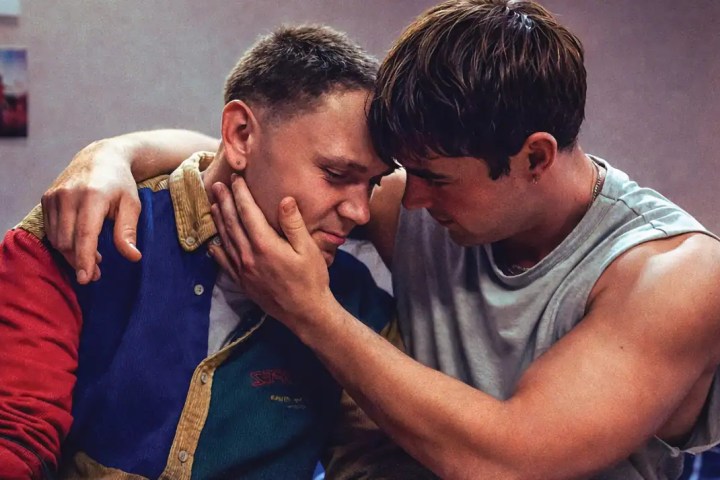
Arnaud Delmarle’s sundrenched short explores how unrequited love tears at the soul, eating someone from the inside out, no matter how hard they try to suppress it. As Hitcham’s brief visit comes to an end, years of pent-up emotion spill out, as Lucas cries and his friendship group consoles him, knowing that the bond between him and Hitcham was always more than friendship, yet uttering no words to convey this.
The Male Gaze: Naughty Boys is now available to rent or buy on Prime Video and Payhip worldwide.







Follow Us