
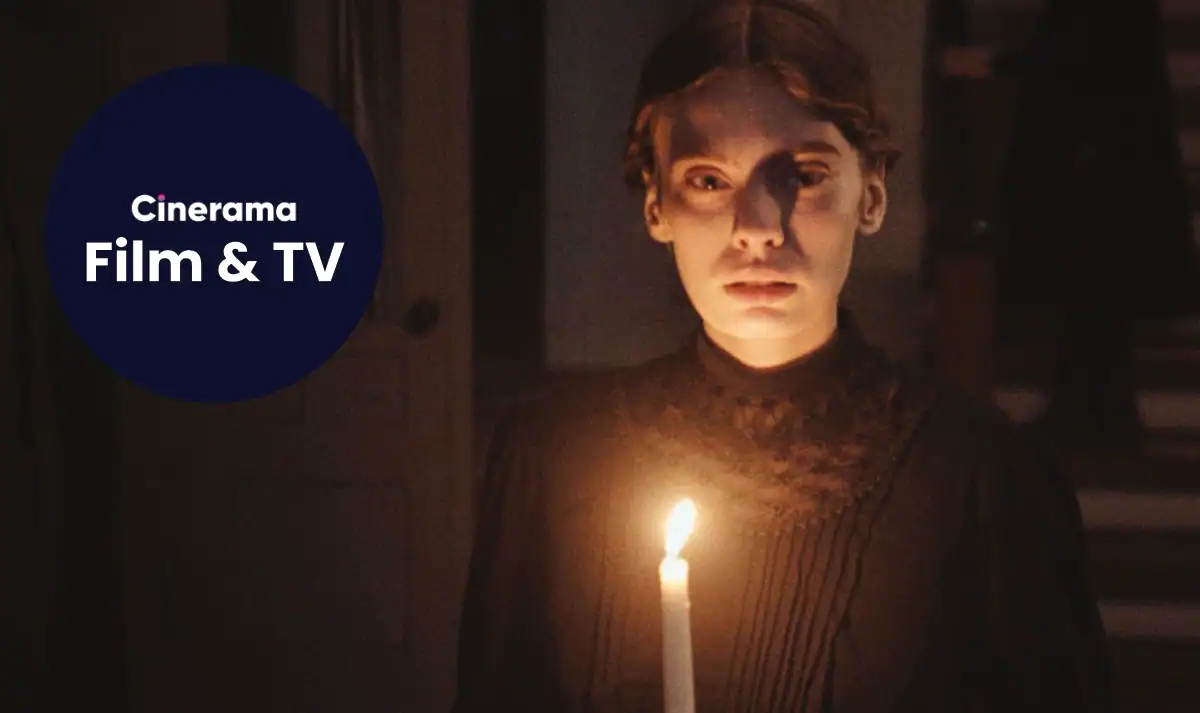
Visually articulate and trading in broad, powerful sentiments regarding identity and womanhood, Sound of Falling (In die Sonne schauen) is like a hypnotic work of art you can’t look away from. It’s bizarre, haunting, and unnerving, yet simultaneously brimming with compassion and sharp insight.
Watching Mascha Schilinski’s mordant, soulful Sound of Falling reminded me of some of Ingmar Bergman’s most iconic films. Like Persona or Cries and Whispers before it, this is a movie that moves at its own pace, engaging with hypnotic imagery and broad, even nebulous ideas. Some may find the film ambiguous or subdued, and to some extent, it is. But for those on board with the ominous, thought-provoking feelings its visuals invoke, this is an engrossing work of thematic splendour.
Structured non-linearly across four generations, the picture centres on a farmhouse in Altmark, Germany. This farmhouse changes hands over the years, but each owner seems connected, directly or loosely, to the family that came before it. We open on Erika (Lea Drinda), a teenage girl in the 1940s who pretends only to have one leg, implied to be a curiosity response to her uncle, who suffered a leg amputation himself. We then jump to the 1910s, where the focus is on 7-year-old Alma (Hanna Heckt), the youngest of many siblings, who becomes fascinated by death and gradually mistrustful of the adults in her life. Her elder brother Fritz (Filip Schnack) eventually suffers a “work accident”, losing his leg in the process. Fritz is later revealed to be the uncle from the 1940s timeline.
In the 1980s, Teenager Angelika (Lena Urzendowsky) observes how her mother, Erika’s sister, is treated by the men around her, and Angelika’s own boundary-pushing behaviours become a response to what she sees as the enabling of harm. The final timeline, set in the 2020s, sees the quiet 12-year-old Lenka (Laeni Geiseler) make friends with the confident, rebellious Kaya (Ninel Geiger), all while her little sister Nelly (Zoe Baier) suffers from feelings of neglect and curiosities with death not unlike the ones Alma had 100 years ago. Familial connections tie each storyline together in some shape and form, but recurring imagery, sounds, and filmmaking techniques serve as audiovisual reminders that this is one story with a single thematic thesis.

The film hops freely between its different timelines, allowing the blood or narrative relations between each to reveal themselves organically. Their aesthetics and mise-en-scene are blatantly distinct – divided by time, lighting, visual look, costume, and set design alike – yet all four are intrinsically tied to one another. Putting aside the family connections, recurring imagery and motifs litter the screen from one timeline to the next. Some imagery and lines of dialogue are repeated verbatim despite their many years apart, and stories that occurred in the past timelines are recounted in more contemporary timelines, their significance or perception emboldened or obfuscated by the passage of time.
Even the most contrasting human experiences are bound together by the cycle of life and death, a theme Sound of Falling (In die Sonne schauen) frequently mulls over. While navigating life, we struggle to find and shape our own identities, often moulding ourselves to suit our environments or the people around us. One particularly potent line comes from Angelika towards the end of the picture, in which she observes how we always see others from the outside but not ourselves. We understand our own woes acutely but don’t always see the struggles of others for what they are, and sometimes even fail to recognise how similar they are to our own, whether in the moment or across generations. Even the farmhouse appears to experience its own cycle of life and death, as it is seen bristling with animals in the 1910s, yet practically empty by the 2020s.
Schinlinki adopts a voyeuristic sense of direction, Fabian Gamper’s cinematography bringing the underlying eeriness of the storytelling to the forefront. One early sequence follows Alma as she runs around the farmhouse, the rooms gradually getting darker and quieter. The use of the tracking shot here recalls the classic tricycle scene in The Shining, while the 1:1:37 aspect ratio throughout creates the impression of the audience peering through a window into the characters’ lives and souls.
In fact, many a scene sees characters peering through keyholes, wooden slits or windows to experience the realities of another’s life, despite the facades they put up. Much of the picture is crafted in a manner akin to a ghost story, an unorthodox but brutally effective creative choice. Out-of-focus shots wander past and surround the characters, as if lost souls of the past are observing the woes of the future, desperate to help but unable to intervene. This is a picture as spooky and visually experimental as any horror film.
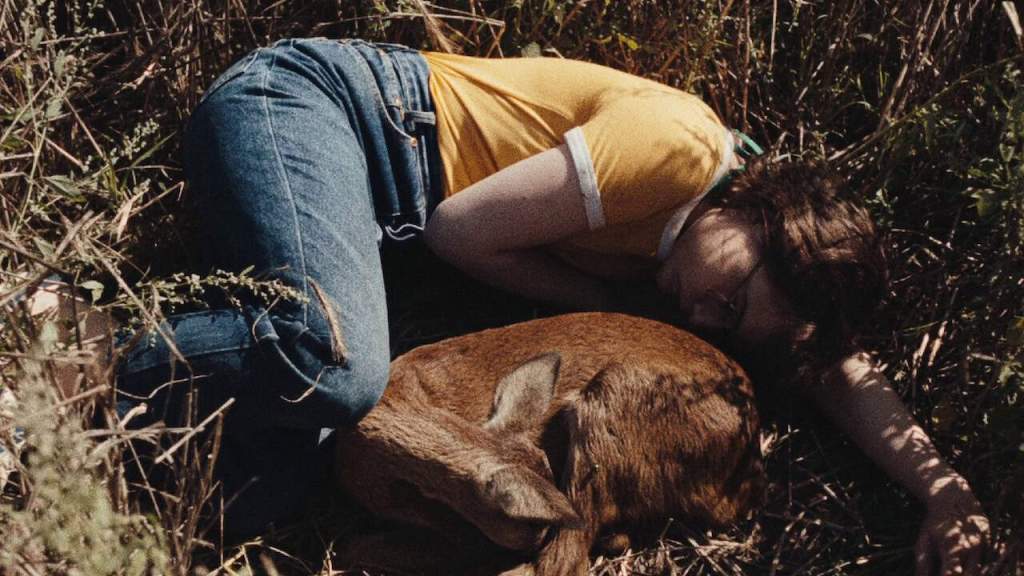
It’s no coincidence that Sound of Falling focuses on the female experience over time. Schinlinki ties the various plotlines to the systemic struggles women face under patriarchal customs, demonstrating that the fight to be seen and understood is a shared one experienced by women across time. Whether it’s the oppressive times of 1910, when most women couldn’t even vote, or the 2020s, where mental health battles are still only moderately understood, these female characters are tied together by blood and the fight to be seen by their peers and loved ones. Repeated motifs unite the characters in this one struggle, the fear and even the temptation of death looming overhead in all their lives, most grotesquely represented by the recurring presence of flies. Nietzsche would’ve had a field day dissecting the symbolism of this haunting picture.
What this leaves us with is an engrossing, labyrinthian tale of identity and existentialism. There are no easy solutions offered, and at times, there is little clarification. It’s a film designed to be experienced as much as understood, the filmmakers asking for our empathy if nothing else. That it invites us to peer through the proverbial looking glass with such puzzling yet invigorating imagery only makes the experience all the more absorbing.
Some may take issue with the film’s gradual pace and its reliance on imagery rather than answers. That is their prerogative, of course, but where some may see tiresomeness, this critic sees sweeping ambition. Visually articulate and trading in broad, powerful sentiments regarding identity and womanhood, Sound of Falling is like a hypnotic work of art you can’t look away from. It’s bizarre, haunting, and unnerving, yet simultaneously brimming with compassion and sharp insight. It’s an assured, powerful work from Schinlinki; one whose motifs and sentiments will stay with you long after the credits roll.













Follow Us