

There’s no room for subtlety when trying to emphasise the importance of your findings, particularly those that affect the entire planet. Attenborough and team use both their visuals, in all their contrasting beauty and horror, as well as scientific data and interviews with experts local to the affected areas of research, to deliver these points concisely and powerfully. Ocean with David Attenborough is now showing in selected cinemas nationwide. Visit Ocean Film to find your nearest cinema.
Beloved British biologist and broadcaster David Attenborough has regularly dismissed the branding of “national treasure” that so many have labelled him with, but you can’t downplay his contributions to entertainment and scientific spaces. With a career spanning decades, his commentary, accompanied by grandiose imagery, has generated renewed interest in the environment and the wonders of our planet. With this latest film, Ocean, which has now crossed £2,526,000 at the global box office, David Attenborough employs a hair-raising warning about the effects of overfishing with gripping results.
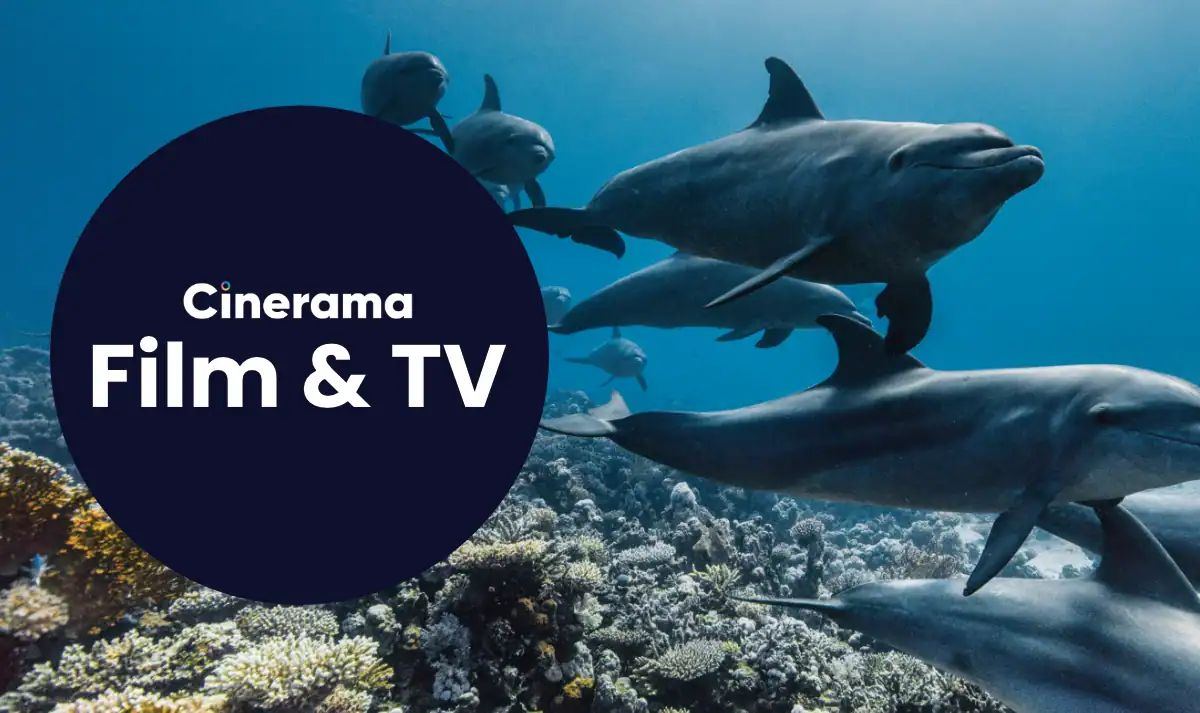
In its first act, Ocean, with David Attenborough, does what it says on the tin: it provides an overview of our oceans, which cover 70% of our planet. They are home to a vast array of animals, and their beautiful underwater environments feel like another world, with colours and patterns that leap off the screen. Long takes and sensuous music accompany Attenborough’s commentary, as they have done countless times before. The sheer majesty of our oceans is captured in glorious detail in these scenes, creating a mesmerising quality akin to the best of Attenborough’s television shows—think Planet Earth.

Copyright: Silverback Films and Open Planet Studios
However, the documentary then takes a dark turn as Attenborough shifts from discussing the luminous qualities of our oceans to territories of devastation. Humanity regularly takes our oceans for granted, exploiting them for our own, usually short-term, ends. Among the many problems modern oceans face are overfishing, pollution, and the mass destruction of seabeds in the pursuit of profit. One particularly harrowing segment details the use of scallop trawlers, which, with their massive nets and rakes, wreak havoc on the seafloor in pursuit of a handful of scallops. The imagery used to showcase the aftermath bears an eerily similar resemblance to a nuclear winter.
Much of the appeal behind Attenborough’s programmes is not just his soothing, insightful commentary but the imagery that accompanies them. Expansive overhead shots are used throughout to capture both the majesty of the environment and the scale of destruction that humanity is leaving in its wake, simultaneously. There’s a deliberate spectacularization of what we are watching, which is arguably manipulative in its ability to elicit emotional responses, but it’s undeniably effective. Interspersed between the real-time footage of fish nurseries, coral reefs, and corporate destruction are animations of world maps to stress the size and relevance of the topics Attenborough is discussing.
Clear-cut messages come from this, which Attenborough and team have no interest in obfuscating – that the destruction of our oceans is aiding and accelerating the rise of climate change and that capitalist greed and lack of laws to restrict said avarice are killing the planet at large and the animals that we share it with. There’s no room for subtlety when trying to emphasise the importance of your findings, particularly those that affect the entire planet. Attenborough and team use both their visuals, in all their contrasting beauty and horror, as well as scientific data and interviews with experts local to the affected areas of research, to deliver these points concisely and powerfully. It’s a robust methodology that uncovers terrifying results.
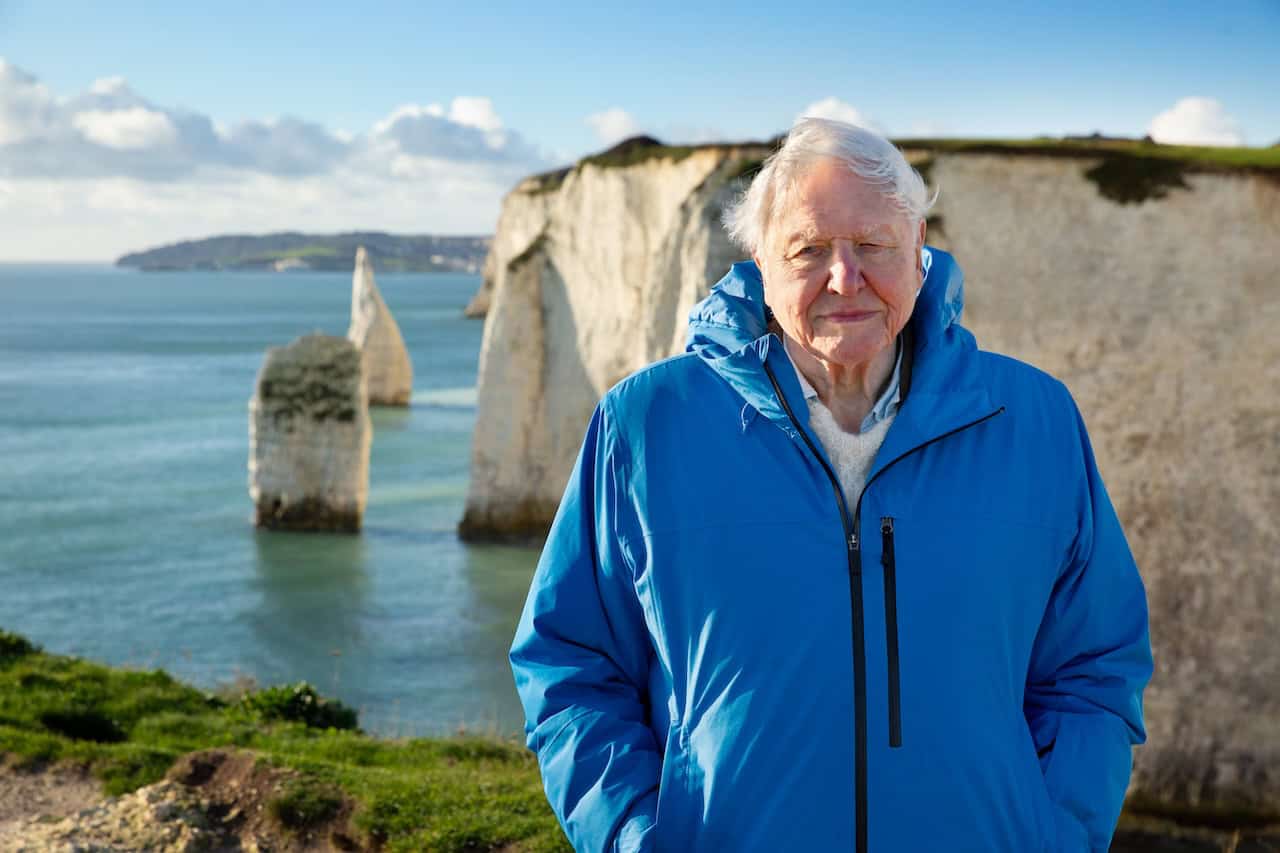
Copyright: Silverback Films and Open Planet Studios / Keith Scholey
For example, shark populations, which are vital to oceanic health and ecosystems, have declined by half in the last 50 years, with over a third of all sharks now threatened with extinction —a particularly shocking number when you consider that sharks have lived for hundreds of millions of years. Overfishing is the overwhelming leading cause of this. The destruction caused by the trawlers hit particularly close to home for me, as much of the footage was obtained around the Isle of Arran, an island just across the water from my hometown of West Kilbride. By comparing these local stories with similar ones across the globe – from Hawaii to Africa and Antarctica – a bleak but irrefutable picture emerges. That Attenborough stresses the weight of his words in a small, dark room—a sharp contrast to the wide angles and sweeping shots we’re used to seeing in his work—makes the film not just informative but a direct call to action.
Ocean with David Attenborough could have been depressing and destabilising, which it often is, but what catapults it into one of 2025’s best documentaries is the undercurrent of optimism beneath the palpable urgency. Amongst the destruction on screen, efforts are being made to preserve our oceans, which Attenborough and the team showcase in the third act.
Chief among them is the establishment of safe “no fish zones” where oceanic flora and fauna are protected by laws, allowing vast swathes of the ocean to recover remarkably quickly. What is most significant about these protections is that they do not affect the need for fishing that many communities rely on—if anything, the overspill generated by these protections actually supports the fishing business. Enhanced by the gorgeous imagery and compelling scientific data, Attenborough highlights the effectiveness of strategies like these by reminding us of how effective they’ve been in the past – before the banning of whaling, the Blue Whale’s population was reduced to a mere 1% but has since bounced back more than even Attenborough could have imagined. These methods of solidarity have worked before, and they can work again.
By turning a worrying collection of numbers and data into a story of context, conflict and solution, Attenborough and team have crafted a haunting but blisteringly powerful picture. Even at 99 years old, Attenborough shows that his voice and wisdom still have the power to inform and resonate, as the captivating visuals serve as an absorbing backdrop to the severity of the issues our oceans face. In June 2025, the UN Ocean Conference will be held in France, with a mission to protect 35% of our oceans and encourage more sustainable fishing methods. Here’s hoping world leaders take the dangers our oceans and our world face as seriously as this tenacious and engrossing film does.













Follow Us