

Generation Z is now showing on Channel 4 online and on TV.
Ben Wheatley‘s Generation Z is a high-octane, darkly comic series with one hell of a killer cast. From Sue Johnston as the flesh-munching leader of a zombie tribe of older people to Johnny Vegas as a downtrodden dad struggling to get by and Anita Dobson as a lasagne-loving gran who soon becomes her grandkid’s worst nightmare, Generation Z is a Halloween treat with more than a few delightful tricks.
Dambury is the last place you’d expect the apocalypse to begin… But when an army convoy overturns outside a care home, a chemical leak starts to have an adverse effect on the residents. The older folks, led by Cecily (Sue Johnston) and Frank, escape the grasp of the army, looking to contain their angry, violent, insatiable hunger for raw flesh in the local woods.
On the night of the outbreak, teenagers Charlie (Jay Lycurgo), Kelly (Buket Kömür), Steff (Lewis Gribben) and Finn (Viola Prettejohn) find their normal lives (tinnies, messy feelings, complex relationships, and A-Level prep) abruptly upended when Kelly’s nan, Janine (Anita Dobson), becomes infected and attacks her in spectacular style.
However, just because it’s the end of the world, it doesn’t mean our teens’ home life and relationship problems have come to an end. At the same time, life is just as complicated for the zombies, with the virus fuelling single-minded desires, bringing a whole new dimension to their zombie rampage. Meanwhile, Finn is more than a bit worried about her grandad-like friend Morgan, played by the brilliant Robert Lindsay, when she realises there might be more behind the chemical spill.
Generation Z is about intergenerational justice and community breakdown, boldly satirising a world where truth is stranger than fiction while exploring the political fault lines in our society and the very real issues facing teenagers today.
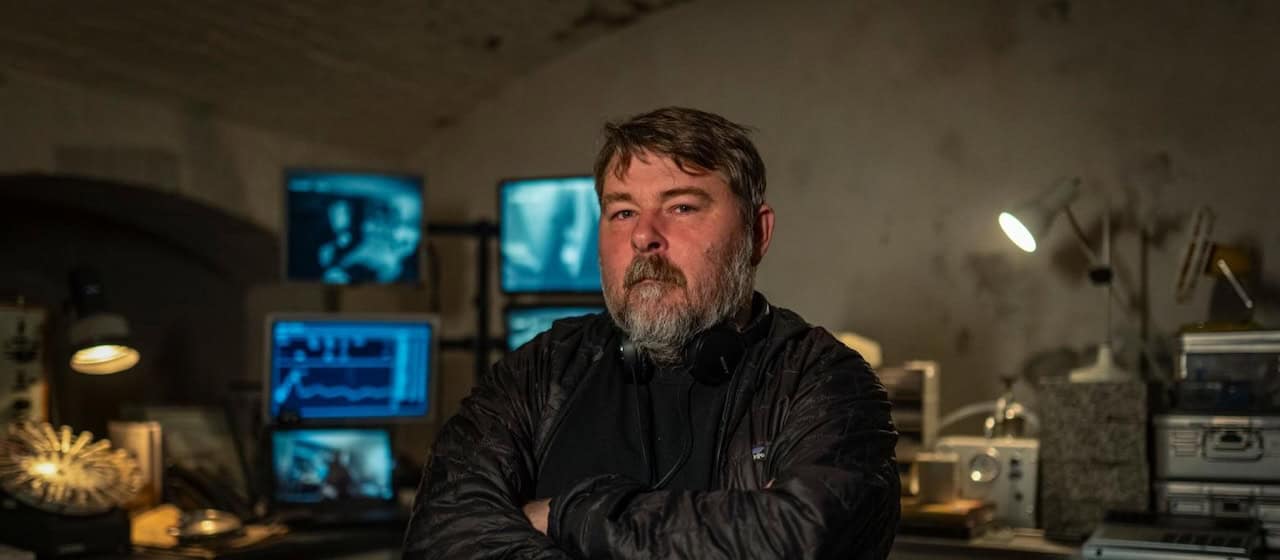
Q: How would you describe Generation Z?
It’s in that world of horror but also a disaster movie, setting up the characters and how they deal with the approaching catastrophe that’s happened outside the town of Dambury. It’s got echoes of Covid, echoes of the classic zombie genre, of The Crazies and Threads and all sorts of things. I was excited about structuring it around multiple generations so there would be different perspectives that would interact within the story.
Q: How central was Covid to the concept?
We almost made Generation Z in 2019, then it needed a rethink when Covid happened – it went from being predictive science fiction to us all living through it, which was weird. It got put away for a bit, then I did The Meg 2, and it came back into focus. A year or so after lockdown, we started to think it was more relevant than it was before…
Q: What makes the zombie genre so apt for allegory?
I’ve always thought the zombie film is a gussied-up version of a civil war movie. It’s difficult to make a civil war movie because you have binary sides which you have to define; when you define one side as the dead, it’s easier not to feel bad about them being shot. Equally, I wanted to change it because it feels guilt-free. If you reframe the zombie film, it’s really people who are ill versus people who are well, which is less comfortable to watch. These aren’t zombies; these are people with feelings and thoughts. They have discussions about what’s happening to them. You can’t think: just kill them.
How far did you decide to push that empathetic side of the zombies?
Diseases make you do things, but so does your own biology, so does living at different ages – you do things and look at things in a different way. Generational gaps and misunderstandings open up, and you can twist all that up within the structures of genre. You have a pulpy excuse to really put your finger on stuff because horror films are always at their best when they’re talking about the society in which they’re set, while making it as fun and engaging for the audience as possible. George Romero’s original Dawn of the Dead is the blueprint for all that.
Q: Is there research to be done with a series like this, or is it all straight from your imagination?
It wouldn’t stand up to a biologist looking at it, but the vagaries of it sort of work! It is pulpy, and I fade into the shadows whenever there’s a specific question about the ins and outs of it, but ultimately, it’s the same mix as Kill List. We’re combining genre with socio-realism, real emotion and family dynamics, then pitting those against B-movie plots. It was about trying to avoid whiplash between those different elements.
Q: Tell us about addressing the idea of fake news and conspiracies through Steff (Lewis Gribben).
Yes, I’ve noticed that wedge between reality and facts more and more. Things become harder to put in a box and not have to think about. If you’ve got something to cover up, you throw out ten things which are a bit like it, and no one can work out what the hell’s going on. Even in the 1990s, people thought something was going on with the news services, but they were willing to accept it for a status quo of information. Now, it’s much more fractured.
Q: Did you revel in the freedom of having six hours?
It exercised different muscles. You have to relearn every time you do a different genre or medium, be it an advert or viral clip or a half-hour comedy show, so for this, I had to write to advertising breaks, which was a really interesting discipline to learn.
Q: How did it come about?
It was a meeting with the producer George Faber. He had this project, which was very simple: the old eat the young. We chatted about that, and it was pitched around until it landed at Channel 4, which felt right because Generation Z is distinctively British, and I had a history of working with Film4. They were very understanding and hands-off. I can’t see it anywhere else.
Q: You tend to direct the projects you write. Was that always going to be the case here?
Yeah, totally. You’ve got to know how you’re going to do it within the budget, especially when you’re working as quickly as we needed to. It’s a much easier thing to write and direct than it is just to come in and direct something in some respects. In other respects, it’s terrifying because it’s all on you, but the actual physical directing becomes much quicker when you’re writing it. You can make decisions on the floor.
Q: There’s a lovely sense of both the teenagers and the Boomers forming “us-against-the-world” gangs. Were you always looking for those parallels?
It was three groups originally – Boomers, Gen X and Gen Z – but the Gen X characters got squashed in the middle. It was structured so there’d be two gangs that would slowly come towards each other. It was important to give the boomer group a voice so it wasn’t demonising them, and as the show goes on, you see all these different positions to take, which aren’t immediately obvious at the outset.
Q: How did you go about casting?
It was an open cast for the younger roles, so we saw a lot of people. My preconceived ideas were open to being destroyed by really brilliant casting moments, which is what happened. I did a comedy sketch show called The Wrong Door years ago, where I met Neil Maskell, Michael Smiley and MyAnna Buring – I’m still raking people out of that show and using them in stuff. This feels like the same thing, where I got to audition and work with the cream of the new generation. I also got to work with absolute icons like Anita Dobson, Robert Lindsay, and Sue Johnston. Meeting Dobson was a geeky, amazing moment, and I’d written references to Wolfie Smith into the script without even thinking about it, so I couldn’t believe it became a possibility that Robert might work on it.
Q: Many people will get a massive kick out of seeing Sue and Anita really letting go!
Yeah, they were up for anything. Apart from being consummate professionals, nothing could phase them. There was a lot of make-up for Sue in particular, hours and hours of it, which was a bit irksome for her, but she was brilliant. Her first day on set was biting someone’s nose off. It was fantastic!
Q: What did you use for the flesh and limbs and so on?
Most of the effects are real and practical. It’s much better to do it all in camera like that, but Sue’s first scene was hysterical to film. The nose was a slightly longer rubber nose that she had to get her teeth into. The internal organs and flesh were all cast, and we had edible prosthetics, mouth-safe prosthetics, and non-mouth-safe, which meant some very careful planning on the part of Dan Martin and the prosthetics team. The blood was strawberry jelly, I think. No one complained about it!
Generation Z is now showing on Channel 4 online and on TV.







Follow Us