

The hardest part of any coming-out journey is self-acceptance and the bravery of sharing your feelings and thoughts with one or two people for the first time. As Dakota’s story comes to an end in Howard’s Riley, he knows everything will be okay, not the same, not what was expected, but good all the same.
Riley is showing at BFI Flare (BFI Southbank) on Saturday, March 16, at 18:00 and Sunday, March 17, at 15.50. Visit BFI Flare for ticket information (click here).
We all face multiple crossroads during our lives, moments where we must choose a new path from many that we hope will lead us to a brighter future. One of the most significant crossroads we ever face involves a decision between living in our truth and being our authentic selves, or forever hiding in fear of rejection. For LGBTQ+ people, this is the moment many of us choose to reject the heteronormative world we were told was the ‘norm’ and break free of the shackles of fear and shame that led us to hide our light.
As his senior year comes to a close, high school football star Dakota Riley, also known as “Riley” to his friends (Jake Holley), can no longer evade the internal battle between his authentic self and the public persona he has carefully crafted during his teenage years. But, for a boy who has spent his young life in protective shoulder pads, practising a disciplined routine of workouts, healthy eating and team talks, the crossroad he now faces feels messy, scary, uncontrollable and unsure.
“This is my story. It’s inspired by my real-life background as a high school football player, struggling to accept and embrace my sexuality. With Riley, more than anything, I wanted to re-explore these moments in a nuanced and truthful manner to illustrate the emotional landscape of a young man as he learns to understand and love himself.”
Writer and Director Benjamin Howard
Benjamin Howard’s film opens with Riley arriving at a suburban house, wearing shades that conceal a recently acquired black eye. An older man opens the front door, inviting him in before pouring himself a drink. It is immediately apparent that this is a hookup, and Riley’s search for answers has led him to the doorstep of a stranger. But as they sit on the bed and the stranger leans in to kiss him, Riley pulls away. The man looks at the athletic boy next to him and says, “What’s going on?” Riley meets his gaze, “I just don’t like kissing strangers.” Impatiently, the man responds, “Okay, so what did you come here for?” The truth is, Riley isn’t sure; he knows what he wants but also knows he isn’t going to find it in a stranger’s bedroom.
That opening scene encapsulates the experience of many young queer people as they rush to find answers to the urgent feelings that invade their every waking moment in secret places. Places that rarely offer them the security, conversation and tenderness they need as a new world opens up in front of them.
Through an ensemble of richly observed characters, Howard’s screenplay captures a realism rarely seen in coming-out movies. From Riley’s best friend Jaeden (Colin McCalla), who hides his own sexual insecurities under a blanket of hypermasculinity, to Liam (Connor Storrie), an out and proud classmate who sees through the football shield Riley has created, and Skylar (Riley Quinn Scott) Riley’s friend turned girlfriend who knows something is wrong, each conversation feels improvised as Benjamin Howard captures the raw emotions of adolescence.
From the outset, it’s clear that Riley has been questioning his sexuality for a long time, with his football career allowing him to create what he believed was a perfect, impenetrable cover as he attempted to please his ex-footballing legend dad and fit in with his teammates and peers.
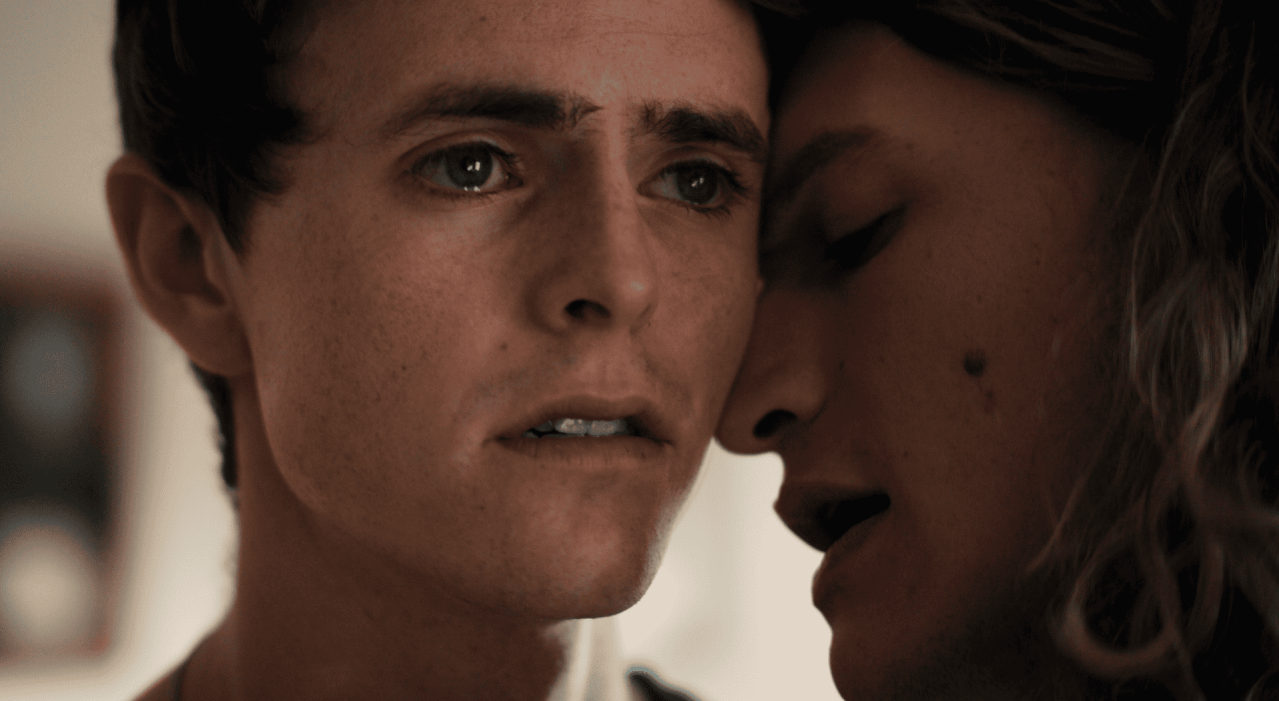
In one beautifully performed and scripted scene, Liam gently challenges this cover as he sits beside Riley in class. As Riley swipes through his Instagram reels, Liam says, “Lots of boys on your feed, huh?” Riley shrugs and states, “I don’t control what pops up on this thing!” Liam smiles, “Well, kinda, it’s an algorithm” Riley looks perplexed, “It’s a what?” Liam adds, “You know, like the cloud and shit, the AI knows you better than you know you.” Liam sees through Riley’s cover but also understands Riley can’t accept this truth right now.
Beautifully written and performed scenes like this help Howard’s Riley stand out in a crowded landscape of coming-of-age, coming-out films, as its core messages of living your truth shine through multiple perspectives. While Jake Holley’s electric performance may sit centre stage, each character is on their own journey of accepting or rejecting their authentic self as Riley explores a diversity of teen experiences, much like Keith Behrman’s 2018 gem, Giant Little Ones.
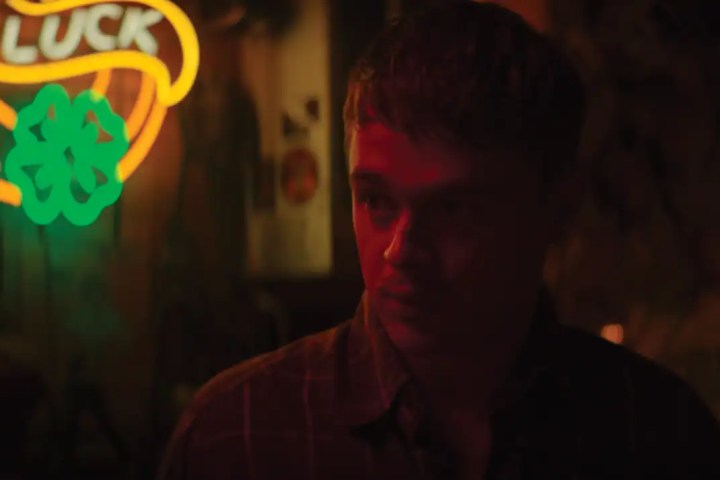
The cinematography of Michael Elias Thomas and the score of Jerik Centeno only further cement Riley’s place as a movie with more than a few beautifully played touchdowns. Thomas excels at balancing wide shots and stunning close-ups, utilising a rich colour palette that beautifully highlights the emotions of each scene. Like Eli Born’s hauntingly stunning work on Super Dark Times, Thomas creates an evocative sense of place that lingers long after the credits have rolled.
The hardest part of any coming-out journey is self-acceptance and the bravery of sharing your feelings and thoughts with one or two people for the first time. As Dakota’s story comes to an end in Howard’s Riley, he knows everything will be okay, not the same, not what was expected, but good all the same. It’s here where Howard’s movie scores a final winning touchdown as Dakota Riley suits up and walks onto the football field, the same on the outside but new and still forming on the inside. As the game starts, it is clear that the boy is now a man, and the fears of the past have been left on the touchline as a new world dawns.














Follow Us