

Double Bill: Mick Jackson and Barry Hines’ BBC drama Threads and Lynne Littman’s PBS/Paramount Pictures film Testament are available to stream, rent, or buy.
On the 23rd of September 1984, seven million Britons settled in to watch a new drama on BBC Two entitled Threads. For many, the memory of that night has haunted them ever since. The feature-length BBC drama they viewed was horrific, informative and terrifying as the reality of a Nuclear War invaded the security of the British living room, with many later talking of nightmares based on what their small Cathode-ray box had shown them. The sheer power of Barry Hines’ screenplay and Mick Jackson’s direction would ensure that Threads gained a place in the TV Hall of Fame, as the pure horror of Nuclear conflict found a new voice, not through an American disaster flick but through a British kitchen-sink drama.
Over 35 years later, Threads continues to haunt us, its discussions just as important today as in 1984. Yet, despite the horrors Threads portrays, nuclear weapons continue to form the primary defence of the Western world, their role as prominent now as at the height of the Cold War; just this past month, Russia tested a new doomsday weapon in the Arctic Circle, and China continues to grow its arsenal. Meanwhile, in the Middle East, countries such as Iran look to become Nuclear powers behind closed doors. This fact makes it all the more interesting that a drama like Threads would likely never make it to TV screens today.

The BBC’s bravery in commissioning, funding, and screening Threads partly made up for its decision not to broadcast Peter Watkins’ nuclear documentary/drama The War Game in 1965, a film that would go on to win the 1966 Oscar for Best Documentary. Peter Watkins’ innovative film used the principles of investigative television journalism established in the early days of Panorama.
With interviews from experts and vox pops from the man in the burning street, we see scientific theory and historical precedent coming together to lay down the narrative foundations of nuclear cinema. First comes the ratcheting up of international tension, followed by the chivvying along of a bewildered populace into performing whatever futile measures the powers that be have devised to stave off panic. When the balloon does go up, it’s simply a question of how quickly and how gruesomely people regress into a feral state.
Threads is a more expansive execution of The War Game’s basic concept. Although it does have the narrative thread of following two Sheffield families brought together by a shotgun engagement between their eldest children, it also relies on a documentary format to deliver what, by 1984, were the latest scientific theories on the likely effects of a nuclear attack. It extends its scope to several years after the attack to illustrate more fully the concept of nuclear winter and the impact of in-utero radiation exposure on society’s ragged remnants.
Both films share an agenda in their brutality. They are consummate propaganda pieces against nuclear weapons. Anything else they might be, whether a genre experiment in the case of The War Game or a kitchen sink drama in the case of Threads, is only in service of this agenda. This mix of documentary-like precision and character-led drama burns itself into the viewer’s memory as the horror of Nuclear conflict unfolds due to a distant war in the Middle East that nobody believes will be life-changing.
Groundbreaking, formidable and terrifying, Hines and Jackson perfectly demonstrate the no-win scenario as humanity returns to the dark ages at the push of a button, with society’s structures crumbling away alongside the burnt bodies that lay scattered on the ground. Threads is a reminder that this potential horror is far from fiction; it sits in our hands and the decision-making abilities of our leaders and armies, making it all the more terrifying.
Nearly forty years later, Threads should be required viewing in every classroom nationwide, ensuring its discussion of the reality of nuclear conflict never falls from view; after all, in a world of growing nationalism, conflict, and insecurity, Mick Jackson’s 1984 film has never been more essential. Threads is a testament to the sheer power of television and publicly funded drama in sparking urgent discussion and reflection; it is the kind of drama that could have only come from the BBC and one that continues to hold atomic power.

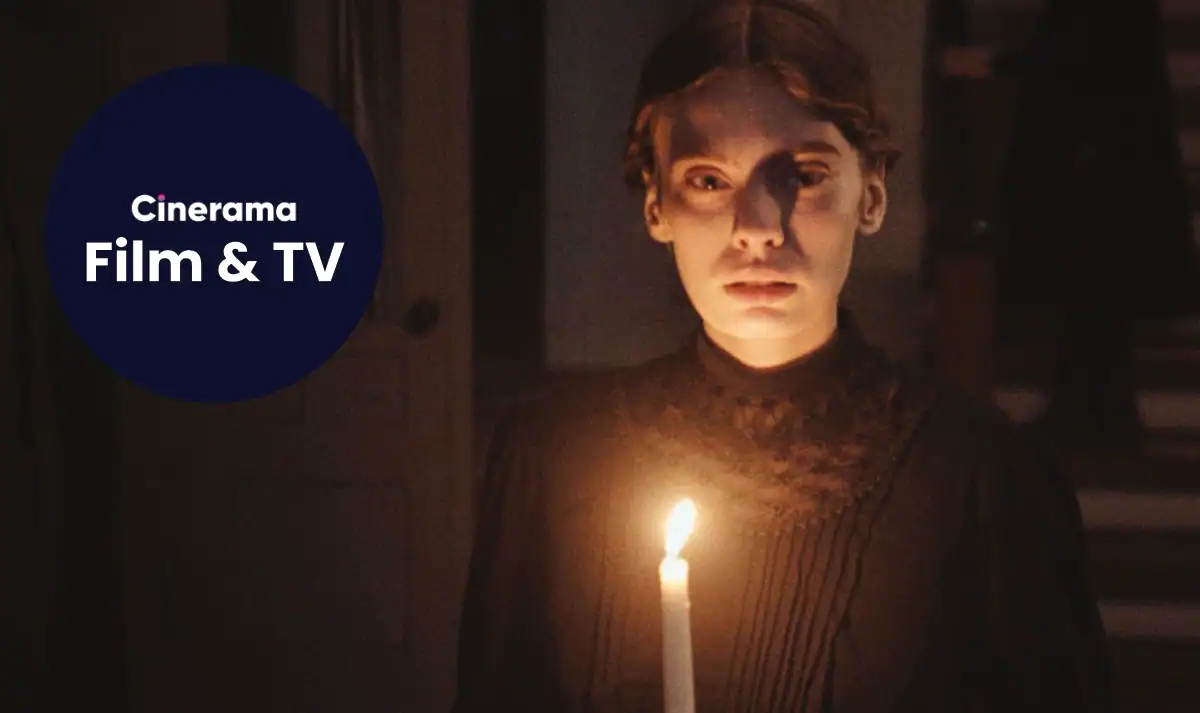
If The War Game is the father of nuclear cinema and Threads the son, then perhaps Lynne Littman’s lesser-seen 1983 film Testament is the Holy Ghost. Based on a short story by Carol Amen, Testament was initially produced in 1983 as a PBS-made-for-TV movie before being bumped up to a theatrical release.
In Hamlin, a satellite town of San Francisco, ordinary housewife Carol Wetherly (Jane Alexander) frets over birthday presents and costumes for the school play she’s directing. She gets a message on the answering machine from her husband, Tom (William Devane), saying he’ll be home in time for dinner. There are no extravagant displays of carnage when the bomb drops on San Francisco moments later – just an announcement on the television and a flash of light. With Tom’s fate unknown, Carol and the children – Mary Liz, Brad and Scottie (Roxana Zal, Ross Harris and Lukas Haas) – are left to hold together what remains of their lives as the radioactive fallout blows in from the city.
Post-apocalyptic fiction is often a showcase for a nihilistic worldview. Even if they choose to end on a dim ray of hope, the overall impression left on the viewer is that films like The Road or Zach Snyder’s 2004 Dawn of the Dead remake take a certain amount of relish in pushing their thought experiments on the possible effects of an extinction event to the grimmest possible depths.
Testament takes a different approach. Although Hamlin is physically untouched by the blast, it doesn’t take long for residents to start showing signs of radiation poisoning. Cut off from the outside world save for the occasional burst on a ham radio, they spend the time left to them on the same things that had always given their lives purpose, however humble that purpose may have been. The school play goes ahead, although its cast are oblivious to the implications of some of their classmates’ absence. Mary Liz’s elderly piano teacher still gives her lessons, even as her strength diminishes.
Kindnesses shown to others in the past, far from being forgotten in a rush to smugly demonstrate how humanity is only three square meals away from eating itself, are remembered and returned with grace. Mike (Mako), the owner of the local petrol station, lets Carol fill up the family station wagon for free because Tom made time for Hiroshi (Gerry Murillo), Mike’s intellectually disabled son. When Mike eventually succumbs to radiation poisoning offscreen, Brad doesn’t hesitate to bring Hiroshi home with him and into their family.
This is not to say that the world ends with everyone singing Kumbaya at a convivial gathering around the world’s last fire. There is gut-wrenching, mind-bending grief. The cemetery overflows into the local lido. There’s no relief from the fate that awaits every single person in the town. There is certainly despair, but there’s also a gradual realisation that there is still room, however briefly, for other things too. Testament dares to offer an answer to the question that Zach Snyder and all the other faux-edgy nihilists dismiss – if we accept that our lives are finite, how do we make them meaningful?
Although Testament has proved to be an overlooked entry in the canon of nuclear fiction, the reasons for its enduring resonance are a bit more nebulous. At the outset, Hamlin is a suburb with the kind of stable affluence that Reagan would claim credit for in his “Morning in America” campaign a year after Testament’s release.
Today, more and more families are finding that their efforts to keep their heads above water are sabotaged by income inequality. In a way, this world that the Wetherlys must bid a long goodbye to already feels lost forever if you were one of the people privileged enough to have ever occupied it in the first place. Moreover, the intangible threat of radiation blowing in on the wind and silently creeping into the characters’ bodies is a fitting metaphor for our growing anxieties about biodiversity collapse brought on by climate change.












Follow Us