

LGBTQ+ From Stage to Screen brings you 12 groundbreaking LGBTQ+ plays or shows adapted for the screen. From Kushner’s exploration of politics, sexuality, religion, and the human condition in 80s America to William Wyler’s brave adaptation of Lillian Hellman’s controversial play.
1. ANGELS IN AMERICA

STAGE PREMIERE 1991 AND SCREEN PREMIERE 2003
Tony Kushner’s epic gay fantasia on national themes began its life in the late 1980s when Kushner was approached by a San Francisco theatre company. Kushner began to work, drawing on his experiences of politics, sexuality, religion, and the human condition in 80s America. Set amid the AIDS crisis, the play would interweave the lives of various characters, each grappling with their own struggles as they search for meaning amid chaos, oppression, and uncertainty. Here, the ‘angels’ Kushner created served as a metaphor for hope and transformation rather than as a reflection of any particular religious iconography.
Angels in America is unlike any play that came before it in its sheer scale and vision; it would dissect Reaganomics and the oppression of individuals and communities as a new millennium approached. In Angels in America, the horror of AIDS is viewed through a prism of division, unity, intolerance and love as the capitalist machine continues its march.
Kushner’s play extends beyond the AIDS epidemic, enveloping the audience as it explores what it truly means to be human. Each character’s life is shaped by differing worldviews, political opinions, and beliefs, yet they are united by one thing: they are outsiders in a world built on predefined norms. The result prompts its audience to examine their own beliefs, motivations, and biases, urging collective responsibility to effect social change. Here, the play confronts political and social injustice issues during the AIDS crisis and reminds us that capitalism can breed division and cloud our compassion and empathy for one another, no matter our community background.
The lavish HBO TV adaptation in 2003 would honour the play’s structure and form, featuring an all-star cast including Al Pacino, Meryl Streep, and Emma Thompson, among others. Angels in America would earn 21 Emmy nominations and 11 wins, including outstanding miniseries. However, this was far from the end, as Angel would return to London’s National Theatre in 2017 with Andrew Garfield, Nathan Stewart-Jarrett, Russell Tovey and Nathan Lane, once more winning global praise.
The sheer power of Kushner’s Angels in America lies in its broad and complex discussions on human resilience, equality, community, and transformation. Its characters reflect the diversity of our LGBTQ+ communities and the challenges and differences that often divide us when we should come together. It asks us to overcome these divides, embracing those living angels around us who challenge and chip away at the walls of inequality and oppression that our governments so often erect.
2. ANOTHER COUNTRY
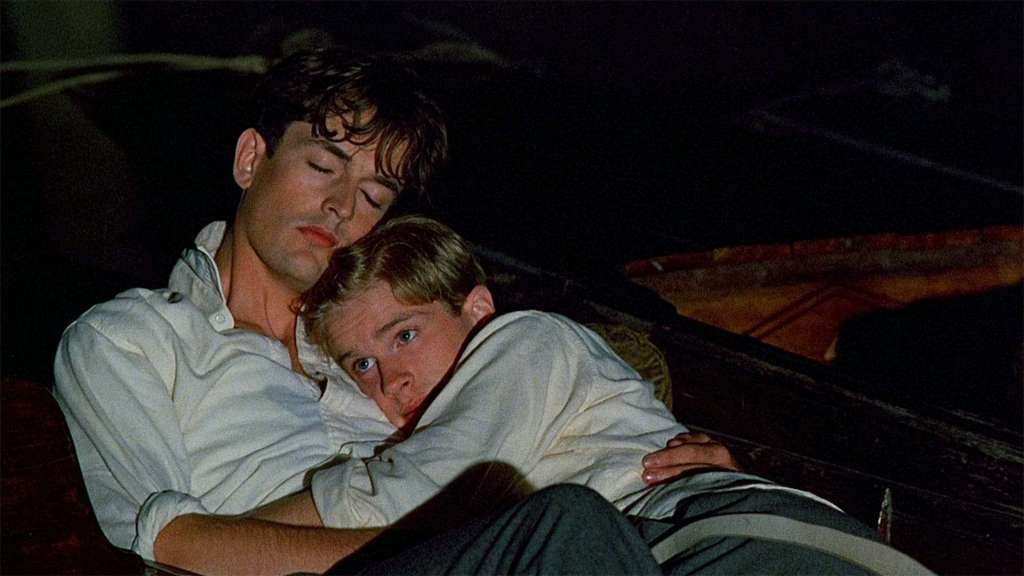
STAGE PREMIERE 1981 AND SCREEN PREMIERE 1983
Not to be confused with James Baldwin’s 1962 novel, Julien Mitchell’s 1981 play draws heavily on If… (1968) in its exploration of toxic class culture. Set in an English public school in the 1930s, the play centres on a small group of elite students grappling with their individuality within the confines of a rigid, conformist society.
Through a nuanced yet probing exploration of Guy Burgess, a spy and double agent, the title ‘Another Country’ may derive from Burgess’s subsequent turn to Russia many years later. Here, Mitchell’s play would explore the foundations of British class conflict and the hypocrisy and homophobia of the elite education system – asking what made Burgess turn to communism alongside the famous Cambridge Five.
Opening with the suicide of a pupil named Martineau, caught having sex with another boy, Mitchell quickly establishes the school’s oppressive atmosphere and dangerous cultural norms. Each boy is held captive in a golden prison of segregation and conformity, where privilege is maintained through a culture of avoidance, control and dismissal. Here, Another Country excels in its in-depth, complex discussions of repression, political ideology, sexuality, and state power.
Bennett is haunted by the suicide of Martineau, a boy he, too, had sexual relations with. He feels like the walls of the school are closing in around him as his sexuality becomes a barrier to his aspirations. Meanwhile, his best friend Judd attempts to fight an Imperial system of oppression and subservience from within. He cannot and will not tolerate the oppressive education system surrounding him and longs to defy the public face of the British class system, even if that means he loses his wealth and position.
In Another Country, Mitchell uncovers the arrogance and contradictions of the British aristocracy as two boys internally battle the system. One would later defect to Russia, while the other would fight in the Spanish Civil War. The original 1981 theatre production introduced Rupert Everett as Bennet and Kenneth Branagh as Judd, while the movie introduced Colin Firth to the world in 1983.
LGBTQ+ FROM STAGE TO SCREEN
3. THE CHILDREN’S HOUR
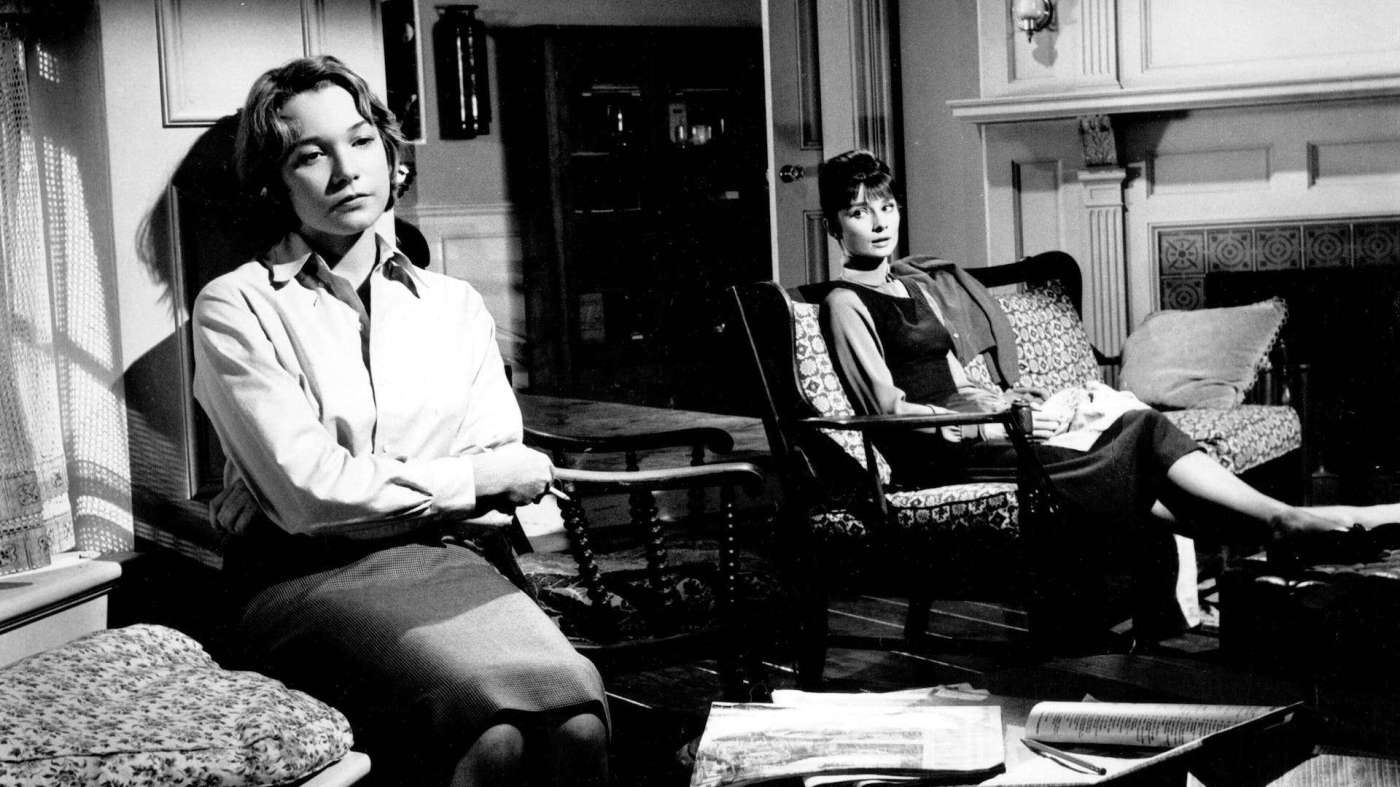
STAGE PREMIERE 1934 AND SCREEN PREMIERE 1961
On November 20, 1934, Lillian Hellman’s play The Children’s Hour premiered at the Maxine Elliott Theatre in New York, garnering largely positive reviews for its exploration of taboo, forbidden, and obscure themes of female sexuality. Despite many demanding that the play end, The Children’s Hour proved so popular that it was allowed to run.
Set in a girls’ boarding school, the play would explore the true story of two schoolmistresses, Jane Pirie and Marianne Woods, in Edinburgh in 1810, where one of their students, Jane Cummings, accused them of having an affair in her presence. Horrified by the allegations and closure of their school, the women sued Jane’s grandmother, Lady Cumming Gordon, and won the case. Marianne eventually moved to London, while Jane stayed in Edinburgh. Whether or not the allegations were true is clouded in mystery, but the core themes of rumour, homophobia, prejudice, and accusation still feel far too relevant today.
Director William Wyler was fascinated by the themes at the heart of Hellman’s play, and in 1936, he adapted it under the title “These Three.” The bravery of this adaptation was apparent, especially in a Hollywood system where onscreen discussions of sex and sexuality were avoided due to the strict code of decency.
As a result, These Three would tentatively step around many of the core themes in Hellman’s play. Therefore, in 1961, Wyler returned to the play for a second time with The Children’s Hour. Of the 1961 version, Shirley MacLaine would later state that “Wyler’s film was not as powerful as it could have been because of his trepidation”. However, for all its faults, Wyler’s 1961 adaptation, starring Audrey Hepburn and Shirley MacLaine, holds an important place in the history of LGBTQ+ filmmaking. Its screenplay reflects a society where ‘gay shame’ reigned supreme, and while it may not directly combat some of these themes, it’s an important stepping stone on the road to representation.
4. A TASTE OF HONEY
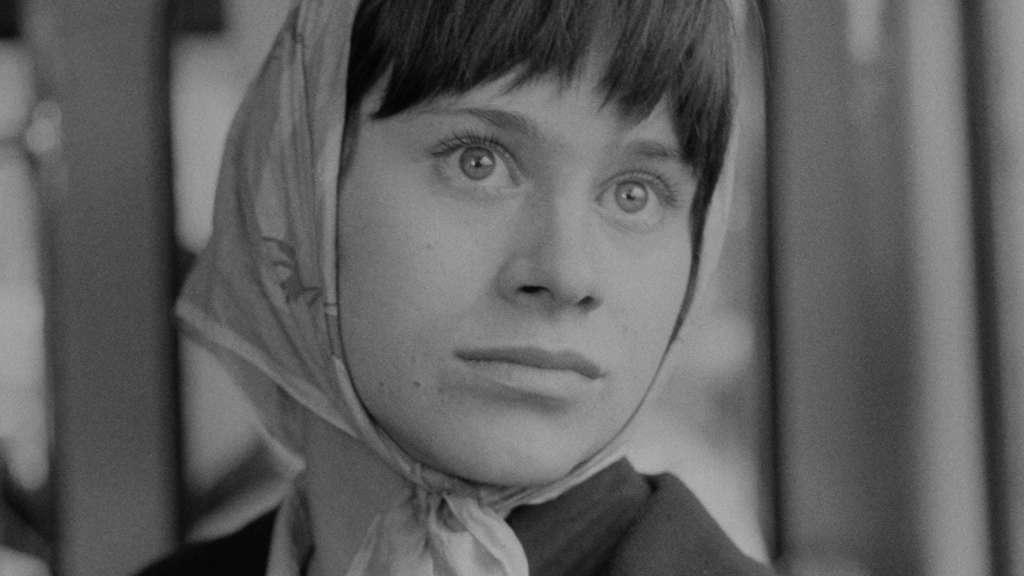
STAGE PREMIERE 1958 AND SCREEN PREMIERE 1961
In the spring of 1958, one play would shake the foundations of British theatre and the future of British cinema. The play was A Taste of Honey, a coming-of-age drama that originated in the mind of eighteen-year-old Salford girl, Shelagh Delaney. Drawing on the gritty reality of northern working-class life in Britain, Delaney completed her play in a fortnight before sending her rough draft to the renowned theatre director Joan Littlewood. Littlewood saw potential, and both women honed and perfected the play before it premiered at the Theatre Royal Stratford East on 27 May 1958.
Set in the 1950s, Delaney’s story centres on Jo, a seventeen-year-old working-class girl, and her unreliable mother, Helen. Jo begins a brief romantic relationship with Jimmy, a black US sailor in port, while her mother disappears with a younger man, leaving Jo to fend for herself. However, as Jo and Jimmy’s relationship deepens, Jo finds herself pregnant, and Jimmy proposes marriage before returning to sea. However, as Jimmy departs, Jo faces the prospect of becoming a single mum – the social taboo of her predicament wrapped in social isolation and racism.
Searching for a safe place away from home, Jo finds lodgings with Geoffrey, a gay man she knows. However, when her mother returns, Jo’s newfound security, belonging and love are threatened by discrimination, isolation and fear. Delaney’s play placed issues of racism, homophobia, sexism and class centre stage and, in turn, tore up the rulebook of British theatre, upsetting many in the process. However, for audiences, A Taste of Honey offered something radical and fundamentally real in its construction.
As a result, A Taste of Honey would be immortalised on screen in 1961; however, its themes concerned censors, and it would earn an X rating, like another groundbreaking movie that year, Basil Dearden’s Victim.
A Taste of Honey is also groundbreaking in its portrayal of gay characters. Richardson ensured Geoffrey (Murray Melvin) sat proudly at the heart of A Taste of Honey. In the hands of Richardson and Melvin, Geoffrey is a rounded, complex, and relatable gay character who would provide early 1960s cinema audiences with their first gay lead. Richardson, Melvin, and Delaney ensure there are no lazy clichés in Geoffrey’s journey with Jo (Rita Tushingham). Here, we are offered a young man forced to endure the homophobia surrounding him as he lives his life discreetly in public and openly in private – the relationship he builds with Jo is based on a foundation of trust and belonging in a society of instant judgment and oppression.
A Taste of Honey was a groundbreaking coming-of-age play and movie that bravely explored themes of sexuality, sexism, race, class, and the multiple layers of social oppression inherent in many communities. Delaney and Richardson placed British society and its class construct under the microscope for all to see and, in doing so, gave birth to a whole new movement in cinema.
LGBTQ+ FROM STAGE TO SCREEN
5. BEAUTIFUL THING

STAGE PREMIERE 1993 AND SCREEN PREMIERE 1996
Let’s take a trip back to the summer of 1996; The Spice Girls were wannabes, Dodgy were wondering whether they were “Good Enough”, and Baddiel, Skinner, and The Lightning Seeds were obsessed with “Three Lions”. Meanwhile, in cinemas, The Muppets were visiting Treasure Island, and aliens were blowing up The White House just in time for Independence Day. At the same time, the political world was rocked by a deadly IRA bomb in Manchester, injuring 200.
For the LGBTQ+ community in Britain, the ongoing fight for equality and representation began to challenge the accepted homophobia in schools, media, and employment, paving the way for some of the most significant changes in LGBTQ+ equality from 1997 to 2000. Change was on the way in Britain, and a groundbreaking 1993 play by Jonathan Harvey, Beautiful Thing, was about to leap from the stage to the screen, changing countless young lives forever.
Beautiful Thing is the sweet, delicate yet bold tale of two boys – one bullied at school, and the other at home – who find love on the Thamesmead estate in London. Harvey’s play was groundbreaking for a whole generation of gay teens, and twenty-five years later, it remains a sweet, tender, funny and touching love story that reflects the challenges of the 90s gay teen experience in a country tentatively opening the closet door.
To mark the 25th Anniversary, I sat down with Jonathan Harvey to discuss the creation, impact and legacy of Beautiful Thing.
6. EVERYBODY’S TALKING ABOUT JAMIE

STAGE PREMIERE 2017 AND SCREEN PREMIERE 2021
Based on the BBC Three documentary Jamie: Drag Queen at 16, broadcast in 2011, Dan Gillespie Sells and Tom MacRae’s musical adaptation proudly took the Crucible Theatre in Sheffield by storm in February 2017. Soon after, Everybody’s Talking About Jamie would do the same in London, becoming one of the biggest West End hits of 2017 and 2018.
The Warp Pictures and Film 4 movie adaptation of Sells’ and MacRae’s musical was initially announced in 2018 and would have found a home with 20th Century Fox before transferring to Disney after the Fox merger. However, during the COVID-19 hiatus, Disney’s 20th Century Studios relinquished the distribution rights, with Prime Video quickly stepping in to fill the gap. This decision would lead Everybody’s Talking About Jamie to a disappointing straight-to-streaming premiere.
Jonathan Butterell’s film adaptation holds on tight to the original stage production and, in turn, avoids any stumbles. There are attempts to build on the stage show’s core story; however, these are minor, adding only slight depth, particularly when exploring Jamie’s complicated relationship with his absent father. Instead, Butterell’s film plays it safe, celebrating the smash-hit musical through a bright, colourful adaptation full of love, energy, and humour.
Everybody’s Talking About Jamie is a celebratory and colourful joy; after all, in a society that still forces too many young people to hide their unique and beautiful differences, Everybody’s Talking About Jamie encourages them to shine and bathe in their uniqueness. Butterell’s movie is bold, proud and loud, so dust off your high heels and get ready to celebrate the beauty of difference and the electricity of Dan Gillespie Sells and Tom MacRae’s award-winning musical.
7. THE BOYS IN THE BAND

STAGE PREMIERE 1968 AND SCREEN PREMIERE 1970
In 1968, the off-Broadway play The Boys in the Band, written by Mart Crowley, challenged and changed the portrayal of gay men on stage. Its bravery and intimacy would earn the play a ‘cutting-edge’ label in the landscape of gay theatre due to its discussions on internalised homophobia and the painful journey to self-acceptance for a whole generation. Crowley stated, “The self-deprecating humour was born out of low self-esteem; back then, homosexuality was still classified as a mental illness.”
By 1970, The Boys in the Band had leapt from stage to screen, with William Friedkin in the director’s chair. However, despite its initial success on stage, the film suffered from a mixed appraisal, with some stating it was narcissistic, while others condemned it for taking gay liberation backwards rather than forwards. However, as the years have passed, Crowley’s work has undergone a reappraisal, culminating in a long-overdue Broadway revival in 2019, which celebrated its 50th anniversary. This revival would star Jim Parsons, Zachary Quinto, Matt Bomer, Andrew Rannells, Charlie Carver, Robin de Jesús, Brian Hutchison, Michael Benjamin Washington and Tuc Watkins while holding on tight to the themes of internalised homophobia that sat at the heart of the original play. In 2020, this Broadway revival was released on Netflix as a new film adaptation starring the same cast.
The play is a chamber piece centred on a group of gay male friends who gather on a stormy Saturday night in the small New York apartment of the paranoid Michael. However, Michael hadn’t planned for Alan’s arrival, his college friend. Alan has no idea that Michael or his friends are gay. As the drinking steps up, the frivolity of the party soon takes a darker turn as mind games, sexual tension and secrets are revealed, leading to a night of dangerous revelations and irreparable burnt bridges.
Looking at The Boys in the Band through a modern lens, it would be easy to think that gay male life has moved on from the world reflected in Crowley’s play; after all, we have won legal protections, marriage rights and an equal age of consent. But in truth, while we have indeed come a long way since 1968, poor mental health, alcohol consumption, and drug use continue to haunt our community’s progress. Much of this is due to the internalised fear we bottle up during childhood and adolescence.
The Boys in the Band continues to reflect these challenges fifty years after its stage premiere through a narrative unafraid to explore the fears and anxieties many gay men keep locked away. The result is a play and its subsequent films that remain far more relevant today than many would like to admit.
8. TRADE / RIALTO

STAGE PREMIERE 2011 AND SCREEN PREMIERE 2019
Based on Mark O’Halloran’s stage play, “Trade”, Peter Mackie Burns, Rialto, is a stunning and nuanced journey into repression, guilt, belonging, and identity through the complex relationship between a teenage rent boy and a father whose life is spiralling out of control.
In O’Halloran and Mackie Burns’ tale, two men sit on the verge of society, one through hardship and the other through self-repression. Colm (Tom Vaughan-Lawlor) has spent his life working the docks of Dublin, his very existence symbolic of the steel units he cares for, as he compartmentalises his life.
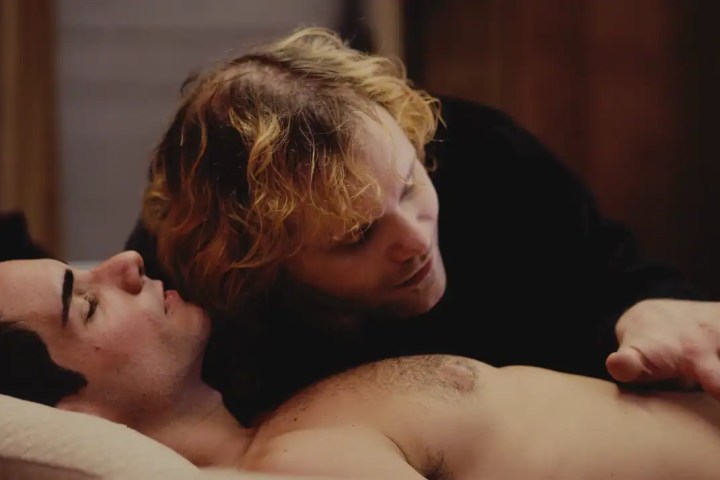
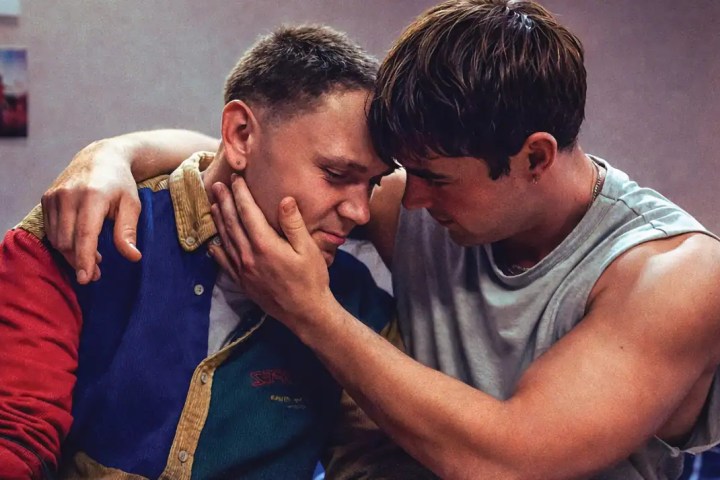
Following the death of his controlling father, a man he could never please, and the growing risk of redundancy at work, Colm turns to alcohol as a crutch, but booze isn’t enough as he seeks sexual release through a secret toilet rendezvous with a local rent boy called Jay (Tom Glynn-Carney). However, as he shuffles into the cubicle with the blond-haired boy, fear and apprehension surround him, and the encounter quickly fizzles into anxiety and regret. But Colm has dropped his wallet, and the savvy young hustler has picked it up, knowing there is an opportunity to scam the nervous “straight” man for money. But a relationship that starts as blackmail soon morphs into something different, as both men become a crutch for one another, as a deep exploration of masculinity and sexuality comes into view.
Trade/Rialto offers an intimate character study of a man on the verge of emotional collapse and a teenage hustler trying to hold his life together by any means. The sexuality of Jay and Colm isn’t the centre of attention, as both men search for something far more difficult to define: a sense of belonging and security in a world of fixed masculine ideals. Here, Colm screams for escape despite the love of his wife and kids, while Jay longs to return to his newborn daughter and a girlfriend who gave up on him long ago. Trade/Rialto is a story of mutual support and therapy at a price, as passion, fear, and secrets are brought into the light with explosive results.
LGBTQ+ FROM STAGE TO SCREEN
9. GET REAL

STAGE PREMIERE 1993 AND SCREEN PREMIERE 1998
Long before sixteen-year-old Simon Spier met the elusive ‘Blue’ through secretive emails in Becky Albertalli’s Simon vs the Homo Sapiens Agenda (2015) and even longer before that story made it to the silver screen with Nick Robinson as Simon, a small-budget British film, based on Patrick Wilde’s play ‘What’s Wrong with Angry?’ helped lay the groundwork for both Albertalli’s book and the later movie adaptation of her work. That film, now largely forgotten in the celluloid mists of time, was Get Real (1998), written by Patrick Wilde and directed by Simon Shore.
Like the play it is based on, Get Real was groundbreaking, unique and different. Arriving on stage at the same time as Beautiful Thing and on film several years after Jonathan Harvey’s story, Get Real places its characters in a realistic ’90s landscape of unchecked homophobia, secret liaisons, hyper-masculinity and slow-moving social change. It was a play, and then a movie, every gay kid who came out or hid their light in fear during the ’90s could relate to: an upfront, honest and authentic depiction of the teenage gay experience in small-town Britain.
Unlike many gay coming-of-age movies of the time, Get Real wasn’t about the tragedy of being gay; it was about the strength, fears, hopes and the secret horniness of gay life as a teenager. It was about the shadow cast by HIV and AIDS over a whole new generation of LGBTQIA+ kids brought up under Thatcher’s Section 28 (a law that prohibited the promotion of homosexuality by local authorities, including schools), leading to unchecked and unchallenged homophobia, bullying and violence.
Steven Carter (Ben Silverstone) is a bright sixteen-year-old who is passionate about writing, secretive meetings with men in the local park toilets, and social change. Steven is proudly ‘out’ with his best mate Linda (Charlotte Brittain) but firmly in the closet with everyone else, and who can blame him? His school seems to think gay people don’t exist, and bullies home in on anyone different, free from challenge; even the school newspaper operates under strict censorship controls.
However, Steven’s world is about to change when he hooks up with the most popular guy in school, the heart-throb athlete John Dixon (Brad Gorton), following a random toilet encounter in the local park. Like him, John is firmly in the closet and desperate for the touch of another boy, but unlike Steven, John can’t risk his reputation as the school heart-throb and track star. That poses a problem for Steven because he has had just about enough of hiding; for Steven, it’s time to Get Real!
Get Real would hold its world premiere at the Edinburgh Film Festival in 1998, touring global festivals before a limited cinema release in 1999. However, like many LGBTQIA+ movies of the time, it wasn’t until Get Real arrived on VHS rental and DVD that it gained an audience. Since then, the film has become scarce, with only a few VHS copies and DVDs still available, and no dedicated streaming platform. Yet, Wilde and Shore’s film remains one of the best gay movies of the 1990s and a turning point in gay storytelling in British cinema.
Silverstone, Gorton, and Brittain are outstanding alongside a fabulous ensemble cast that includes David Lumsden, Jacquetta May, Richard Hawley, Kate McEnery, and Stacy Hart. But what makes Get Real so real is the exquisitely crafted screenplay, which joyously jettisons ’90s gay stereotypes and clichés in favour of an honest, upfront, and, at the time, groundbreaking depiction of the teenage gay experience.
10. ROPE

STAGE PREMIERE 1929 AND SCREEN PREMIERE 1948
Set in a high-rise apartment during a dinner party, Alfred Hitchcock’s 1948 psychodrama Rope is a deliciously dark chamber play that is undoubtedly one of his finest films; its roots, however, are firmly in the theatre.
Hitchcock turns a nail-biting setpiece into a delightfully dark murder mystery with a fascinating psychological twist. In many murder mystery movies, the whole narrative spins around themes of motive rather than consequence, but Rope is far less interested in why and far more interested in the aftermath.
Based on Patrick Hamilton’s 1929 play, Rope took inspiration from the case of Leopold and Loeb, two wealthy American graduates who murdered a teenage boy purely to test their intellect and ability. Like Brandon and Philip in the movie, the real-life murderers considered themselves superior to the common man and, therefore, above the arcane laws that govern our world. As Brandon says, “Good and evil, right and wrong were invented for the ordinary average man, the inferior man, because he needs them,” Brandon and Phillip stuff the body of their victim into a chest in the middle of their apartment, they decide to flaunt their skills by holding a dinner party with food, and canapés served a top of the still warm corpse of their friend or possibly closeted lover.
Brandon (John Dall) and Philip (Farley Granger) aim to test their guests as they dance around the room, seeing just how far they can push each other and those around them, including Rupert (James Stewart), their college professor. But for all the suspense, camera trickery and sublime performances, one aspect of Brandon, Phillip’s and Rupert’s relationship remains the most fascinating: “Are all three men gay?” For my money, there is no doubt they were.
The Hays Code may have stopped many films from reflecting gay relationships and sex on screen, with Crossfire 1947 being a prime example of this, but it didn’t stop Hitchcock. There’s a cosy, desire-laden atmosphere between all three men in Rope; the game of hide-and-seek Brandon and Philip play isn’t just centred on the body in the room; it’s centred on their own sexual relationship, a forbidden relationship governed by laws Brandon and Philip reject.
There are plays on words ranging from “peculiar” to “queer” without those words ever being mentioned in full, and moments where Brandon and Philip’s macabre ballet almost lets the cat out of the bag as they toy with their guests. In addition, Stewart’s professor clearly knows their innermost secrets, either through a fleeting relationship with one or both men, making Rope an LGBTQIA thriller long before such a thing was ever deemed possible.
11. HEDWIG AND THE ANGRY INCH
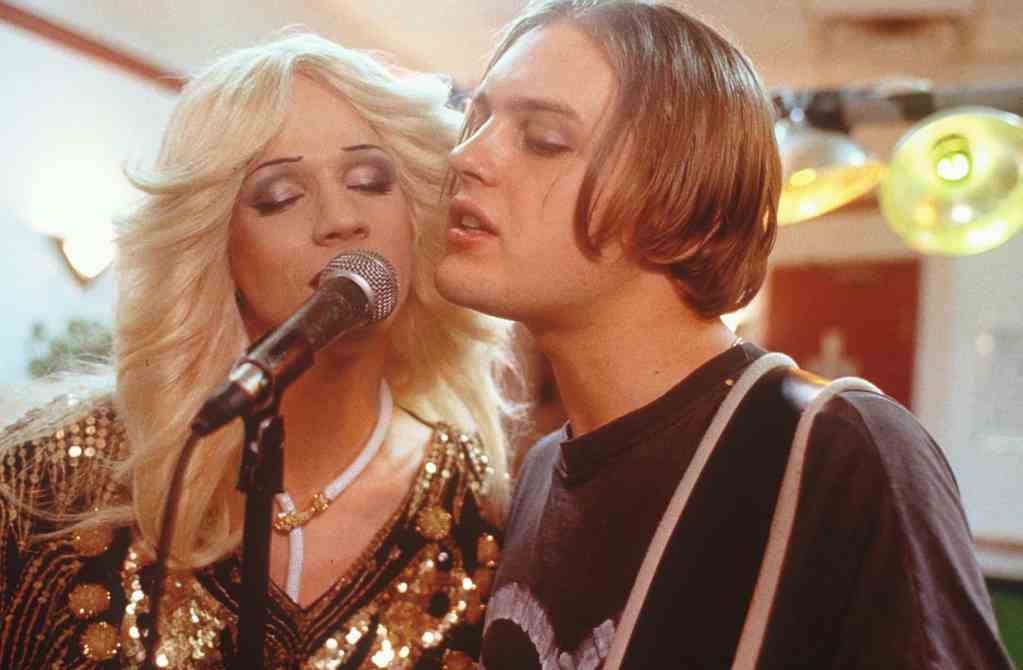
STAGE PREMIERE 1998 AND SCREEN PREMIERE 2001
Hedwig has had a tough life, from growing up gay in East Berlin to sleeping in his mother’s oven. However, despite this challenging start, Hedwig has become a force of nature, a singer-songwriter whose band, The Angry Inch, performs in small restaurants and clubs across America, much to the dismay of many local patrons. Hedwig’s songs have found fame, but not, unfortunately, in Hedwig’s hands. Instead, his ex-lover, Tommy Gnosis, uses Hedwig’s material to further his rock star career. But can Hedwig finally achieve success? And can love trump hate and deceit as Hedwig tracks down the boy who stole his heart and material? Celebrating its 21st anniversary this year, Hedwig and the Angry Inch remains one of the finest pop-rock musicals ever produced – its journey from a gay club to a New York stage and finally to the big screen is a unique, fascinating and colourful road trip.
Hedwig began life in the imaginations of the Broadway star John Cameron Mitchell and the composer and songwriter Stephen Trask during a random meeting on a domestic flight. Their fabulous creation was to be rooted in drag culture in New York’s nightlife and in the emergence of a new queer punk rock scene. As they began to form the outline of what would become Hedwig and the Angry Inch, they bravely took their vision to the stage at the gay rock ‘n’ roll, queer punk, and drag venue Squeezebox. It was the perfect place to slowly develop Hedwig’s character as John Cameron Mitchell’s nightly performances began to draw in big crowds, and the story of Hedwig and the Angry Inch became a part of Squeezebox culture. But how do you find the finances to jump from a club to the Broadway stage? Crowdfunding came to the rescue, with Hedwig finally taking to the stage at the Jane Street Theatre, New York, on February 14, 1998.
Hedwig’s dazzling and humorous rock opera would wow crowds and achieve cult status, touring the UK, Canada, Brazil and Germany before the curtain finally fell in 2000. But did that mean Hedwig’s journey was over? Of course not! John Cameron Mitchell was already working with the Sundance Institute on a potential movie.
When Hedwig and the Angry Inch arrived on our screens in 2001, it would be just as wild a ride as it was on stage – a glorious, vibrant and devilishly funny movie that revelled in Hedwig’s Squeezebox birth. John Cameron Mitchell is truly electrifying alongside the original New York cast, and when you add Michael Pitt as the young rock prodigy Tommy Gnosis and the animation of Emily Hubley, Hedwig and the Angry Inch becomes a unique, colourful and vibrant celebration of queer culture. So, what are you waiting for? Pour yourself a drink, get together with friends and visit Hedwig’s wild world.
12. TICK TICK… BOOM!
SOLO STAGE PREMIERE 1990 AND SCREEN PREMIERE 2001
Okay, this selection is a slight curveball, but stick with me. On the morning the groundbreaking rock opera RENT was to debut off-Broadway in 1996, its creator, Jonathan Larson, died suddenly at 35. Larson had suffered an aortic dissection, possibly caused by an undiagnosed genetic disorder. RENT had been a labour of love for Larson, a personal reimagining of ‘La Boheme’ set in New York against the backdrop of HIV and AIDS. The musical would go on to achieve considerable success before landing a movie adaptation in 2005—a success Larson had worked so hard to achieve but would never see.
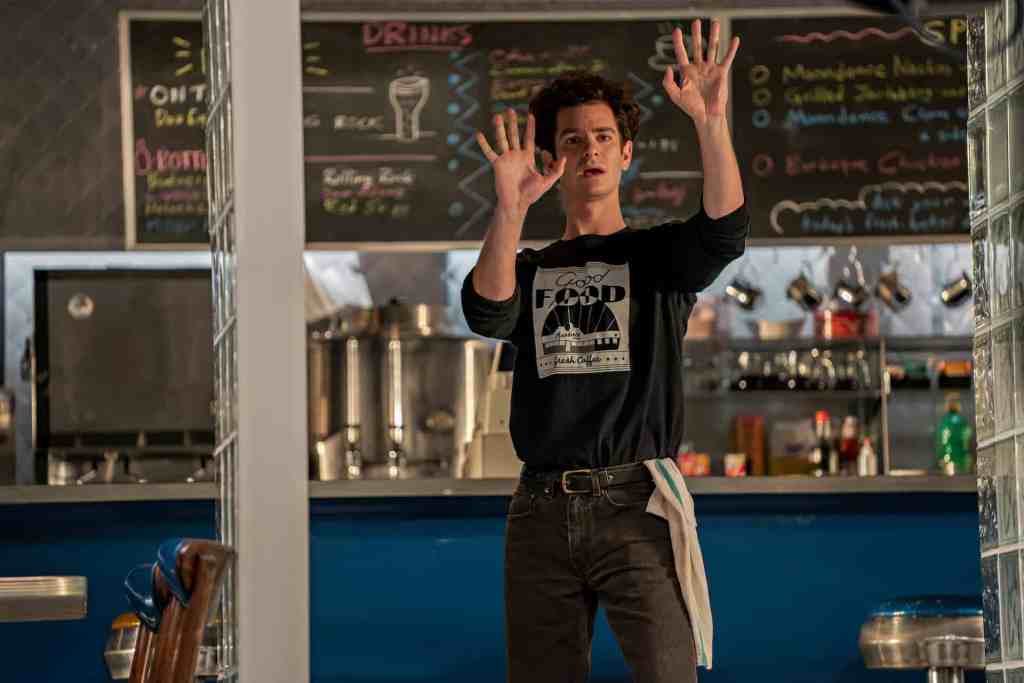
However, while RENT will always be the musical creation most associated with Larson, it was far from being his only work. Long before RENT, there was Tick Tick… BOOM! an autobiographical musical/stand-up show, and the George Orwell-inspired Superbia. Both were labours of love for Larson while he worked as a waiter at the Moondance Diner in New York’s SoHo, his bohemian home life and desperate need for success surrounded by a trademark artistic poverty. It’s here that Lin-Manuel Miranda’s outstanding directorial debut begins.
The year is 1990, and Jonathan (Andrew Garfield) is about to turn 30, with his musical Superbia still in development eight years after graduating from Adelphi University on Long Island. Larson is stuck in a rut, the clock ticking as he ponders his birthday and the elusive hit he dreams of.
In a cluttered loft apartment he shares with his girlfriend, Susan (Alexandra Shipp), and his best friend, Michael (Robin de Jesús), Jon dreams of success, devoting every penny to the planned workshop of Superbia, which is set to take place. But when his girlfriend accepts a job outside the city, and Michael starts work for an advertising agency, Jon’s bohemian life suddenly becomes solitary. And as Jon struggles to complete Superbia, it feels like his dreams are floating away as everything changes around him.
In telling Jonathan’s story, Lin-Manuel Miranda cleverly utilises his biographical musical, Tick, Tick… BOOM! as a narrative device alongside his first musical, Superbia.
Tick Tick… BOOM! is built upon a series of flashbacks and vignettes, carefully woven together to create a luscious tapestry of Jon’s life before RENT. In doing so, Miranda has the creative freedom to craft fantastical sequences built on Jon’s imagination and energy – a point emphasised by the opening statement, “Everything you’re about to see is true, except for the parts Jonathan made up.” The result is a glorious celebration of Larson’s story and creativity told through his eyes and imagination.










Follow Us