

What’s new on BBC iPlayer – Sherwood Special. David Morrissey discusses series two, character arcs, and real-world issues.
The second series of Sherwood further explores the powerful themes that made the first so resonant to audiences across the UK. Set in the present day, it introduces two new families that find themselves entangled with the Sparrows, entering a complex web of local gangs, old rivalries, revenge, and betrayal. Meanwhile, a newly appointed Sheriff of Nottingham is passionately fighting against a proposed new coal mine for the area, which promises much-needed jobs and prosperity, but also serves as an unwelcome reminder of the legacy that has long plagued the community.
Sherwood series two is produced by House Productions and will air on BBC iPlayer and BBC One. James Graham has written all six episodes and is an executive producer on the series.
Clio Barnard is the lead director and executive producer, with Tom George directing episodes four, five, and six. The producer is Kate Ogborn (Life After Life; The North Water). Juliette Howell, Tessa Ross, and Harriet Spencer are executive producers for House Productions, with Jo McClellan serving as executive producer for the BBC. BBC Studios, which owns House Productions, serves as the international distributor for both series.
David Morrissey discusses series two, character arcs, and real-world issues.
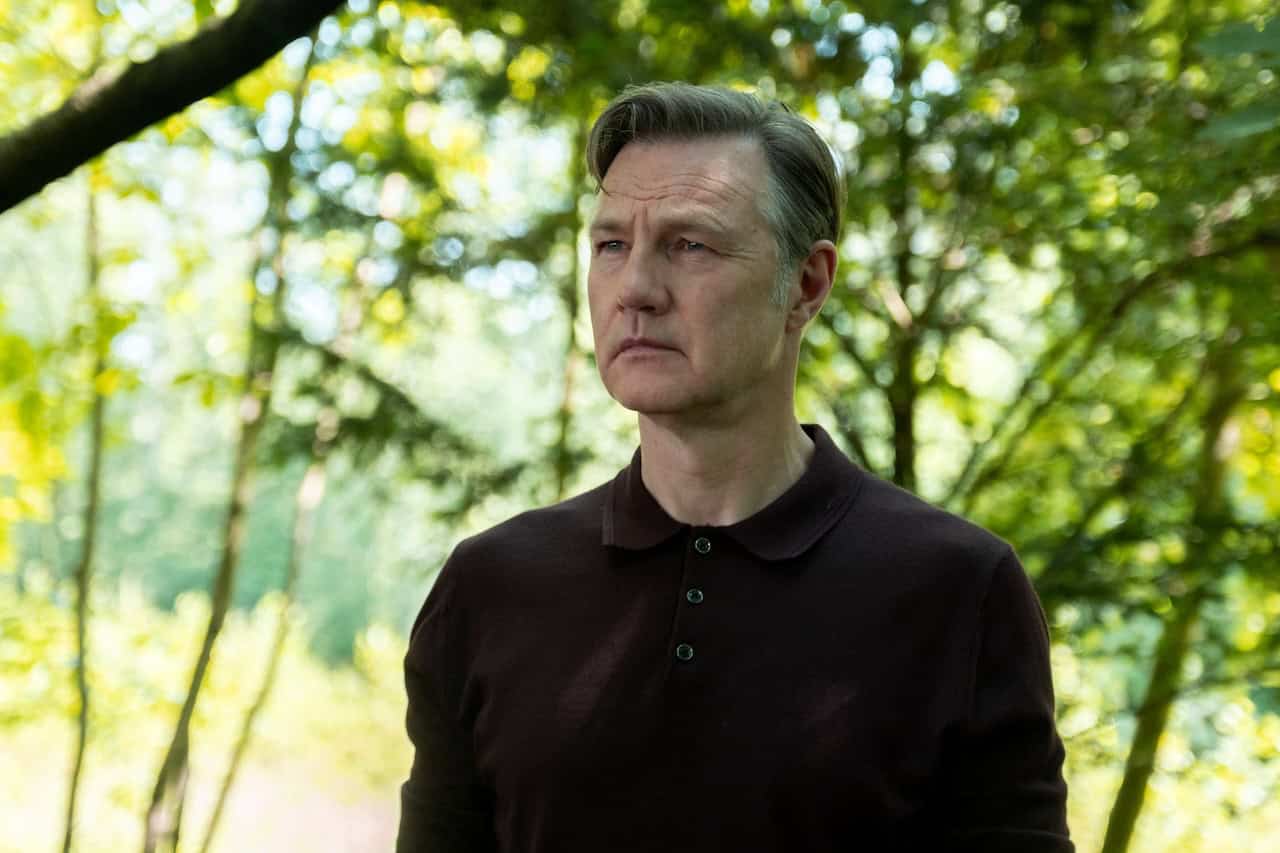
Q: Can you give us a brief overview of where we find Ian at the start of series two?
David: Ian has now left the police and is heading up a new unit for the local council, which is a Violence Intervention Team —a unit that brings together all the social services. It aims to integrate everything from housing to public health, the police, and emergency services.
Q: What drew you to the role of Ian St Clair in Sherwood series one? And what keeps you excited about it in series two?
David: I’ve always been a fan of James Graham. I think he’s one of our greatest writers. When they approached me about the role, I spoke to James, and we went for a long walk. He outlined the world and what he wanted to do with it. I immediately signed up and said “yes” it sounded great to me. I thought it was a brilliant piece of drama to get into: the exploration between families who are still traumatised from the events of the miners’ strike in the early 80s.
Once we started filming series one, I just fell in love with the character. I thought he was pretty wonderful and complex, but slightly compromised at the same time. When it was floated that they might do a second series, and James found a role for Ian, I was delighted.
Q: What themes and issues does series two explore that you find particularly compelling?
David: One of the issues that resonates a lot is around a breakdown of social services and the cracks that young people – particularly young men – can fall down. Particularly in regard to gang culture. I think many of the other themes explore the dissociation between talk and action, focusing on rejuvenation and investment in local communities. Broken promises and superficial political rhetoric have let down people and their communities for too long.
Q: How does the dynamic between Ian St Clair and other characters shift in the new series?
David: Ian is outside of the police force now, and he’s very critical of it. Of course, he still has colleagues and friends within the force, and he remains a valuable person to the police. Criminal gangs are going to go to war again, and Ian was instrumental in policing that when he was in the force. Now, he’s being drawn back into the police force in an advisory capacity to lend a hand. I think he feels compromised because he doesn’t really want to return to the police force.
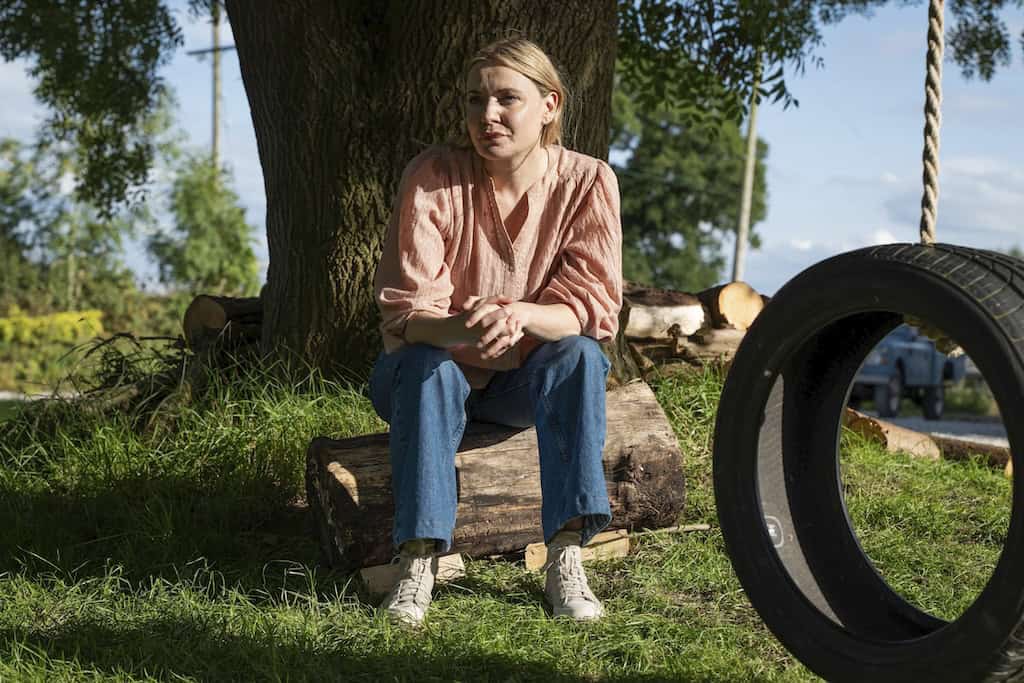
It feels at odds with the work he’s so passionate about outside of the force. We see this conflict in how he interacts with so many of the characters. We see him reconnecting with characters such as Julie (Lesley Manville) and the Sparrows (Lorraine Ashbourne, Phillip Jackson, Perry Fitzpatrick, and Bill Jones), utilising his past relationships to aid him in his present.


Q: What challenges does Ian face in his personal and professional life in this series?
David: His personal life is falling apart in a lot of ways. He’s divorced, and he’s living on his own. He’s a single man living out of boxes. On a professional level, though, he’s passionate and motivated in his new role in the Violence Intervention Team. I think he feels energised by the new role. However, due to the events unfolding in the community, those plans are slightly derailed, and he has to ride two horses into town. One as the policeman that he thought he’d left behind. The other is the community liaison. I think he finds those two roles and identities increasingly harder to marry.
Q: Are there any new characters in series two that significantly affect Ian’s story?
David: Yes, there’s Harry (Michael Balogun). A police officer with whom Ian is teamed up. There’s also the Branson family (Monica Dolan and Stephen Dillane), with whom Ian crosses paths frequently. Lastly, we are introduced to a new character, Ryan (Oliver Huntingdon). He’s a loose cannon and the focal point of everyone’s anger.
Q: What was it like to reunite with the cast and crew from series one and have the new cast join you for series two?
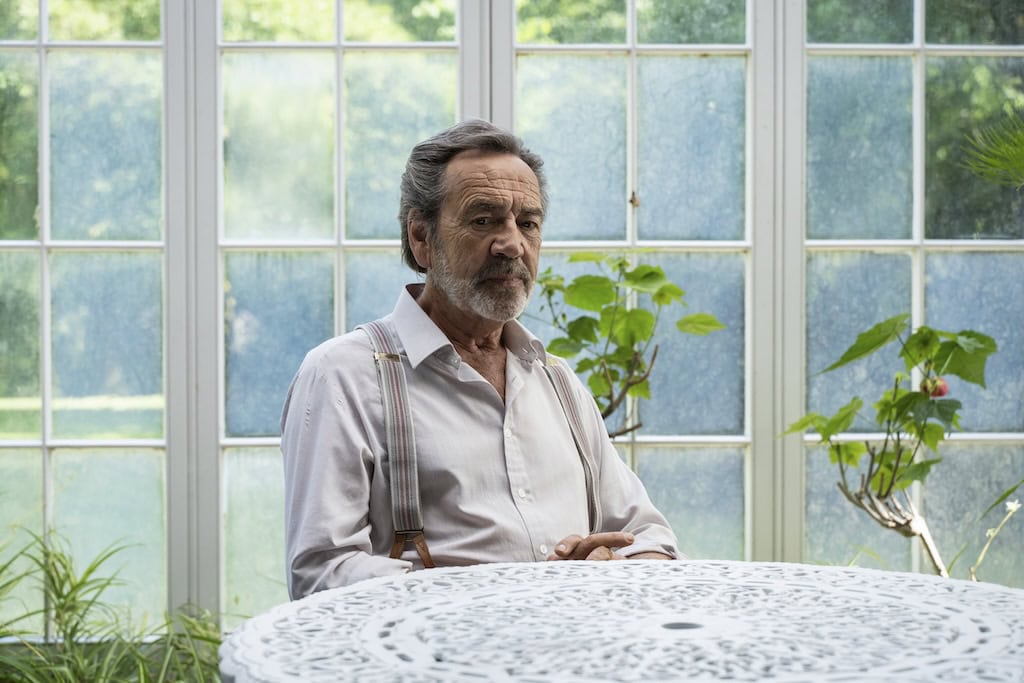
David: It was really interesting. Some of the crew members were the same, but many were new. We had new directors whom I loved and got on incredibly well with. But it was nice to be back with a few of the old guard in Perry (Fitzpatrick), Lorraine (Ashbourne), and Phil (Jackson), who are all good friends. It felt very familiar and warm to be with them again. I loved working with the new characters, though. Robert Lindsay is in this series, and he’s an actor I’ve admired for a long, long time, so it was wonderful to work with him. Likewise with Monica Dolan and Stephen Dillane.
Q: Can you speak to the importance of James’ storytelling in shedding light on real-world issues?
David: The main thing about James is that he has this ability to hold a mirror up to society as it is now. Of course, series two was written during a different government to the one when the show airs, but the issues still exist. I think James highlights the problems that are facing our society. He also offers potential solutions to it or certainly points you in the direction of where to look in terms of healing. I think it’s a very important drama for us in terms of where we are now with the breakdown in society, how we seem to have become more and more isolated in where we are, and that we need to be more conjoined, particularly around social services.
Q: In what ways do you think Sherwood addresses relevant social or political issues today?
David: James is certainly involved in looking at characters who live and breathe on the streets of Britain, particularly in Nottingham. They are people who are having to live with the consequences of major decisions that are made by big business and big government. I think that’s ultimately what’s relevant and resonates.
Q: Do you find any aspects of Ian St Clair’s character that you particularly resonate with or that you find particularly challenging to portray?
David: I think that Ian takes on a lot of responsibility. He feels responsible for many, many things. Many of which are out of his control. He feels the need to fix, and that can take him into two areas. One is that he can be guilty of having a martyr complex, and the other is a narcissistic belief that he can bring light and justice to the world.
Q: What do you hope audiences will take away from series two?
David: I hope that it’s similar to what people took out of series one. It’s a great ensemble cast, portraying a wonderful story by James, which resonates with their lives in a very immediate way.
Watch Sherwood series two on BBC iPlayer in UHD and on BBC One from Sunday, 25 August.










Follow Us