

The Major and the Minor remains enjoyable as a comedy if you don’t examine it too closely. And if nothing else, it jump-started Wilder’s versatile career, for which we can only be grateful. The Major and The Minor is available now on Arrow Academy Blu-Ray.
Is she a kid… or is she kidding? says the tagline of Billy Wilder’s first American film, The Major and The Minor, perfectly encapsulating the plot. As one of the most versatile and brilliant directors of the classic Hollywood era, he is known for his American directorial debut, which is worth exploring for its strange choice of topic alone. Based on Edward Childs Carpenter’s play Connie Goes Home, the film follows Susan Applegate (Ginger Rogers, 31 years old at the time of filming) as she disguises herself as a 12-year-old girl, ‘SuSu’, to purchase a half-price train ticket home to Iowa. The premise is clearly absurd, but that very absurdity is the primary source of humour.
The film is quite possibly the most farcical in Wilder’s filmography. Disguised identities are a fairly common element in comedy, going back to Shakespeare, with Wilder exploring this later in his undoubtedly most well-known film, Some Like It Hot; classic examples also include Tootsie and Mrs Doubtfire. At the same time, films exploring children caught in an adult body or Vice Versa (no pun intended) are a staple of Hollywood filmmaking, from Freaky Friday to Jack and Big.
In The Major and The Minor, a woman, Susan, willingly turns herself into a 12-year-old schoolgirl, removing her make-up, putting on a school uniform with knee-high socks, and tying her hair in pigtails. While her clothes and voice are on point, she can’t hide her height or refuse a cigarette. The train conductor quickly suspects a sham, and so Susan hides in Major Kirby’s compartment (Ray Milland). Hilarity then ensues when the Major takes her for a 12-year-old girl without question.
Due to a sequence of comedy of errors, the Major’s fiancée, Pamela (Rita Johnson), finds her in Kirby’s bed on the train, taking her for a grown woman. Therefore, SuSu must take Kirby’s invitation to spend several days at the military academy where he is working to clear him of any suspicion. SuSu soon finds herself in a position where she cannot reveal her true identity, yet she starts falling for him.
Romantic plotline aside, the comedic elements function hilariously well, even by today’s standards. The plot opens up several opportunities for great situational comedy, allowing Ginger Rogers to shine by switching between her adult and preteen personas in a heartbeat. Wilder also jokes about Greta Garbo’s loneliness and Veronica Lake’s popular hairstyle; such intertextual references weren’t standard in 1940s cinema.
In the finale, the Major visits SuSu on his way to be assigned to active duty. At this point, it feels like the film is parodying itself as Susan – not yet ready to face him as herself – pretends to be her mother (fun fact: Susan’s actual mother is played by Ginger Rogers’ real-life mother, Lela. E Rogers). As the Major is about to depart, Susan finally reveals her true identity at the train station, and the two kiss and embrace, deciding to get married.
Here we see two characters passionately kiss, even though one was 12 years old mere seconds before. However, as the audience knows the sham from the beginning, it is easy to accept that there is nothing wrong with Susan’s and the Major’s romance. But, if we look at the story from the Major’s point of view, it gets trickier: He randomly stumbles upon this frightened 12-year-old, whom he promises to keep safe and effectively kidnaps her, taking her to a military academy. He does not suspect her real age, apart from calling her a “very peculiar child” and telling her she’ll be “a knockout one day”. Although we have heard far more problematic lines in other 1940s films, it doesn’t distract from a modern sense of unease.
From his perspective, the Major’s fatherly relationship with SuSu quickly morphs into adult love and marriage! Instead of questioning the situation or trying to make sense of SuSu’s behaviour, he goes with it as a 12-year-old girl suddenly and miraculously becomes a legal adult. Thankfully, Wilder’s film does not allow for any inappropriate attraction on the Major’s part towards SuSu while he believes her to be twelve. However, the question indeed arises: was the ending supposed to suggest he had feelings for her all along?
Wilder himself said, “It wasn’t too difficult for Ginger to imitate a girl of twelve, especially in those days. Now it seems a little foolish. To think a thirty-year-old could play a twelve-year-old girl and be believable! Well, she couldn’t, but it didn’t matter. The audiences were very generous in those days. They had come to have a good time, and they went along with you.” – Anthony Balducci: I Won’t Grow Up!: The Comic Man-Child in Film from 1901 to the Present, p.71
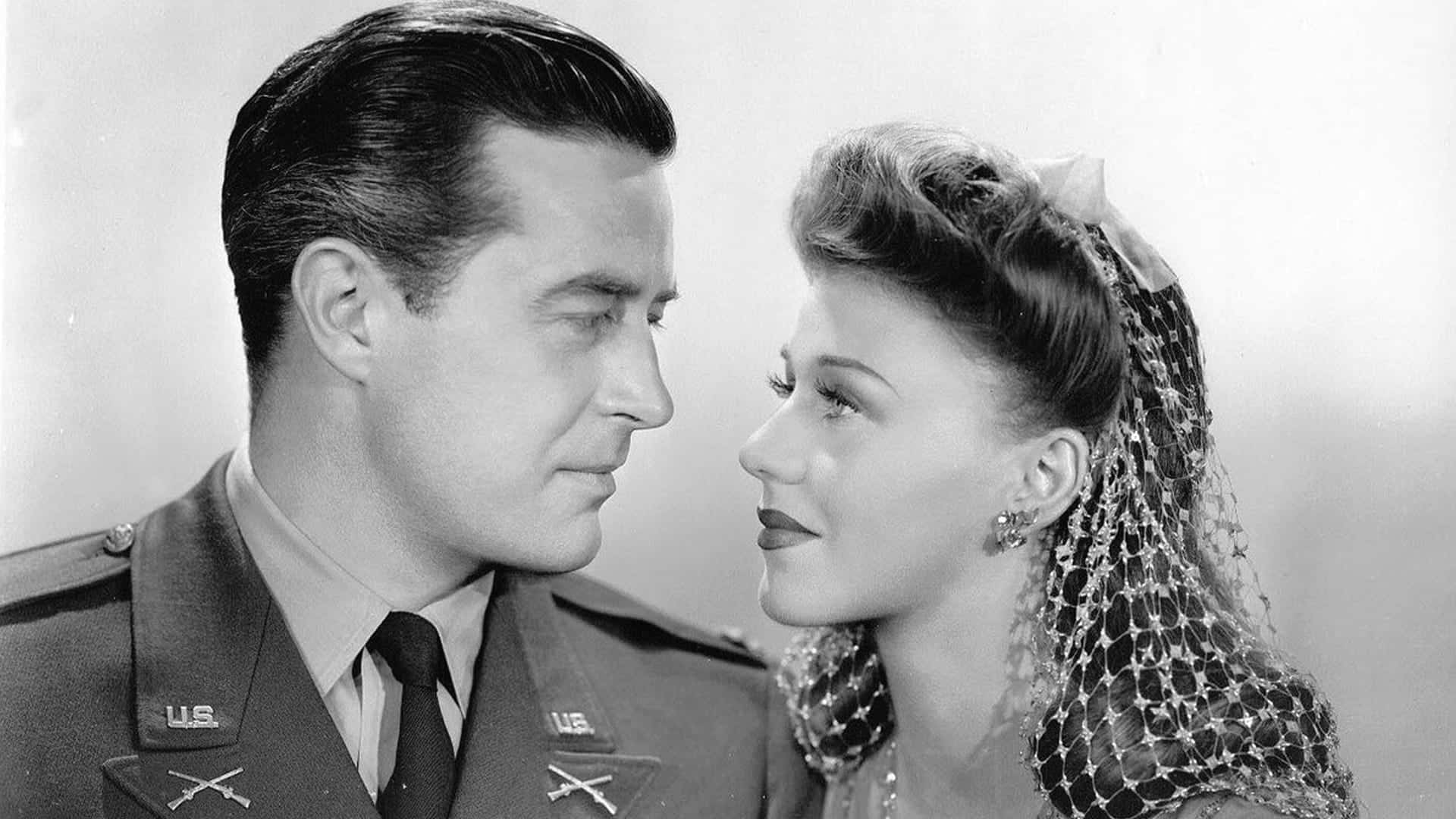
This quote perfectly encapsulates the film’s strange ambivalence. The main issue is that the film’s internal logic does not align with ours. The audience can’t take Susan’s disguise seriously because we know from the beginning that it is Ginger Rogers. Only certain characters can see through her disguise if it favours the plot. For example, SuSu quickly befriends Pamela’s younger sister, Lucy (Diana Lynn), a cynical teenager who immediately senses that SuSu is lying about her age.
There is no agreement in the film’s universe about whether she passes as a 12-year-old. This differentiates the movie from the aforementioned “disguise comedies”: in those, there is a tacit agreement between the audience and the characters to play along with the concept. It would be interesting to see the same film without the extra information about SuSu’s real identity. What would the audience’s reaction be if we were to find out the “trick” along with Major Kirby in the final scene?
The film was designed to be watched as an innocent, lighthearted comedy without deeper meaning or subtext. But while the intention was undoubtedly comedic, we can’t help but feel uneasy about the subject matter. Even with the absurd elements considered, the story feels like it crosses a line into inappropriateness, eventually detracting from its enjoyment.
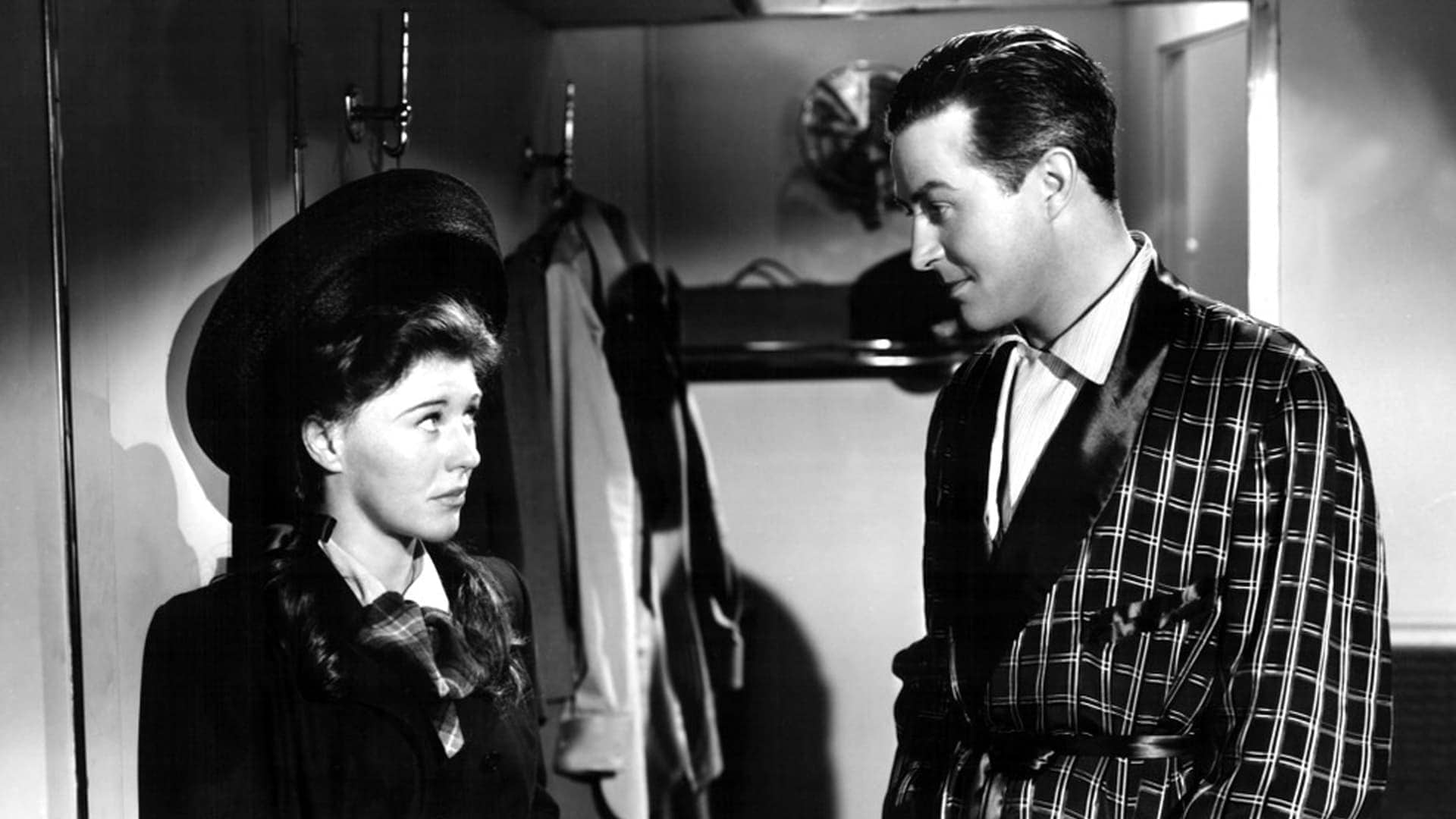
Wilder was known for continually pushing the boundaries of censorship, and there’s no doubt he pushes them here. The scene where SuSu and the Major first meet is the most clever play on the strict Hays Code rules audiences of the time had seen. As SuSu runs from the conductors, she bursts into Kirby’s compartment and claims she fears the thunderstorm outside. Kirby tries to calm her down by climbing into his bed with her, hugging her caringly. This scene would not have passed the Code rules without SuSu’s disguise, as censorship even prohibited married couples from being shown in the same bed. According to the censors, Rogers posing as a child had no sexual meaning; therefore, the scene passed. But today, the scene feels incredibly problematic on so many levels.
As a result, The Major and the Minor would never be made today. In 1955, Norman Taurog made a gender-swapped, musical-heist version of the film titled You’re Never Too Young, but it wasn’t well received, a possible indication of how far things had moved since 1942. Don’t get me wrong, The Major and the Minor remains enjoyable as a comedy if you don’t examine it too closely. And if nothing else, it jump-started Wilder’s versatile career, for which we can only be grateful.















Follow Us