
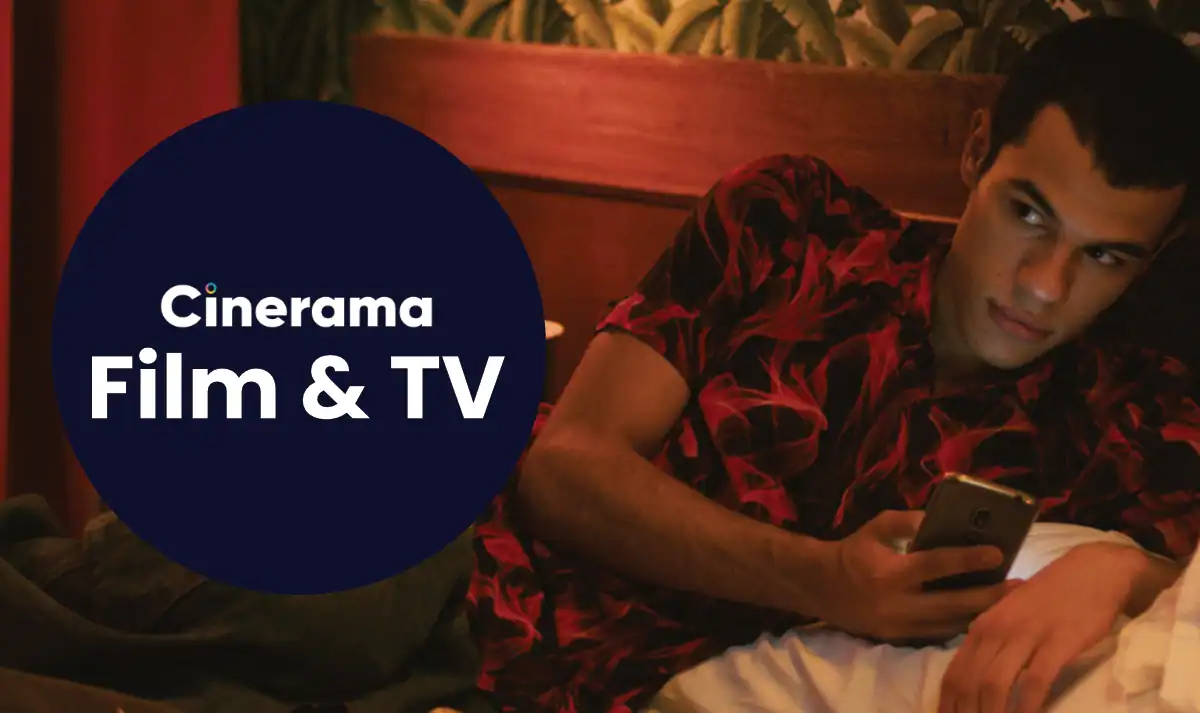
Baby is a movie that has no intention of following a tried-and-tested narrative path, subverting expectations at every delicate turn through a story rich in emotion, complexity, honesty, and dramatic power.
Some films bristle with the energy, diversity, and colour of their location; Marcelo Caetano’s Baby is one of those films. Shot on the streets of downtown São Paulo, often using zoom lenses, crane shots and hidden cameras, Caetano’s film carries an authenticity, energy, and emotion many similar films lack. It’s the story of a young man attempting to find his place following two years of incarceration in a youth detention facility; a story that in many ways could be described as a classic queer coming of age journey, but Caetano weaves a tough, gritty, and tender tale of life on the margins of a metropolis through those queer coming of age roots. Baby is a movie that has no intention of following a tried-and-tested narrative path, subverting expectations at every delicate turn through a story rich in emotion, complexity, honesty, and dramatic power.
The story opens with seventeen-year-old Wellington (João Pedro Mariano) being released from the youth detention facility he has called home for the past two years. As he sits in the car alongside his probation worker, his destination couldn’t be any more uncertain. His home is no longer a home, and his parents’ whereabouts are unknown. They left, offering no forwarding address, and rarely spoke to Wellington when he was in detention. His father, a police officer, was shamed by his son’s attempted arson at his school, but even more ashamed of his son’s sexuality. At the same time, his loving mother lived her life beneath his father’s shadow, following his instructions even if that meant leaving her son.

As Wellington sits in the car, his probation worker tells him she needs the signature of an adult who can care for him; otherwise, he will have to stay in a state hostel until his birthday. Wellington has other plans, and a hostel isn’t one of them. He has his old neighbour sign the papers and sets off onto the streets in search of his parents, his place, and some semblance of security.
His first stop is the queer group of friends he left behind two years ago, a group who gather in a small park amid the lights and sounds of São Paulo’s busy urban streets. They welcome him back with open arms and an eventful trip to a sex cinema downtown, where hustlers ply their trade as pornographic films illuminate the sex acts on offer, for a price. It’s in the darkness of the cinema, illuminated only by the flicker of the projector and the images that light up the big silver screen, that Wellington meets Ronaldo (Ricardo Teodoro), a chiselled forty-two-year-old escort. It’s a meeting that will change Wellington’s life in multiple ways.
Ronaldo sees potential in Wellington and invites him back to his home, where sexual sparks fly between them in a strange dance of care and support versus business interests. Ronaldo has clients who would love Wellington, and as he ages, he is more than aware that a younger man could boost his income. Yet he also wants to care for the boy, who might just have found a place in his heart. Ronaldo’s home becomes Wellington’s, who now goes by the name ‘Baby’ as he earns his keep through meetings with men Ronaldo seeks out in clubs and saunas. But can a financial relationship built on a confused and complicated protection survive the realities of sex work, drugs and one boy’s need to find a family built on security and love?
Caetano’s screenplay, co-written with Gabriel Domingues, delights in crafting moments of exquisite tension as we journey alongside Baby and Ronaldo through the saunas, streets, nightclubs, and back alleys of São Paulo. However, the real strength lies in its delicate exploration of family, security, age and socio-economic imprisonment. While Baby, or Wellington’s story, sits centre stage throughout, Baby is as much about Ronaldo as it is our young protagonist. Ronaldo knows that Wellington could end up just like him, a forty-two-year-old escort attempting to keep his head above water and pay the bills. He doesn’t honestly want that for Wellington, yet he also knows the boy holds a value he no longer possesses. He loves Wellington, but love isn’t something either of them can afford.
Bringing this layered screenplay to life are the truly outstanding performances of newcomer João Pedro Mariano and Ricardo Teodoro, supported by a strong ensemble cast. Add the vibrant, documentary-like realism of Joana Luz and Pedro Sotero’s cinematography, the assured vision and direction of Caetano, and a delicate yet proudly Hispanic and Latino score by Bruno Prado and Caê Rolfsen, and Baby shines with ferocity, love, honesty, and feeling from the first scene to the last.
Baby arrives in selected cinemas nationwide on December 12, and on BFI Player, Curzon Home Cinema and Peccadillo Pictures Player on December 22.
Discover more from Cinerama Film
Subscribe to get the latest posts sent to your email.























Follow Us