
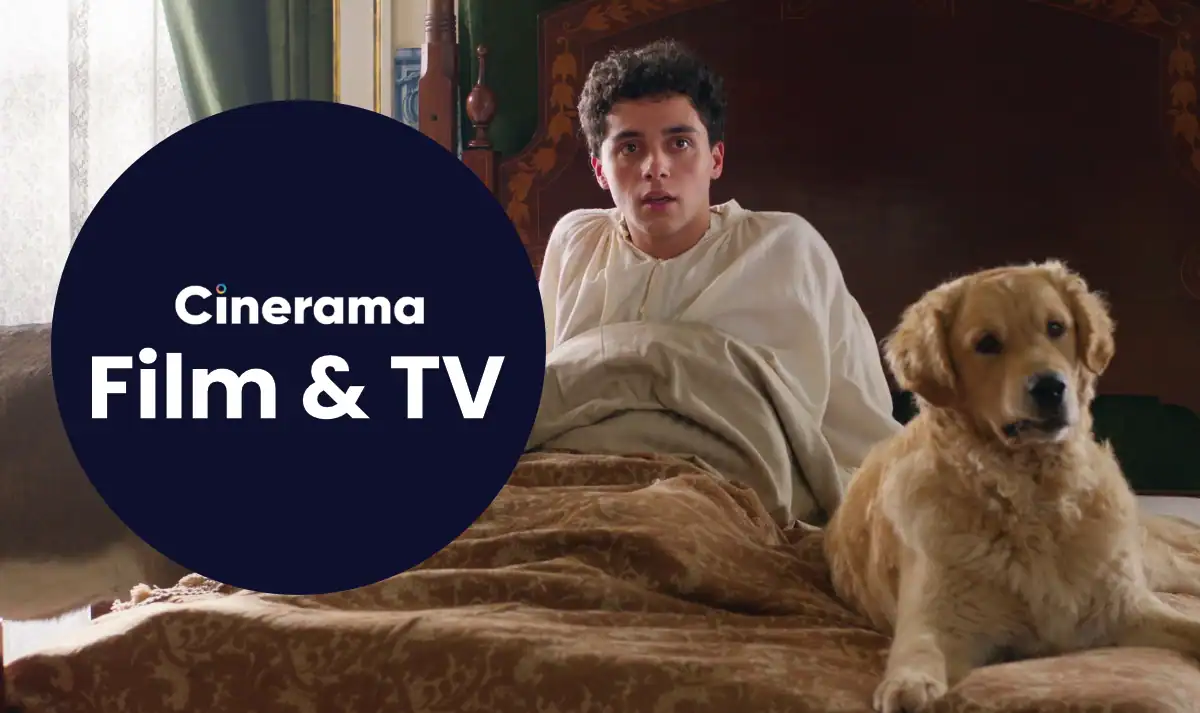
Bold, witty and fantastical, Eugène Green’s The Tree of Knowledge (A Árvore do Conhecimento), holding its world premiere at Fantastic Fest, is a mesmerising and playful exploration of what it means to be Portuguese and, over that, what it means to be human in a fractured world
The history of any country is full of contradictions, moments of seismic change, confused narratives, and inaccuracies that become accepted facts over time. We, as people, carry that history and selectively use it to justify our sense of identity, our purpose and political ideologies, sometimes for good and sometimes for bad.
Like many countries, Portugal’s history is one of monarchy, revolution, colonialism and republicanism. It is a country, like most of Europe, where conflict has forged change and shaped its place, and where its people carry their history in shaping their identity. At the heart of writer and director Eugène Green’s fantasia on a theme, The Tree of Knowledge (A Árvore do Conhecimento), is a commentary on what it means to be Portuguese today, and how the history we carry can lead to both darkness and light. But its core messages also relate to us all in a world of growing nationalism.
At the centre of Green’s fantasy is Gaspar, played by the enchanting Rui Pedro Silva, a young man who lives in a turbulent household on an isolated housing estate outside of Lisbon. Gaspar is lost as the film opens. He loves art, but people tell him it’s a waste of his time. He wants to stay at school, but his angry mother pressures him to find a job, none of which exist outside of Lisbon. He is angry, yet sad, and confused yet proud of his Portuguese heritage. It feels like life holds no opportunities, no simple escape door and little to encourage optimism. Even Lisbon feels like it has become nothing more than a playground for tourists, with locals pushed to the margins in housing, employment and culture. Gaspar has had enough, and he is about to pack his rucksack and head for the city in the hope that an answer may present itself.

As Gaspar arrives in Lisbon, he is greeted by hordes of tourists, who stare at him like he is a museum exhibit. At the same time, tour guides point him out as a “typical Portuguese street urchin.” But everything is about to change when he is kidnapped by Leitão (João Arrais), the henchman of an evil ‘Ogre’ played brilliantly by Diogo Dória, who long ago sold his soul to the Devil, who apparently works at the República newspaper as a film critic! The Ogre transforms tourists into edible animals. Leitão then butchers them, saving the prime cuts for the Ogre before selling the rest to tourist eateries, where visitors consume other visitors, unaware of the horror on their plate.
The Ogre has been looking for an attractive young man, as while Leitão is also young, he only seems to attract older tourists, who provide tough, grisly meat. Therefore, Gaspar, whether he likes it or not, is about to become a young, virile lure for fresh meat. But Gaspar is conflicted about his new role. After luring two Americans to their death as transformed pigs and choking on the meal Leitão has prepared, he knows he can’t continue in this Machiavellian role. But he equally understands it will be his own hide on the plate if he rebels.
Suddenly, an opportunity comes knocking to escape. After a night out drinking, the Ogre transforms a square full of tourists into animals, and two of the animals follow Gaspar back to the Ogre’s lair: a donkey and a golden retriever. This time, Gaspar isn’t about to let the Ogre slaughter his new friends, so in the dead of night, he escapes alongside them, venturing outside of the city in search of meaning, hope and a sense of direction.
Gaspars’ fairy tale odyssey will see him meet the ghost of a community once built on corn; the mysterious, out of time, Queen Dona Maria I, played brilliantly by Ana Moreira, the first queen regnant of Portugal and Brazil, and the Echidna, the half-woman and half-snake of ancient Greek myth. All while being pursued by the Ogre, Leitão and Hecatinha, a feminist witch with a flying broom that has space for three.
Eugène Green is a protean artist who embraces theatrical, contemporary and historical realms of storytelling. The Tree of Knowledge (A Árvore do Conhecimento) is unmistakably his creation, and there’s no doubt that not all audiences will bathe in its artistic vision and brilliance. This is a world where capitalism is represented by the devilish Ogre and the modern witch; a ghost in a corn field symbolises communism; and the conflict between monarchy, republicanism, liberalism, and conservatism is held in the hands of a long-dead Portuguese queen. It’s a story where Gaspar’s animal friends reflect our human ability to connect with the heart over the mind in building relationships that require no words, and one where the mythological Echidna represents Gaspar’s internal sense of divided loyalties and conflicting beliefs.
Gaspars’ journey is, in essence, a rite of passage as he defines who he truly is. Yet, it’s also a story of the political and ideological fault lines of modern life and the manipulation of history in building identity. Bold, witty and fantastical, Eugène Green’s film is a mesmerising and playful exploration of what it means to be Portuguese and, over that, what it means to be human in a fractured world where nationalism, division, and polarisation place us all at an uncertain historical crossroads.
The Tree of Knowledge (A Árvore do Conhecimento) held its world premiere at Fantastic Fest and is awaiting a UK release date.











Follow Us