

Presence is showing in cinemas nationwide from Friday, 24 January.
We all love a good ghost story that sends a shiver down our spine while it intrigues and asks us questions about death, belief and the mysteries of our universe. Good ghost stories are rare, and they have become even more so in the age of jump-scare horror, where our desire for effects has replaced the slow-build tension of old, leaving us with movies that, much like the popcorn we gobble, are soon forgotten on leaving the cinema. Like some of the best ghost films, from Stir of Echoes to The Changeling, The Others and The Devil’s Backbone, Steven Soderbergh’s Presence revels in atmosphere over jump scare horror as we view proceedings from the perspective of a presence that is trapped in an empty home that is about to greet a new family. Therefore, those expecting effects, jump scares and forgettable horror be warned. Presence isn’t going to tick those boxes, nor will it play by the rules of the standard supernatural horror. But that’s what we love about Soderbergh: he rarely plays by the rules.
Written by David Koepp, a long-time collaborator of Soderbergh, Presence may be viewed from the perspective of an unseen entity, but at its core, it’s a family in peril chiller; however, unlike movies like Poltergeist (look out for the nod to Hooper and Spielbergs enduring classic in the typography of the end credits) it is not the presence haunting the family home that creates this peril. This family were already in trouble before moving to their new home, as lies, deceit, and toxic behaviours invaded everyday life. The emotionally distant mum, Rebecca (Lucy Liu), cares only for her sports-loving and spoilt son, Tyler (Eddy Maday) and dismisses her daughter, Chloe (Callina Liang), at every opportunity. At the same time, her husband, the caring Chris (Chris Sullivan), attempts to keep the family together while navigating a tricky relationship with his wife that often sees him ignored and sidelined, with no one but his workmates to turn to for advice.
The presence in the home silently watches the family as the drama of their everyday lives unfolds through darkly comic conversations, heated disagreements and toxic behaviours that only Chris seems to call out. But it is Chloe ‘the presence’ is most interested in as it hides in her room, looking over her, caring for her, and even at one point stacking her books for school neatly on her desk. Chloe quickly becomes aware of the presence and immediately assumes it is her best friend Nadia, who recently died from a sudden drug overdose (the second local girl to have died from an overdose in the past year). Of course, her mum dismisses her suggestion of a ghost, and her brother is too busy entertaining his best friend, Ryan (West Mulholland), who has taken a shine to Chloe, to care about his sister’s belief in spirits. But her dad believes her, for he also feels that everything is about to crumble and family life is about to change forever. And it is, as the real home invader isn’t the presence!
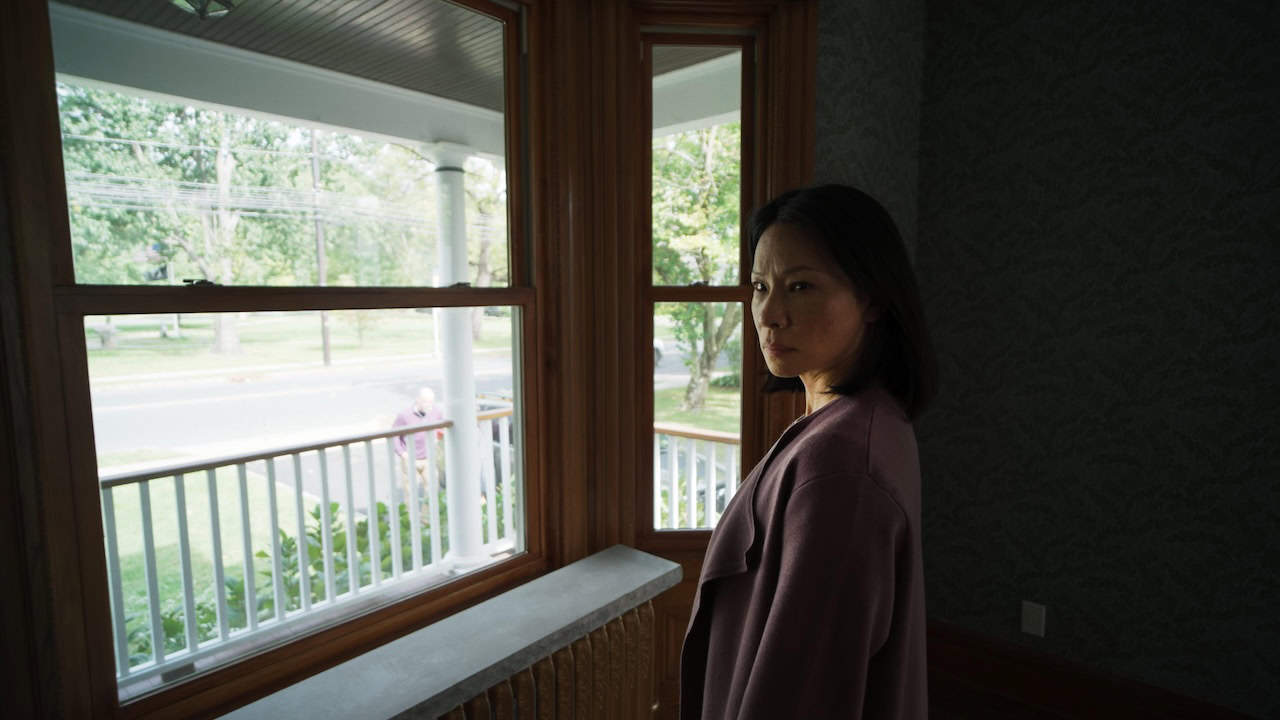
Soderbergh plays with all the classic haunted house tropes, from moving objects to flickering lights and chilling gusts of air as the entity floats around the house, observing the family through creative and unnerving POV camera work that embraces the motion and actions of a spirit keen to remain hidden to all but Chloe. However, for all its loving nods to past ghost stories and POV camera work, Soderbergh and Koepp’s ability to upend expectations is the true genius of this low-budget supernatural chiller.
The classic narrative path of any ghost story goes back centuries, with the set-up (e.g. a family moving into a new home full of hope) followed by the arrival (strange events start to occur, and the family believe they may not be alone). In this second stage, the haunting begins, and events take a darker turn as the house slowly offers up its secrets. The encounter follows this with the moment the ghost, or presence, makes itself known, and all hell breaks loose. The final two stages are often interlinked as the back story merges with the denouncement. In this final stage, the fate of the family, the ghost and the property find a form of finality or are left open, allowing for a sequel. In Presence, each stage is seen not from the family’s perspective but from the ghosts; this alters the set-up and turns the table, placing the family into the role usually held by the ghost. It’s a clever twist that hits its stride in the final act, as the denouncement is turned on its head by events that take a chilling and very living and breathing path.
With performances and dialogue that occasionally feel unscripted and a floating camera that watches rather than engages, Presence will undoubtedly prove divisive with audiences. Much of this division will be based on the expectations of each audience member walking into the cinema. Those expecting a Hollywood supernatural horror like The Conjuring will leave disappointed. But those expecting something far more nuanced will delight in Soderbergh’s love letter to the classic ghost story and his reworking of the narrative path many of those stories take.
Discover more from Cinerama Film
Subscribe to get the latest posts sent to your email.





















Follow Us