

Given Hajdu’s previous films and his signature style of human psychological drama grounded in realism (e.g., White Palms (2006) and It’s Not the Time of My Life (2016), Treasure City occasionally feels clumsy, despite being Hajdu’s most personal film to date. However, despite these flaws, Treasure City is undoubtedly a breath of fresh air, as it dares to challenge and reflect the state of current Hungarian society and politics. Treasure City arrives on digital platforms Friday, 18th June 2021
Making a film with the premise of portraying, with specificity, the atmosphere and culture of a particular country is always tricky. Inevitably, many small details, references or jokes could quickly go over the heads of foreign audiences. Szabolcs Hajdu has become one of the most prominent independent Hungarian filmmakers of the last two decades; he has made a name for himself in the industry by capturing the often miserable, almost stereotypical Eastern European reality of Hungary’s past and present. His latest film, the ironically titled Treasure City (although the Hungarian title translates to “Peacetime”), employs an anthology format to capture the vibe of one night in a Hungarian city through several intersecting stories of almost two dozen characters.
Treasure City explores the dynamics of dominance and vulnerability through a range of relationships, while also balancing a narrative that straddles the boundaries of naturalism and magical realism. Here, we explore one night in an unnamed city through the eyes of several distinct groups of people, each with their own diverse problems. While the film was shot in Cluj-Napoca, Romania, it is relatively apparent that it takes place in Budapest.
READ MORE: POST MORTEM
Political activist mother (Orsolya Török-Illyés) is organising a protest to stand up for free education, yet cannot communicate with her runaway daughter (Lujza Hajdu). Meanwhile, a protestant priest (Szabolcs Hajdu) is engaged in a seemingly unresolvable disagreement of views with his wife (Nóra Földeáki) and rebellious punk son (Ábel Krokovay), and a young and naive actress (Fanni Wrochna) is about to share a taxi ride with a famous theatre director (Árpád Schilling). Finally, a middle-aged actor (Domokos Szabó) and his wife (Lilla Sárosdi) sink into a marital crisis as their preteen daughter (Magdó Pálfi) silently suffers. Our stories are loosely connected via small intersecting scenes and a taxi driver.
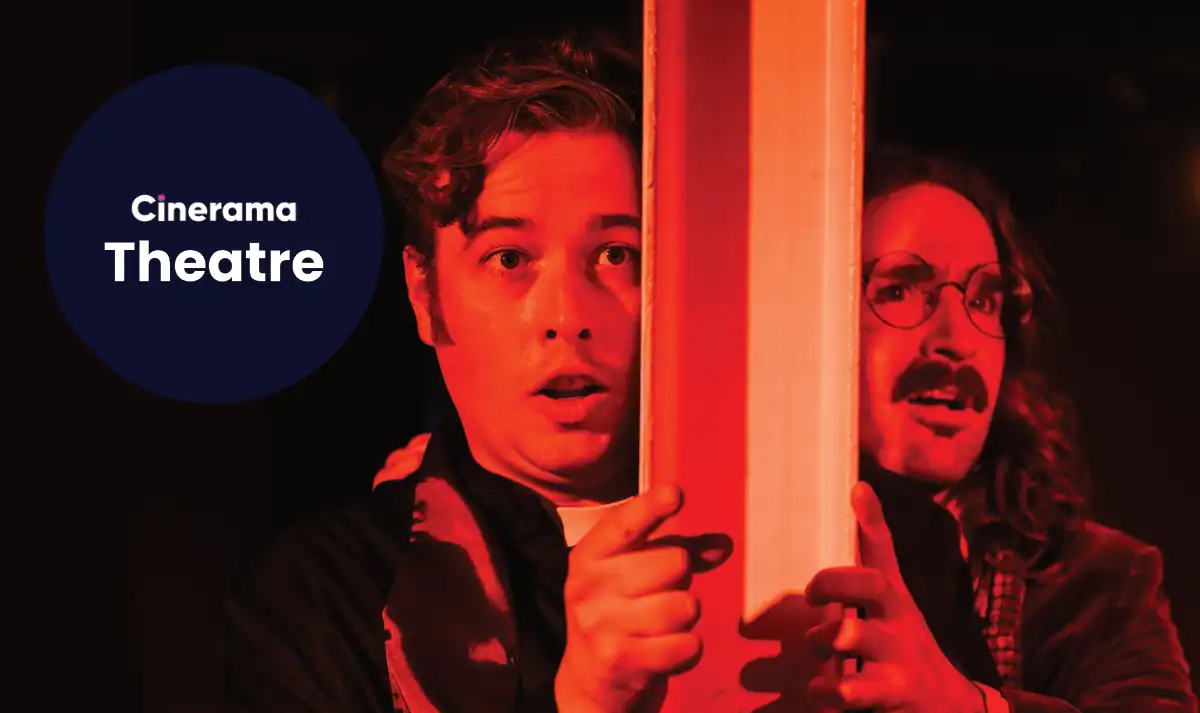
Visually, the film is heavily reminiscent of the postmodern cinema of the 1980s and 1990s – the frequent use of neon lights, surreal locations, and music creates a Lynchian atmosphere similar to Blue Velvet. However, all this is presented through a lens of self-awareness and dark humour, which lightens the film’s overall tone —a style reminiscent of Robert Altman —as it indirectly critiques society through its satirical humour. Hajdu is no stranger to paying homage; his previous film, It’s Not the Time of My Life (Ernelláék Farkaséknál), was shot in a vérité style in the director’s own home, featuring a cast of friends and family.
READ MORE: MOSCOW SQUARE
However, it is the work of Jim Jarmusch that Treasure City most resembles, particularly in its fragmented narrative and magical realism. While it explores marriages, friendships, and parent/child relationships, Treasure City is essentially about the relationship between citizen and state, as it holds a distorted mirror of Hungarian daily life. As a result, Treasure City also becomes one of the most critical movies of the current Hungarian government we have seen in many years.
READ MORE: Károly Makk’s Love ‘Szerelem’ (1971)
Treasure City’s most significant power stems from its willingness to be critical, refusing to shy away from commenting on numerous current political and social issues in Hungary. The constant background noise of the radios or TV channels throughout the film alerts us to the threats that migrants pose to Hungary. Like an ironic take on Big Brother from Orwell’s 1984, it’s everywhere: in the home, car, workplace and restaurant; we can’t escape it. However, the sad truth is that the excessive use of the “migrant-danger” message is not an over-the-top exaggeration from Hajdu used to make an anti-government point; it is the harsh reality of Hungary’s pro-government news coverage, as it forces its propaganda onto the nation through any available channel.
The film is not only a political criticism but a social one, too; the stories include a generational divide, with the adults leading miserable and frustrated lives while the youth stand by, witnessing the events mostly in silence – we know they are the ones with the opportunity to change the course of history eventually, but are they aware of that? Treasure City points to how hate speech and government propaganda infiltrate life, often without us noticing it—ruining relationships on every level while going far beyond political campaigns. This is perhaps best captured in the flower shop episode, where a shop assistant’s minor disagreement with a customer turns into a physical fight, leaving nothing but embarrassment in its wake. It is a dark and foreboding vision of where the country is heading, only further emphasised by the final scene of a taxi cab unable to escape a never-ending roundabout.
Another risque topic covered, albeit subtly, is the ongoing demonstrations for a free education system. Here, Orsolya Török-Illyés, the director’s wife, Szabolcs Hajdu, plays a protester who clashes with the police. While never explicitly mentioning the real-life events it portrays, this protest relates to the heated political disagreements surrounding CEU University. Hungary’s right-wing government claimed the institution planned to destroy Europe with its inherently liberal values. These scenes also find relevance in the recent #freeSZFE movement, where students rejected a new government-appointed board that could undermine their school’s autonomy.
However, the hardest episode in Treasure City sees Fanni Wrochna’s aspiring actress and Árpád Schilling’s slimy theatre director take a taxi ride together. The scene references the #MeToo movement and the László Marton case of October 2017. Marton, a well-known theatre director, was accused by actress Lilla Sárosdi of sexual harassment and assault, with her accusations quickly followed by others. The result was one of the most prominent ‘Me Too’ cases in Hungary.
READ MORE: DOGGY LOVE
The film’s greatest virtue is capturing the often insane or even disturbing, yet quintessentially Hungarian way of life, portraying everyday situations that might (and will) seem like an over-the-top exaggeration to non-Hungarians. Yet, this may be Treasure City’s downfall for anyone unfamiliar with Hungarian politics or its ongoing social issues. While the anthology format is a great creative choice, the form does not allow enough time for each individual story. Most of the characters feel like stock images, and while we may identify with the social problems at the heart of each story, the characters often feel too hollow.
Given Hajdu’s previous films and his signature style of human psychological drama grounded in realism (e.g., White Palms (2006) and It’s Not the Time of My Life (2016), Treasure City occasionally feels clumsy, despite being Hajdu’s most personal film to date. However, despite these flaws, Treasure City is undoubtedly a breath of fresh air, as it dares to challenge and reflect the state of current Hungarian society and politics.
Discover more from Cinerama Film
Subscribe to get the latest posts sent to your email.

















Follow Us