
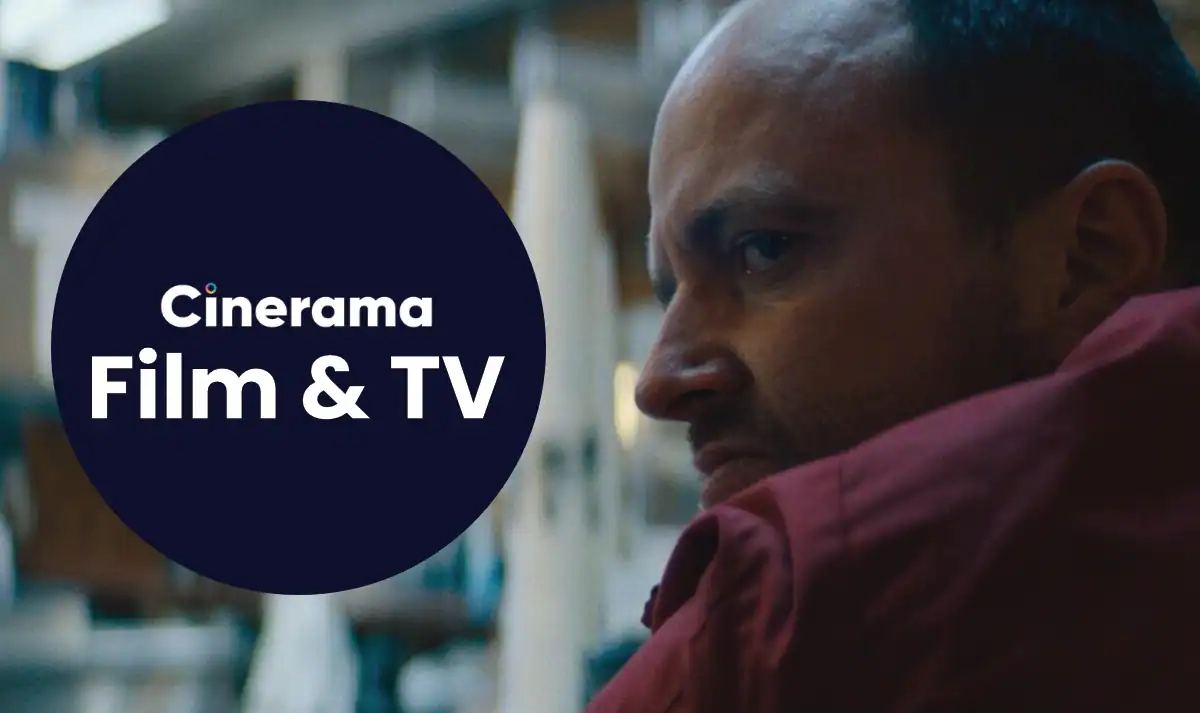
At this year’s Frightfest, I caught up with writer and director Tyler Savage to discuss the premiere of Blinders.
Every year, millions of people pack their bags and head to major cities worldwide, seeking a fresh start while attempting to leave behind the problems, memories, and ghosts of their past. However, for many, the desperate rush to leave behind the old only increases the vulnerability of the present. Within these themes, Tyler Savage’s new film Blinders finds its voice as the bright lights of Los Angeles and a need for belonging combine to create a tense and relentless thriller.
Andy (Vincent Van Horn) has just arrived at a new LA apartment; his old life and memories are packed into boxes, while his phone holds videos and pictures of a life now over. His decision to move followed a messy split with his girlfriend back home in Austin, Texas—a relationship he is still not entirely over, as he swipes through his digital memories with his dog ‘Juicebox’ at his side.
Getting to know his surroundings, Andy heads to a local bar, where he meets the vibrant, young Sam (Christine Ko). The couple hits it off over drinks, and Sam invites Andy back to her home for a nightcap, but a simple rideshare journey is about to change Andy’s new life forever as a deadly game of cat and mouse ensues. At this year’s Frightfest, I caught up with writer and director Tyler Savage to discuss the premiere of Blinders.
Congratulations on the heart-thumping Blinders. What inspired you during the writing process? And how long did it take for Blinders to progress from page to screen?
We’re just now starting to get outside feedback on the film, so I’m really grateful for the kind words. In terms of writing, the original concept for the film came from an unsettling conversation I had with a rideshare driver about a year before we started shooting. From there, my writing partner, Dash Hawkins, and I started talking about how to make a fun noir thriller that plays off the idea that technology makes us vulnerable. We wrote the first draft in about two months. When we shot the film, it had been less than a year since we’d started writing, so I’m proud of how quickly we were able to pull all the pieces together.
Many people choose the anonymity of large cities when escaping personal crises or change, but our online lives often mean this veneer of anonymity rarely exists. Was this a key consideration when writing the role of Andy?
Absolutely! And I love the way you word this question. Social media allows us to project a desired version of ourselves, which doesn’t sound so bad, given that we all have our fears and insecurities. But if you hold that idea as self-evident, it means we live in a reality that is constantly misrepresented. It’s fake news culture. So, to answer your question, I think Andy is trying to run away from his true self by leaving Austin and coming to LA. But despite moving and despite a concerted effort to redefine his past, he has to face the truth. Anonymity always seems appealing, but no matter where you go, your true self follows.
Los Angeles feels like a character in its own right in the movie. Was it your intention to have the city streets live and breathe alongside the characters?
This is nice to hear, and it will undoubtedly make our DP, Antonio, smile. Dash and I are both LA-born and raised (or San Fernando Valley, I should say), so it was a priority from the start to feature the city in a fresh way. It’s both intimidating and freeing to shoot a film in one of the most photographed cities in the world. Everyone should watch LA Plays Itself if they haven’t already. But to your question, yes! For me, we needed to balance the familiar with the unfamiliar, so we shot everywhere from Atwater to Boyle Heights and Sherman Oaks to South Central. We took some inspiration from Taxi Driver in shooting the street scenes. Still, the main idea was to juxtapose the loneliness and ghostliness of our city with the sunshine and the superficiality it’s typically known for.
Colour plays an essential role throughout Blinders, from the warm tones of Andy and Sam’s slowly developing relationship to the darker and colder tones of Roger’s control. Was the use of colour a key consideration in maintaining audience fear?
I’m not sure if we thought of colour in terms of maintaining fear, but I think you’re absolutely right. We used red for Roger to highlight danger, greens and earth tones for Andy since he’s the grounded one, and cool blues for Sam since she has a certain iciness to her, shall we say…
Throughout the film, I often found myself reflecting on its similarities to Cape Fear, both in its design and in its slow-burning psychological terror. Are there any films that directly inspired your final vision for Blinders?
Well, I’ll always welcome that comparison! I actually talked about both versions of Cape Fear quite a lot while working with Vince and Michael on the scenes. In terms of the central dynamic, there were several points of inspiration, including Misery, The Gift, Play Misty For Me, and even What About Bob? Visually, I was influenced by late 70s-early 80s Brian De Palma, maybe especially The Killing of a Chinese Bookie, but really, I was just trying to balance dread and dark humour in a fresh way because film noir and ill-fated heroes are near and dear to my black heart.
Roger is a highly complex character who could easily have become a caricature in the wrong hands. How important was your casting choice of Michael Lee Joplin in ensuring Roger remained grounded and authentic?
Yeah, Roger could have easily degenerated into a caricature. We essentially wrote the role with Michael in mind, and I knew he could handle balancing it. He’s my friend too, of course, but Michael really is a brilliant and generous actor. He asked me early on how I knew he could play this role. And I had to be thoughtful in my response and not just tell him it was because he could scare people or creep them out. Michael is just so alert and present most of the time that it can be overwhelming. It’s what I love about him most, but I also knew it wouldn’t be rocket science to exaggerate that quality. Michael was able to play the monster while maintaining his humanity.
Film production has been hit hard by COVID-19 over the past year, and the most significant casualties may be independent films. What could be done to strengthen the essential role of indie filmmaking?
Yeah, these are indeed strange and scary times. I don’t feel that independent film is going away, but it’s definitely changing. Depending on which mood I’m in, I think the changes will probably be both positive and negative. There are many dysfunctional aspects of the way the indie film world has operated for years, so this might actually be an opportunity to return more power to creators, since content is king. But in terms of the theatres, it’s hard to be hopeful. I’m someone who used to average 60+ trips to the cinema a year, so I’m definitely worried about the long-term impact on both the big chains and independent theatres. Sometimes, it feels like the inevitable march of time that will see movie theatres go away. Still, I think communal experiences as simple as watching a film together in the dark are essential to our lives and culture.
Director: Tyler Savage
Cast: Christine Ko, Vincent Van Horn, Michael Lee Joplin








Follow Us